
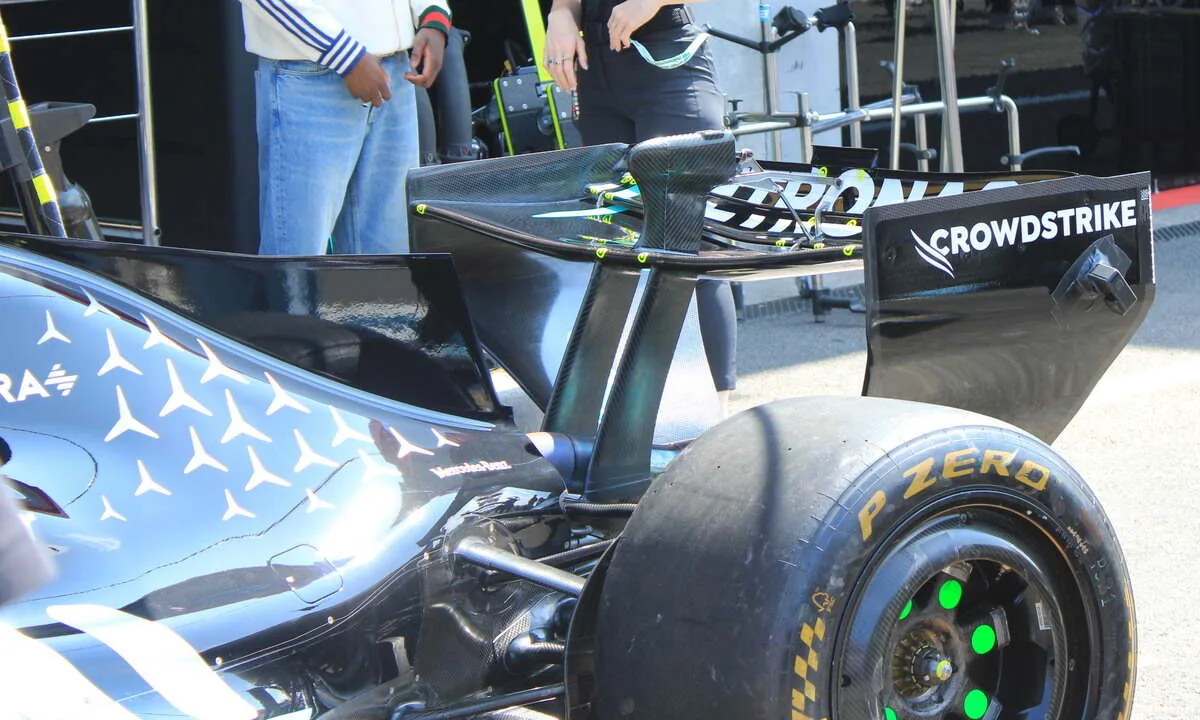
The veils fall on Mercedes’ summer package, designed to adapt the W17 to high-speed tracks. In Brackley, work was done on the front endplates, the rear wing, and the wheel group flaps to reduce aerodynamic drag, gaining speed on the straights and energy management. However, the choice to invest resources in modifications that will only be useful in some races tells of an unusual approach to development.
Read more F1 Belgian GP 2026, FP2: it’s time for qualifying simulation and long run, starting at 17:00 – LIVE
The Spa package
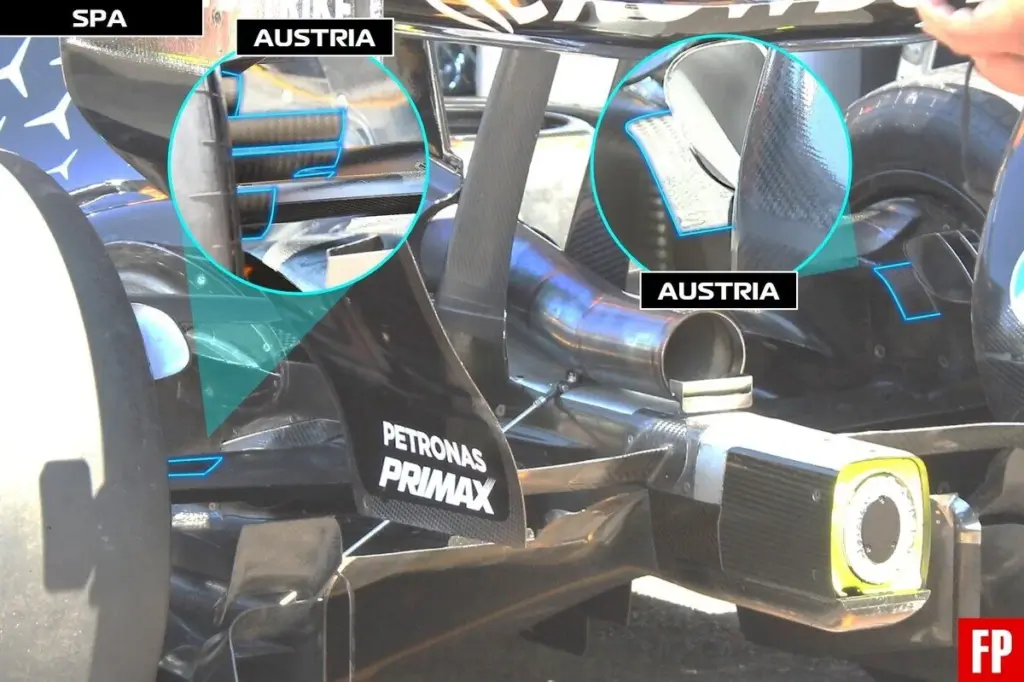
The power of active aerodynamics from the new regulations had practically eliminated in the first races the typical setup dilemmas about the best compromise between downforce and drag depending on the track. At Spa, however, this still holds true, pushing Mercedes to invest in a low downforce package debuting right in Belgium. The novelties start from the front wing, where the outer flap of the endplate appears simplified both in the shape of the partition and in the small flow diverters. The rear wing, instead, mounts a new upper profile, smaller compared to the element used in previous events. The aerodynamics of the rear wheel groups is also different, decidedly more stripped of the normally present flaps, reducing both local downforce and diffuser efficiency.
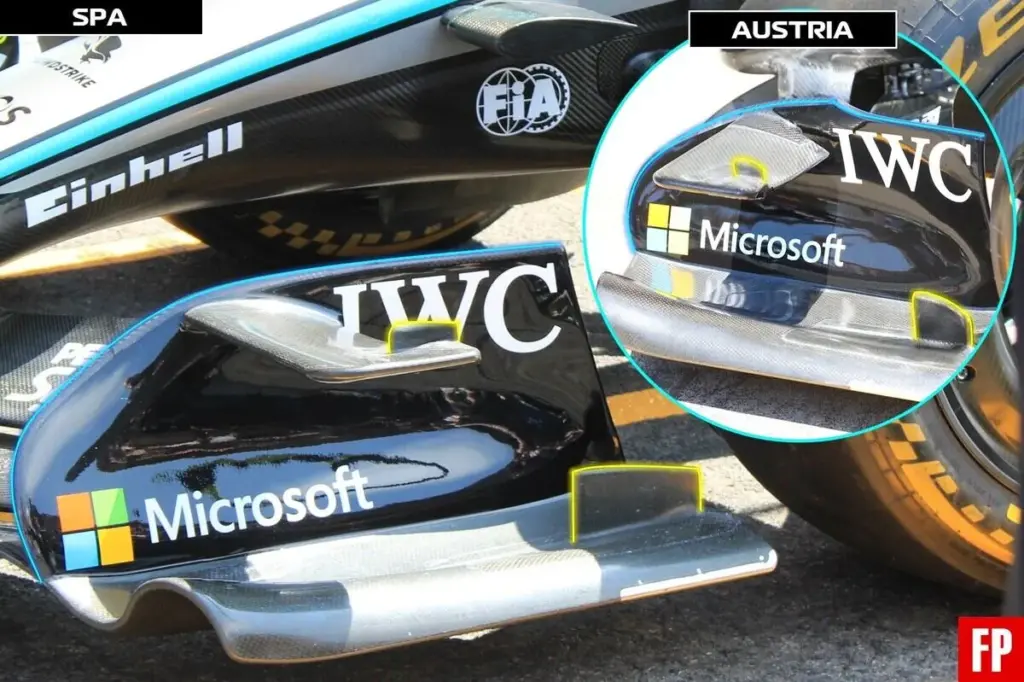
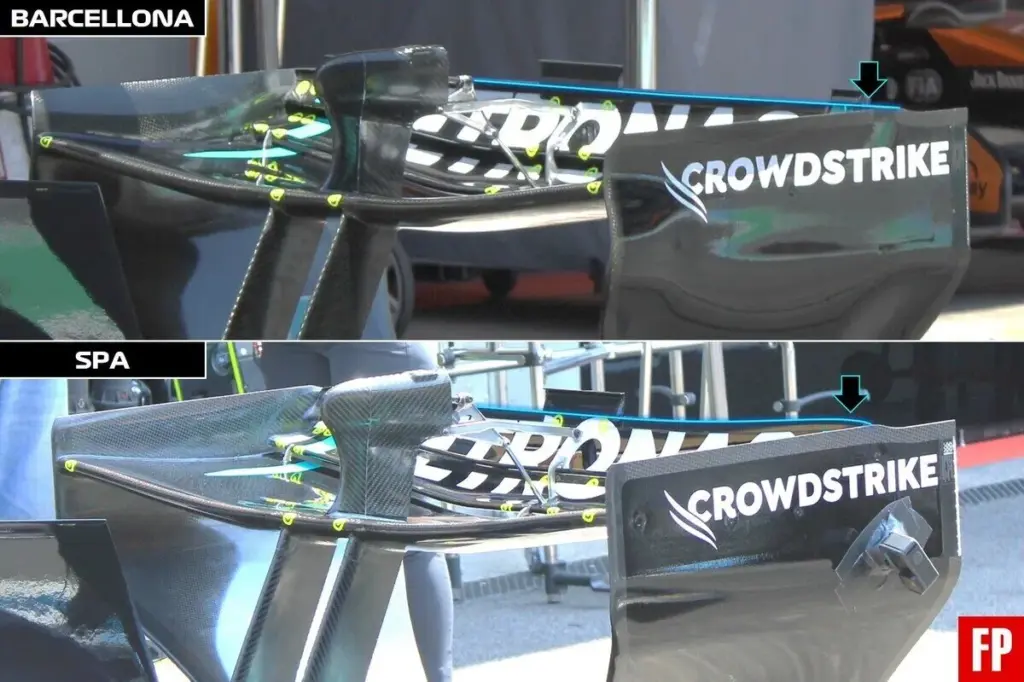
The use of the new package in Belgium will depend on the feedback in free practice, as Antonelli explained on the eve: “We will have to see if what we gain is not less than what we lose in corners. We will see if and how the balance changes, from there we will evaluate whether to keep it or switch to the wings we used until last weekend.” In any case, the novelties will also be useful in subsequent events, particularly at Monza, Baku, and Las Vegas, all tracks characterized by long straights.
Countercurrent approach
Overall, Mercedes’ decision to create a low downforce package is somewhat surprising, whose usefulness will be limited to a small number of tracks. The new cars are still aerodynamically very immature and in every wind tunnel session teams find significant gains, so the main bottleneck for development is the budget cap. It is therefore surprising to invest resources in an adaptation package rather than a general evolutionary step, which is still expected but has been awaited since the distant Canadian Grand Prix.
Read more Dall’Igna: «Marquez, less spectacular style but optimized to do what is needed»