

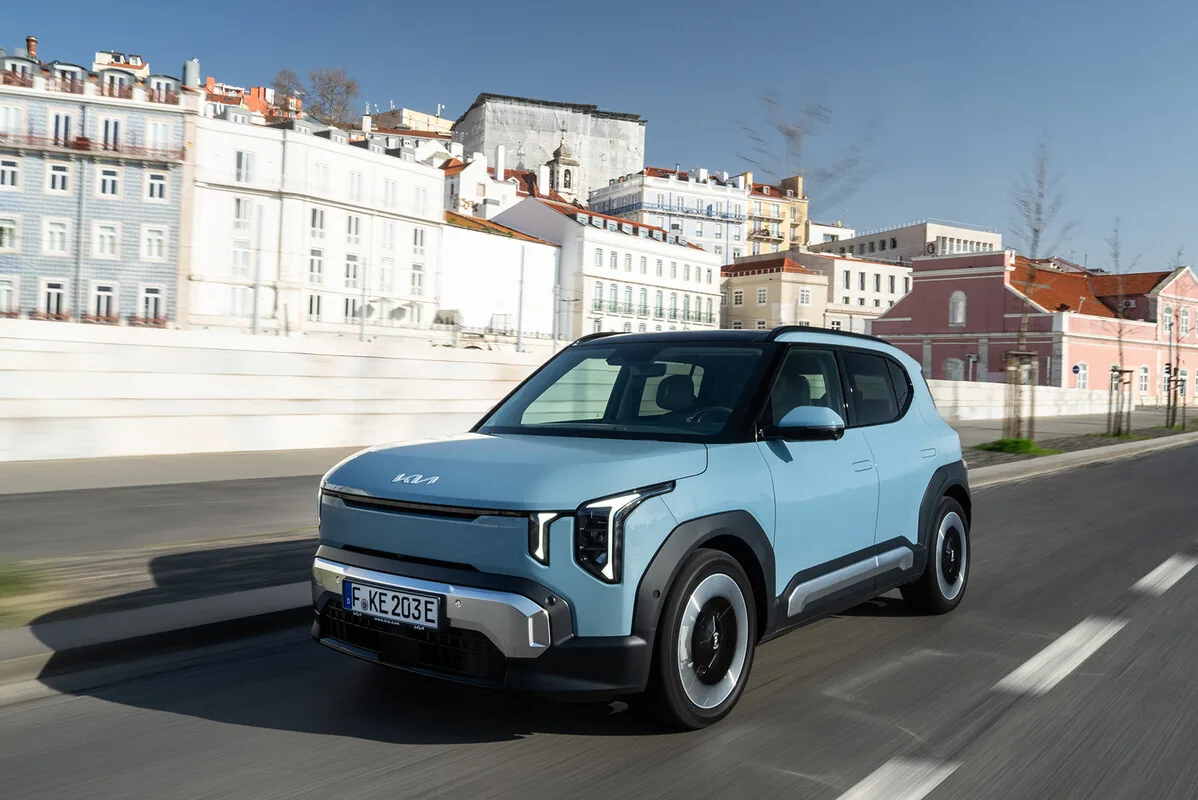
KIA has stated that it has reduced the price gap with Chinese rivals in Europe this year, in a context where Beijing’s companies are intensifying their cross-border expansion. This was explained by CEO Song Ho-sung during the Investor Day held earlier this month, pointing to a growing price war triggered by Chinese competition. According to a recording of the event reported by Reuters, as of this year, KIA has lowered the price differential of its vehicles with Chinese models from the previous 20-25% to 15-20% depending on European markets, with the aim of defending market share and margins while the sector is going through a slowdown phase.
Read more Ogura: “We did everything we had planned. It was a good test”
KIA targets Chinese rivals
The strategy, according to the company, is helping to strengthen commercial performance despite a more difficult market. The group, which together with Hyundai ranks third in global vehicle sales, indicated that it has increased its global revenue and managed to counteract the broader decline in demand. In parallel, Europe has emerged as a crucial arena for Chinese electric vehicle companies: while sales in China slow down and access to the US market remains complicated, exports to Europe become an essential channel to sustain growth. The competitive pressure, in fact, has pushed competitors to offer discounts and accelerate the introduction of more accessible models.
Read more Marini: “An intense and enriching day of learning”
Reduced price gap in Europe
The comparison becomes particularly intense when observing the increase in registrations of Chinese brands in Europe: BYD sales, for example, reportedly registered an increase of almost 150% in March, far exceeding the overall increase in sales and also the growth of KIA and Hyundai. KIA itself admitted having to respond with commercial incentives which, however, weigh on profits, confirming the “two-speed” nature of the industrial duel: on one side, the need to defend volumes and presence, on the other, the cost of competition based on more aggressive prices. Song also predicted a possible acceleration of the restructuring of the Chinese automotive industry, arguing that, with the possible tightening of government support, companies might have fewer resources to continue expansion.
Read more The first modern MINI turns 25