


Russell: even Mercedes can’t explain what’s happening
If in F1 your teammate is the world championship leader, racks up wins and pole positions, any attempt to explain your own difficulties always risks sounding like pathetic excuses. This is what is happening to George Russell, who on the sidelines of qualifying at Spa firmly stated that he has a problem that is inexplicable even to the team, which caused him to lose a huge four tenths on the straights to Antonelli.
Troubles he has been experiencing for a few weeks and that have pushed Mercedes to go by elimination: they replaced the brakes and the floor but did not find a solution.
Read more Ferrari, the goal for the ‘ADUO 2’ engine is Monza
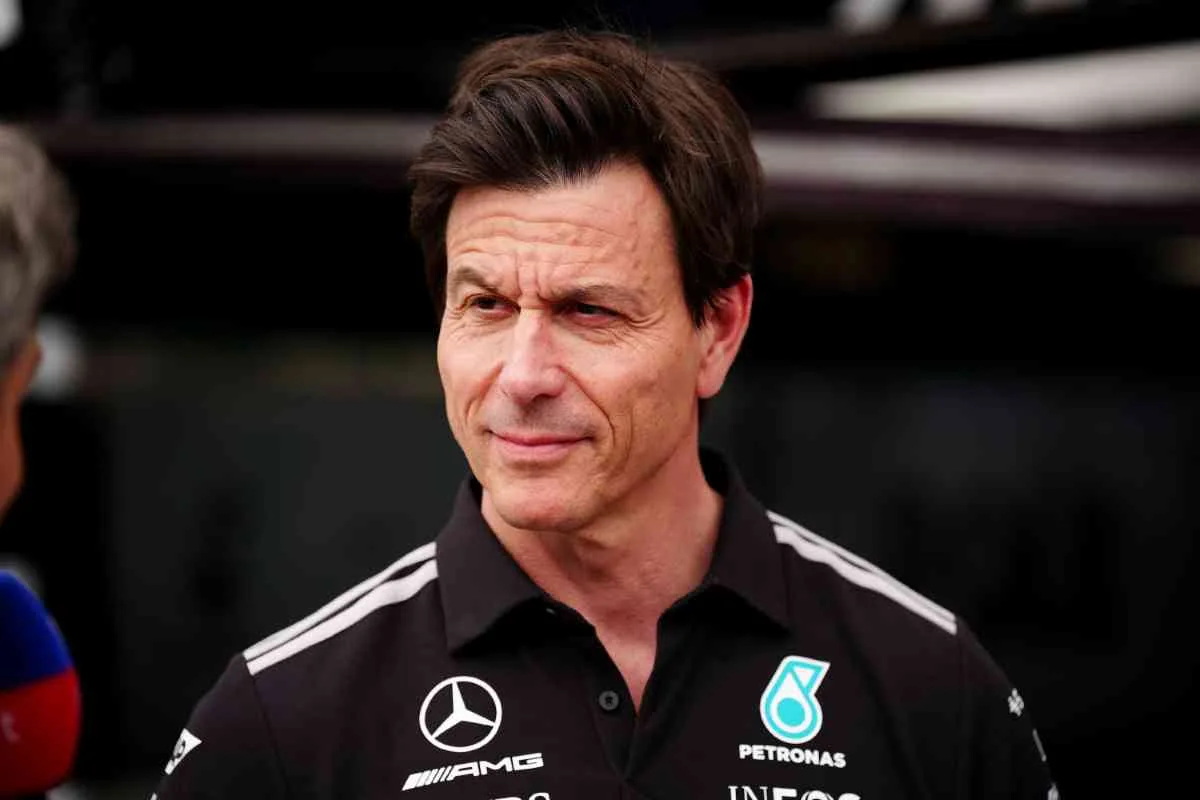
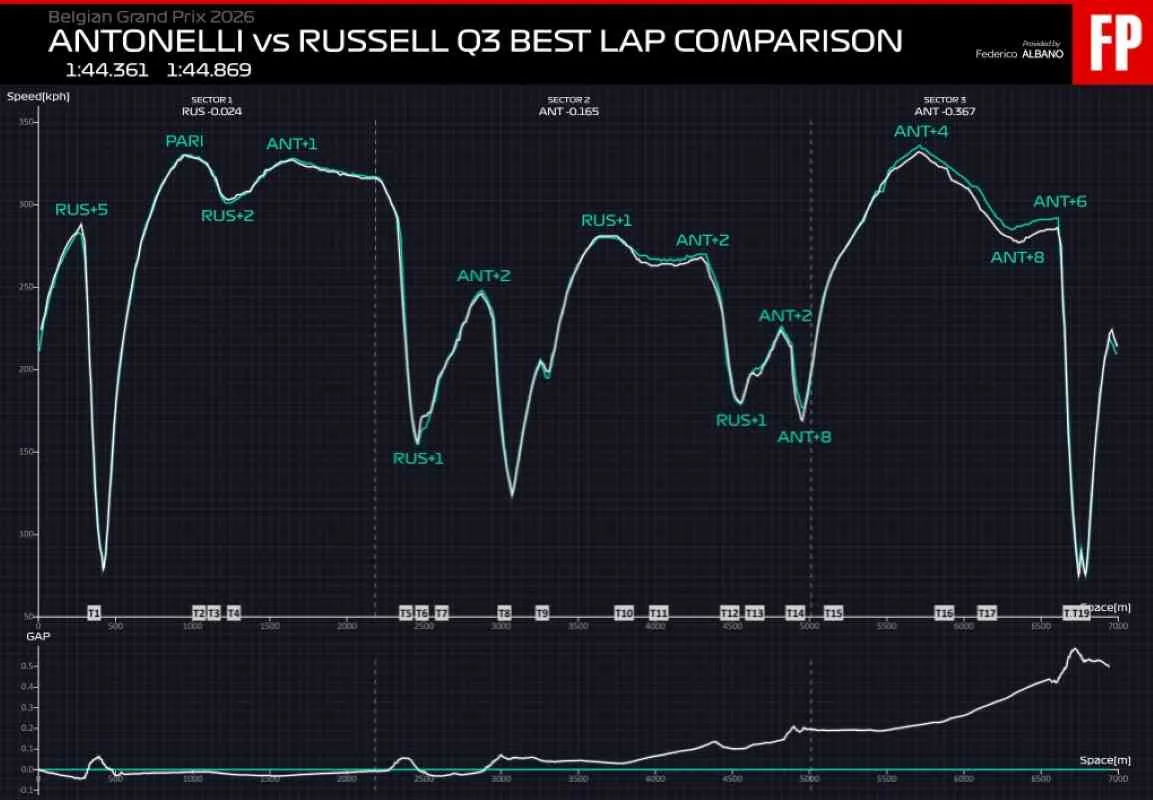
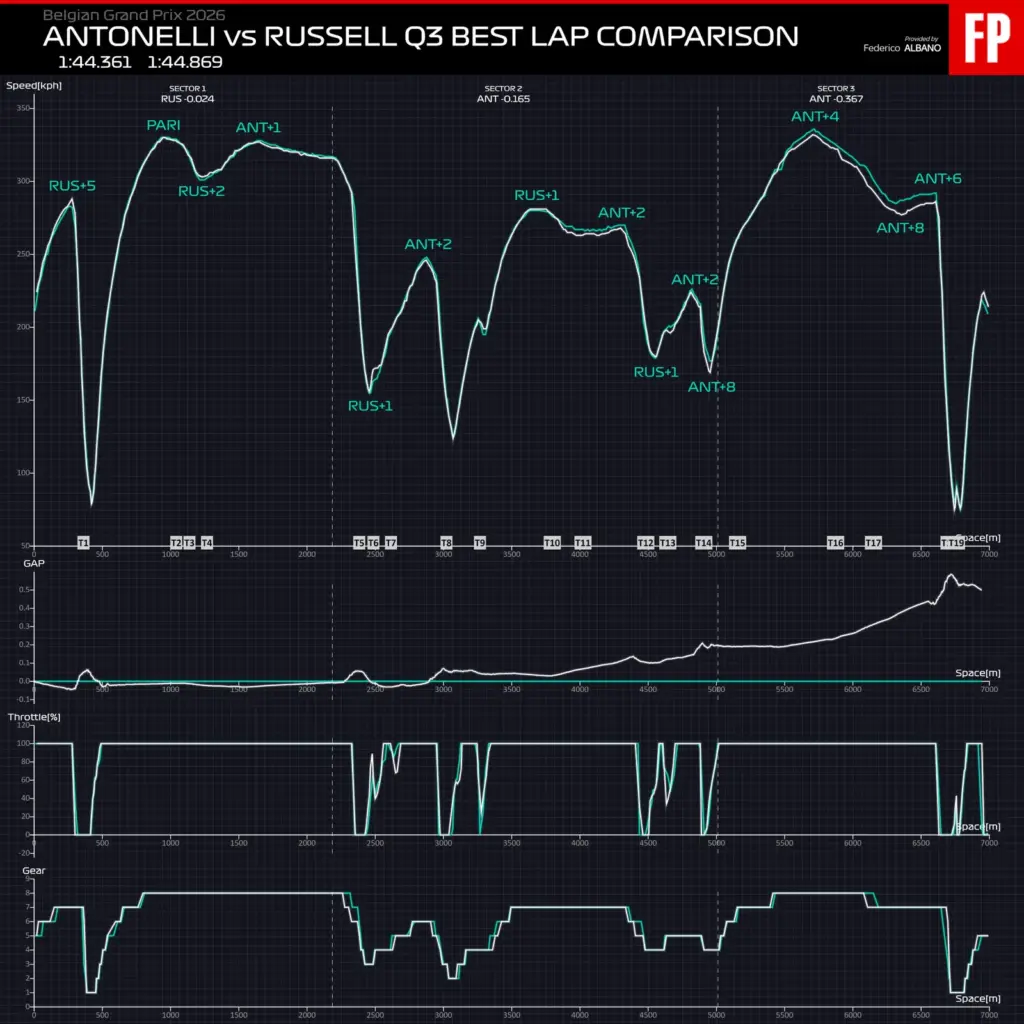
In Belgium, Russell was asked to replicate Antonelli’s driving style, as recounted by Wolff: “George worked diligently on this aspect this weekend, but without solving the problem” and also by Shovlin (head of engineers): “There is a clear loss that we cannot explain with his driving style, he continues to suffer from a non-optimal deployment at the last chicane.” After Turn 15 between Russell and Antonelli in qualifying there was indeed a gap of just over a tenth, only in the final acceleration did the gap widen to more than half a second: in short, all a matter of deployment. A situation that is clearly shown through the telemetry of our Federico Albano.
In F1 there is an untamable AI
A question arises spontaneously, why can’t teams understand where this deployment difference – that is, the management of electrical energy – even between drivers of the same team comes from? Andrea Stella, McLaren team principal, tried to explain it, as he encountered such a difference even between his own drivers: “If we compare Antonelli and Russell, the situation is similar to what we are seeing between Lando and Oscar. If we take their best laps in Q3, Oscar loses time on the final straight and at Blanchimont for reasons that have nothing to do with his driving.”
And all the preparation done in the factory on the simulator often goes to waste already after the first lap of the weekend, because a distribution of electrical energy different from the one expected occurs.
Also Stella: “To make these power units work you don’t operate in open loop mode“, meaning by open loop those systems where an algorithm acts based on previously set instructions and parameters.
In this F1 and in these power units, the software gives feedback and constantly remodulates the electrical management based on the experience gathered on track.
Read more Volkswagen crisis, CEO Blume will meet employees
“A significant part of the controller that manages the power unit is based on real-time calculations“, explained Andrea Stella, going into more detail: “The power unit thus ‘thinks’ and calculates in advance what to do based on… In short, many things happen while the car is moving“.
This creates confusion among the team engineers, who cannot understand what calculations are being made with the car on track.
The confusion also extends to the drivers: “It also affects braking points. If you have an excessive amount of power with a superclip just before, you arrive at braking 10 km/h slower and the braking point changes”. In short, power unit variations also influence the drivers’ references when approaching a corner and these are very small changes that occur even from one lap to another. This happens because the management artificial intelligence has recalibrated itself learning from the immediately preceding laps.
Federico Albano: energy management like tire management?
On a circuit like Spa-Francorchamps, very demanding in terms of energy, with this management the sensitivity of the system and AI to driving inputs becomes even more evident – for example, it can make a difference how much you push before a certain corner.
Federico Albano, on his X account therefore asked himself: “Russell complains and says he loses 0.4 only on the straight while in the corner he would be competitive. Is it true? Yes. There is a but in my opinion: energy management is an integral part of driving these cars, for better or worse. Antonelli has figured out how to do it, he evidently hasn’t and on such energy-demanding tracks he finishes with no margin.
It’s a bit like with tires: a driver is fast in the first two sectors but then arrives in the third and has no more grip. Is it the tires’ fault or the driving? A big mystery…”
So does the driver still count or does AI count more in this 2026 F1?
Read more Peugeot, seven new models by the end of the decade