



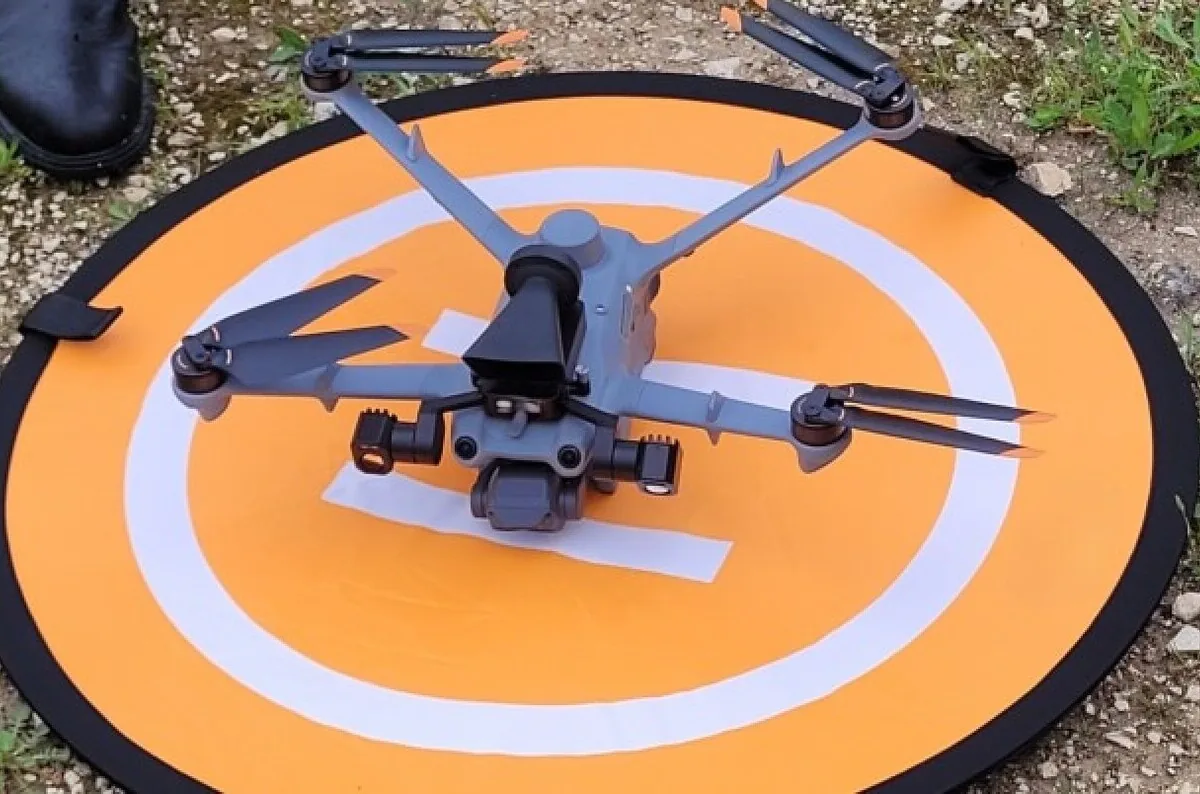
MIT takes a new step forward in innovation applied to road safety with the successful outcome of the VISTA experiment, Visual Assistance from drone to road rescue. The result of a collaboration between the Ministry of Infrastructure and Transport and the Department of Computer Science of the University of Bari Aldo Moro, the project is part of the National Road Safety Plan 2030 and aims to integrate aerial observation technologies, real-time video transmission and artificial intelligence algorithms to enhance the promptness and effectiveness of interventions in case of accident.
Read more Concorso d’Eleganza Villa d’Este, always less time to go
Intelligent drone for road safety
The first operational test, carried out on March 18 in Bari, confirmed the feasibility of the system in realistic simulation conditions, effectively marking an important milestone in the path initiated with the inter-institutional agreement of October 28 two years ago. During the test, the drone flew over the simulation area sending video streams to operational centers. Artificial intelligence algorithms analyzed the scene in real time, identifying the vehicles involved, detecting the presence of people and signaling critical situations. This ability to provide, in the minutes immediately following the impact, a detailed visual and analytical picture makes it possible to significantly improve the management of the so-called golden hour, the first hour after the accident, crucial for the survival of victims and for the effectiveness of rescue operations.
Read more Electric cars, Italy five years behind in the EU
First test in Bari
The integration between aerial sensors, connectivity and automated analysis proved capable of speeding up scene assessment and promptly informing operational decisions such as the dispatch of vehicles and the preparation of access routes. The simulation was attended by project managers for MIT and the University of Bari, together with representatives of the 118 Service, the Bari ASL, the Local Police and the associations “United for Awakenings” and “Live the Road”. Among the innovations that emerged, the drone-person interaction protocol stands out, designed to enable contextualized communications with victims and witnesses and to ensure certified documentation of accident outcomes, with possible applications also in extra-assistance areas such as the reconstruction of dynamics and probative validation.