


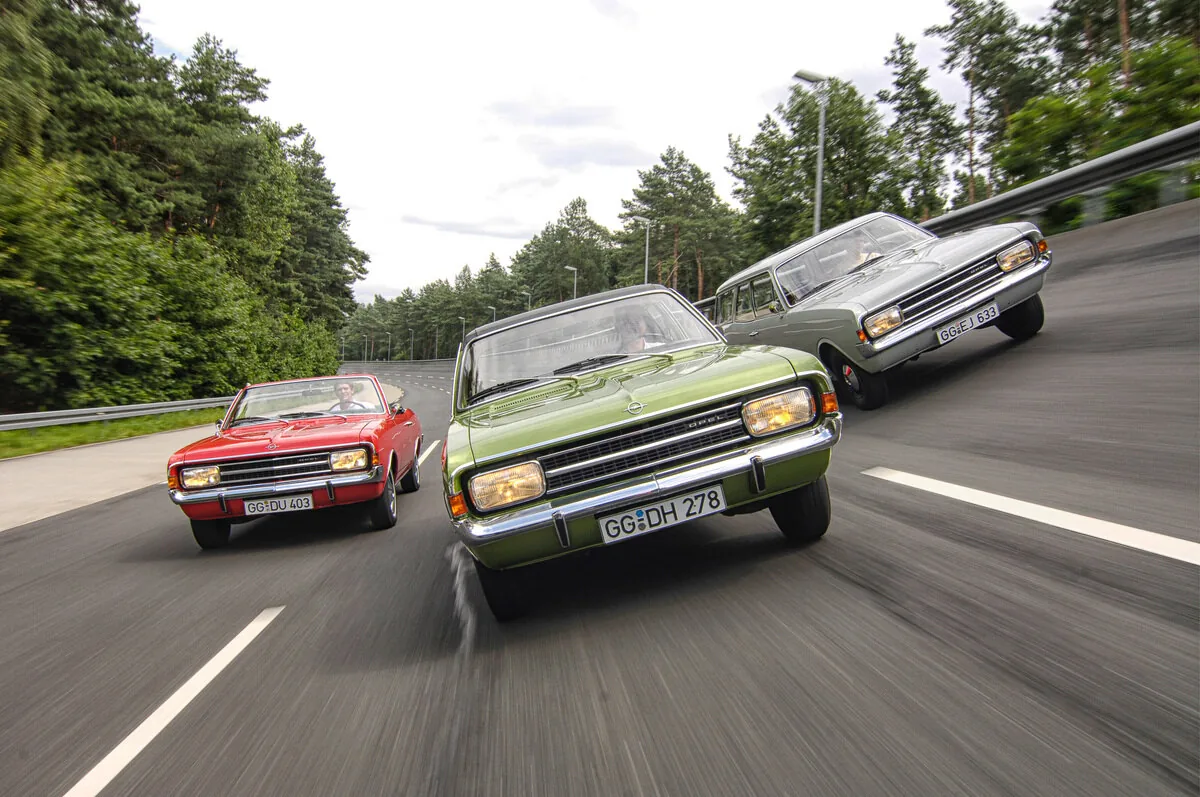
Sixty years ago, in April 1966, Opel inaugurated its test center in Dudenhofen, a facility dedicated to the most rigorous testing of new vehicles. Work began on November 3, 1964, and required a total investment of 20 million marks, covering an area of 2.6 km2. It was crossed by a dense system of tracks: roads more or less narrow totaling 33 kilometers. For engineers, there was no respite even on a 5 km long high-speed ring, characterized by a 33-degree banking along the entire perimeter. Or on the “skidpad,” a large circular concrete area 100 meters in diameter, designed to evaluate steering behavior and accurately measure slip in corners.
Read more Marc Marquez on Instagram: “Today I do nothing but give thanks”
Opel and the Dudenhofen test center
Even then, testing was combined with “real-time” experimentation of projects. Among the first Opels to take advantage of these possibilities were the Rekord-C, presented on August 23, 1966, as well as the Kadett Rallye and Diplomat Coupé, which arrived a few months later. Behind the choice of Dudenhofen, however, there was also an almost accidental story. In the summer of 1963, the municipal administration mistakenly received a letter from Gutervermittlung Lehmann of Bonn: the recipient was another Dudenhofen, the one near Speyer. From the content, the interest of a company in an area of about 300 hectares was still clear, and Mayor Kratz immediately seized the opportunity by writing to Lehmann to clarify the misunderstanding and point out that his municipality had suitable land.
60 years of evolution
At that point, an exchange of correspondence began without the sender revealing the name of the principal: after preliminary contacts, Hans Mersheimer, project manager at Opel and member of the board of directors, was involved, and in the end, Dudenhofen sold 254 hectares of state forest to Opel at 2.30 marks per square meter, with the condition, however, of not cutting down more than 6-8% to preserve the natural environment. Over the years, the test center has continued to evolve, becoming an open-air laboratory where extreme road conditions multiply, but in an amplified version: asphalt, cobblestones, speed bumps, and above all curves of every kind, from very fast elevated sections to more “handling” spaces, designed to reproduce the layout of the Nürburgring Nordschleife.
Read more Marini: “Zarco’s fall reminded me of mine at Suzuka, the leg was in very bad shape”
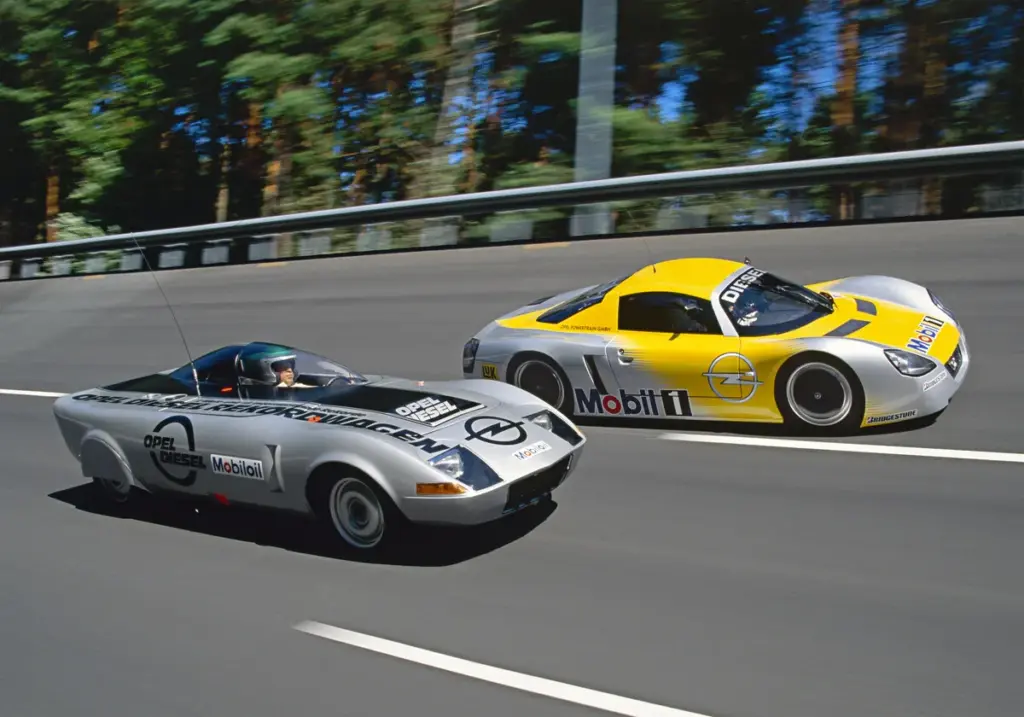
Not just testing
Not just testing: Dudenhofen also hosted records with Opel ElektroGT and Diesel GT prototypes in 1971-1972, and then again in 2003 with the Opel Eco Speedster. Furthermore, in later periods, a redevelopment and expansion of the facility was initiated, aiming to increase the length of the tracks and build a new “skidpad2” with a variable diameter between 30 and 300 meters, designed to also support autonomous driving. Unlike a circuit born in 1917-1919 and often linked to competition, Dudenhofen has never hosted motor races: its vocation has remained that of testing, development, and the most rigorous experimentation.
Click here to add Formula Passion as a preferred source on Google Discover: you will find our content more easily!