




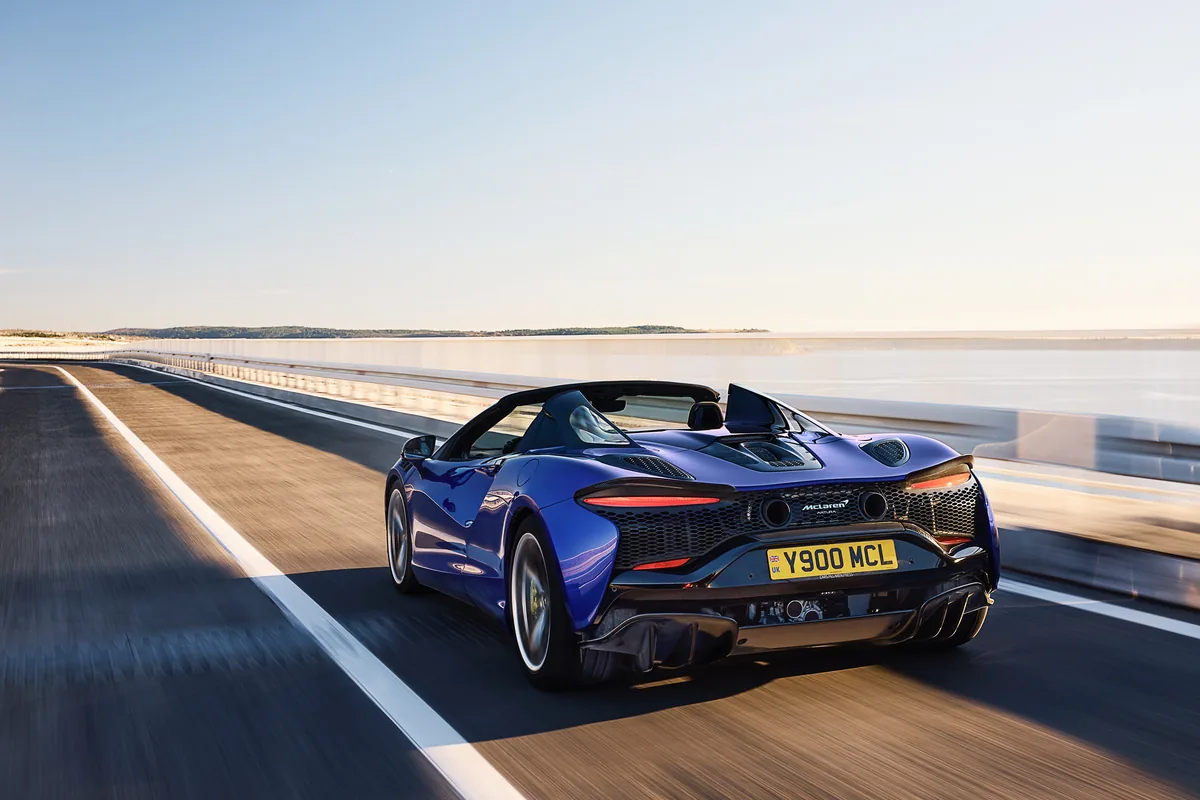
This summer McLaren will preview its first new car since the merger with the start-up Forseven. Marking the beginning of a new phase for the historic Woking-based company. The operation was made possible by the entry of CYVN Holdings, the Abu Dhabi sovereign wealth fund that invested approximately 1,5 billion pounds. And it has combined the resources and expertise of McLaren and Forseven under the leadership of the start-up’s former CEO, Nick Collins. According to what was revealed by Autocar, the first public revelation of the product plan was originally scheduled by the end of 2025, but it was postponed for strategic reasons.
Read more Audi, Binotto takes full control: “But I need someone to support me at the GPs”
McLaren prepares the range of the future
Collins assured that from this summer the company will begin to unveil the new course, coinciding with the start of deliveries of the hypercar W1, heir to the legendary P1. Rumors speak of a much broader product strategy compared to the traditional focus on mid-engine two-seater supercars. McLaren plans in this sense to launch several models by 2030. It seems that full-size cars of the entire future range have already been shown to dealers. While not anticipating specific details, Collins hinted that the summer preview will offer a clear vision of the new cars. Although probably more in the form of concepts or mock-ups than ready production models.
Read more New facilities at Melbourne’s Albert Park: works in progress until 2028
Confidence in internal combustion engines
Furthermore, the launch of the W1 will act as a catalyst for subsequent communications and deliveries. The massive funding from CYVN should allow the company to diversify its offering well beyond traditional supercars, regaining commercial momentum and credibility after years of difficulty. A key element of the announced strategy, however, is the technological choice: McLaren will in fact continue to focus on combustion engines for all models planned in the plan until 2030. Collins explained that an electric car will only be developed “when our customers want it”, arguing that the market is not yet ready for a complete transition to electric for the company’s target.