



Start below expectations
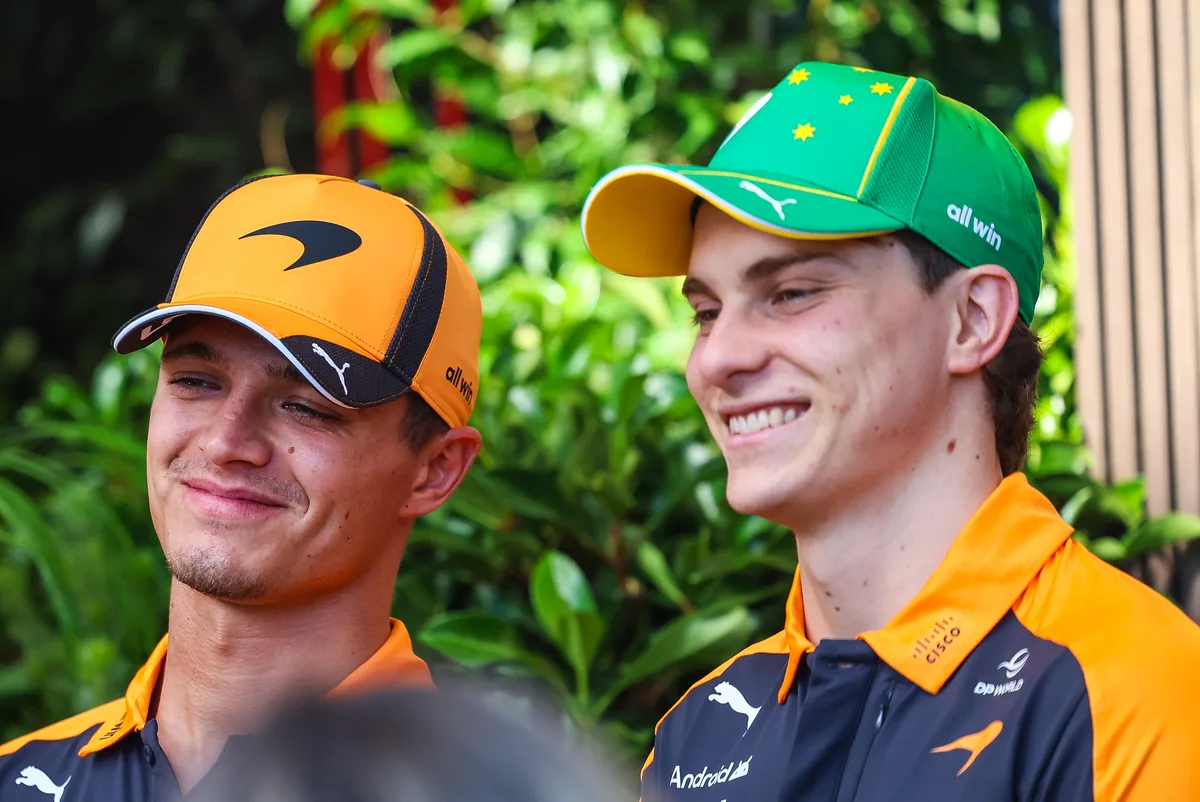
Awaiting their return to the track for the Miami Grand Prix, McLaren conducted two days of Pirelli tests at the Nürburgring with both of its drivers, who had the opportunity to reflect on the first three races of this season. The first to comment on this start was Lando Norris, the reigning world champion who appeared to be in clear difficulty, with two races finishing in 5th place in addition to not participating in the Chinese GP: “It hasn’t been the start to the season we hoped for, and we’ve had some difficult weekends so far – commented the Englishman to the team’s official microphones – coming into the year as reigning champions, both as a team and as a driver, the expectations we set for ourselves were high. We want to achieve pole positions, win races, and be at the top of both championships, but that’s not the situation. We are not in a disastrous position, but we definitely need to work to get back to fighting for victories, and even then, we need to continue to strive to ensure we have a car capable of winning every single weekend. We’ve also had some issues that certainly haven’t helped the development of these cars. One thing we understood very early on is that time spent in the car and accumulated laps are fundamental to learning how to make the most of the car, and particularly the power unit. Even tiny details make a big difference. If we add to this the fact that we didn’t start the Chinese Grand Prix and didn’t have enough track time during free practice in Japan, it’s easy to see where we are lacking. However, we are using this interval between Japan and Miami to do everything possible to fill these gaps in our understanding. We are dedicating a lot of time to the simulator and have returned to the wheel for a tire test at the Nürburgring. Although the test is focused on next year’s tires, time spent behind the wheel certainly can’t hurt.”
Read more Buemi: “Fantastic to win at Ferrari’s home in the 50th race out of 100 starts”
Difficulties also analyzed by Oscar Piastri, who finished 2nd in Japan but after two races, in Australia and China, which he did not take part in for different reasons: “I think it’s fair to say that the start of the season has been more complicated than we wanted. Coming into this year as World Champions, we had made it clear that there would be a reset for the entire grid, but we would be lying if we said we weren’t hoping to be closer to the front. Adapting to this new generation of cars has been challenging, as expected, and we’ve seen how important track time is for this purpose. Not starting in the first two races meant we lost significant and essential learning time, which is frustrating. We’ve been good at making the most of these weekends, which contributed to the excellent performance in Japan, which was one of my best weekends. It showed that when we start well, we are truly competitive! We knew Mercedes and Ferrari would be strong this year, but I believe we made a positive step forward in Japan. We have a lot of work to do if we want to be at the front, but I know this team has the ability to grow throughout the year, and I look forward to seeing what we can achieve when we return to racing.”
2025 and 2026 Cars: The Major Differences
2026 thus started uphill for the Woking team, with the drivers at the wheel of single-seaters that comply with the new, criticized technical regulations. Differences and greater difficulties compared to the 2025 cars were confirmed primarily by Norris: “These cars are certainly very different from last year’s, and the differences are quite complex – he added in the interview – some I like, others I’ve found a bit more difficult to manage so far. Last year we had enormous downforce, the cars really ran on rails, and when we tuned them, they reached a speed that seemed infinite. However, when you lost grip, it was over: you lost time, at best, or ended up in the gravel. This could be quite frustrating, because you didn’t feel like you could make a difference as a driver; you needed the car under you and had to make sure you stayed within the car’s limits. This year, the cars have much less downforce and are much more on the limit. It’s easier to control slides, and the slightly lower grip makes them very exciting to drive. As a car, I really enjoy driving them; they remind me of some of the cars I drove in junior categories, and I say that as a big compliment, you really feel like you can make a difference. I’ve already said that it’s not the car that’s causing me problems, but the part behind it that I don’t like as much: the power unit regulations. In Japan, the battery deactivation system activated, even though I didn’t want it to, and as a result, I had to overtake Lewis. This made me an easy target on the next straight, where I actually wanted to use the battery. For me, this means taking too much control away from the driver, but I know that the FIA and all stakeholders in this sport are looking into the matter: there has been good dialogue with the FIA on this topic, so I am confident that a solution will be found by the time we return to racing in Miami. An important point, however, is that we are happy that fans enjoy racing, because ultimately, we are an entertainment sport. Fans want to see us on track fighting each other and pushing the grip to the limit. We must avoid, as much as possible, artificial elements in racing, but we are not that far from achieving this goal and having a truly exciting era of racing.”
Read more Kobayashi: “The TR010 is competitive and gives us confidence for the rest of the season”
Assessments similar to those of his Australian teammate: “Overall, these cars are very different from any other car I’ve ever driven. But we knew that ever since the new regulations were announced. This diversity represents a new challenge for us drivers, which isn’t necessarily a bad thing. One of the main differences compared to 2025 is that the cars are lighter, shorter, and narrower. This means they can be a bit more agile and more enjoyable to drive in low-speed corners, but the issues related to dirty air persist and partly neutralize these advantages, as following opponents remains a problem. Furthermore, as a driver, there are many more aspects to consider on track. You have to think more tactically about different things, especially regarding power management. These cars are also more unpredictable. You will have noticed that power spikes often occur, leading to unexpected car behavior. This is just one of many aspects that need to be analyzed and modified in the near future, as also highlighted by some incidents that have occurred so far this season. I know we are working closely with the FIA, F1, and other teams to ensure these aspects are taken into consideration, in order to ensure safe, but also fun and exciting races for everyone.”
Read more Pier Guidi: “The Virtual Safety Car made us lose the first position”