




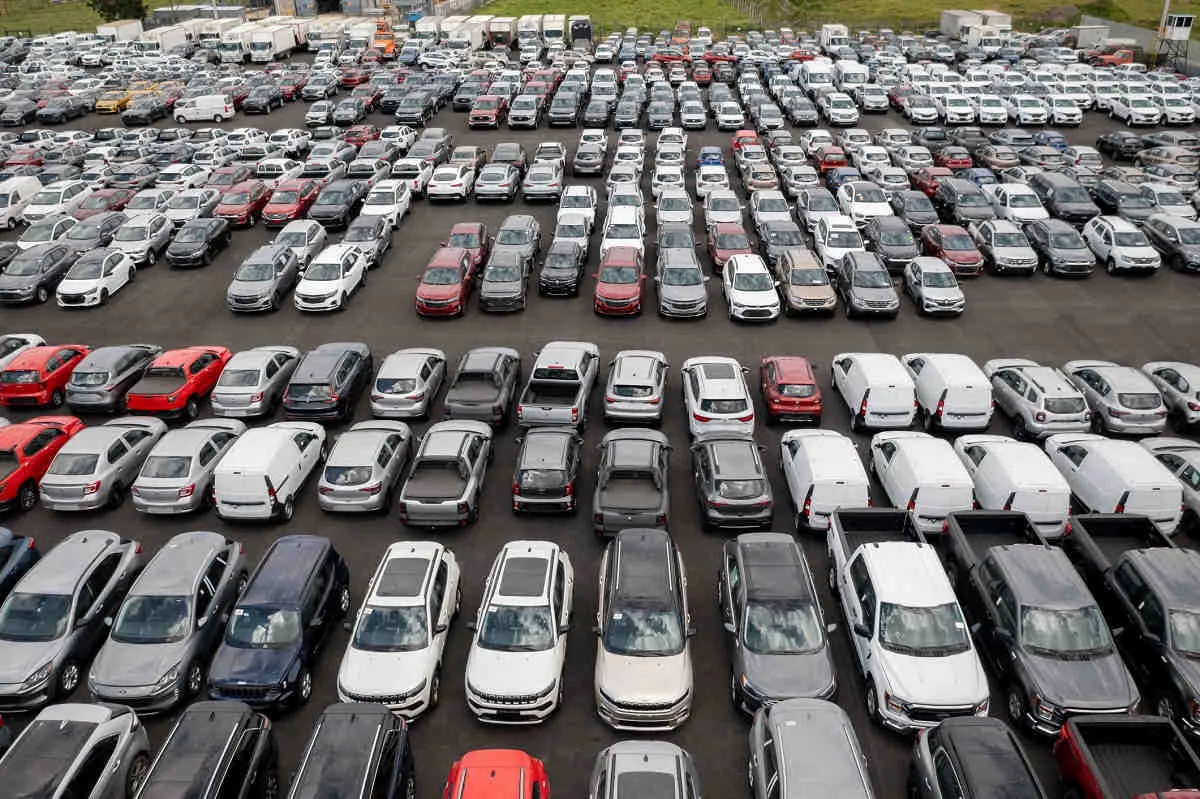
Italy confirms its European leadership in car density: 701 cars circulate for every thousand inhabitants and the car fleet exceeds 41,3 million vehicles, with a constant increase since the beginning of the 2000s. According to the research office of the Cgia of Mestre, in the last decade the number of cars has grown by over 4,2 million, equal to an increase of 11,5%. Strong differences emerge at the territorial level: the province with the highest motorization rate is Florence (877 cars per thousand inhabitants), followed by Isernia (850), Catania (811), Frosinone (801) and Reggio Emilia (793), while Trieste (579), Milan (571) and Genoa (511) record the lowest values.
Read more Ducati sinks in Thailand, Tardozzi: “We must recover quickly”
There are really too many cars circulating in Italy
A relevant element of the Italian picture is the age of the fleet in circulation: almost one car in four (24,3%) is more than twenty years old, a percentage second only to Spain (25,6%) and much higher than France (12,5%) and Germany (10%). This aging carries implications for safety, emissions and consumption, in addition to influencing management costs for owners and the priorities of renewal policies and incentives. On the other hand, the average age of cars contributes to maintaining demand for repairs and spare parts, although it is not the only factor at play.
Read more Bezzecchi’s revenge: “Important to react to yesterday’s mistake. The bike was perfect”
Independent workshops on the decline
Despite the large number of cars, the independent workshop sector is shrinking: between 2014 and 2024, car repair activities fell from around 83.700 to just over 75.200, a decrease that the Cgia interprets as a structural transformation and not a mere cyclical fluctuation. The causes are obviously multiple: increasing management costs, the growing technological complexity of vehicles which requires electronic and digital skills in addition to traditional mechanical experience, a lower interest of the new generations in manual trades and the fact that modern cars, in many cases, require less routine maintenance.
Read more Acosta has no illusions: “There will be weekends where we will struggle more”