







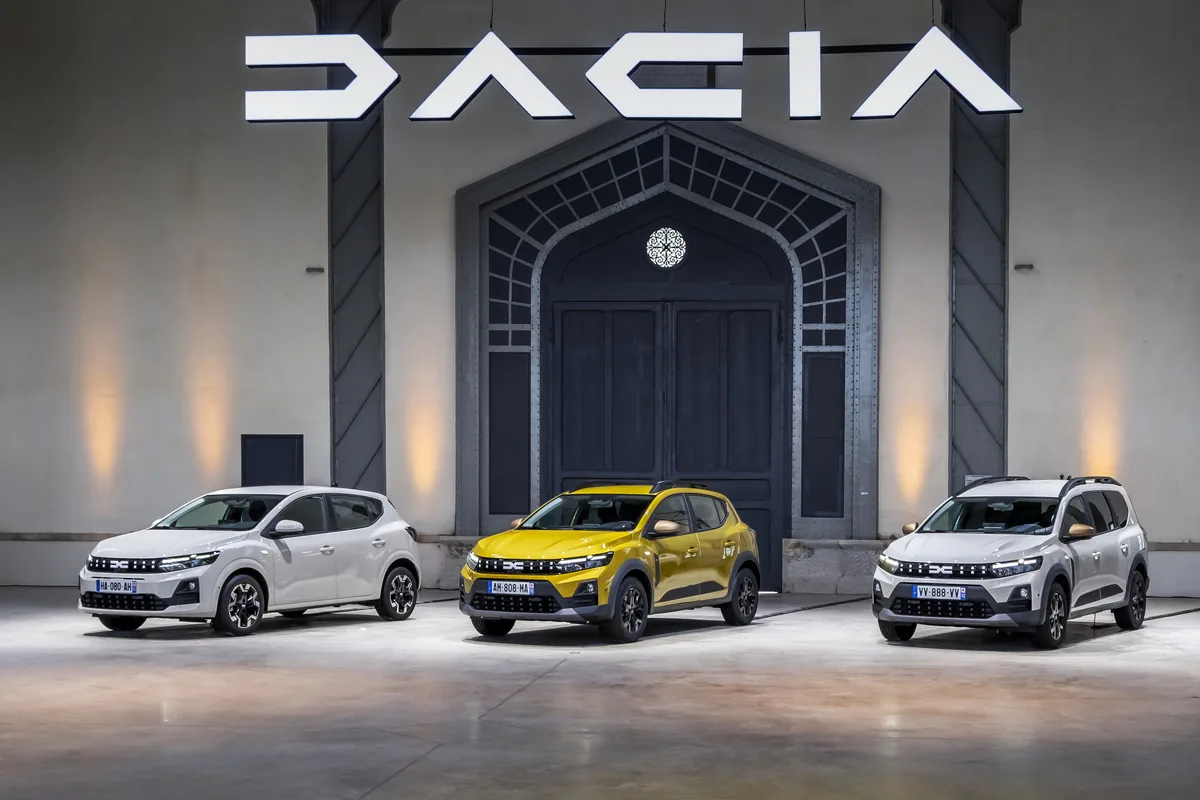
Dacia aims to enter electric mobility decisively and confidently with an ambitious plan from now until the end of the decade. This plan includes four new electric vehicles by the end of the decade. The first of these would be ready by the end of the year. It should arrive as a 100% electric A-segment city car, built on Renault’s AmpR Small platform. The car, Carscoops reports, would have been developed in less than 16 months and could arrive with a price below the 18,000 euro threshold.
Read more Dall’Igna targets Jerez: “The race? No. The Monday test is fundamental”
New Dacia electric car by the end of the year
Recently, a prototype of the car was spotted testing in Europe with camouflage that seems to want to hide some key details. Even with a more “Dacia” interpretation, the new 100% electric model clearly appears to be a reworked version of the Renault Twingo E-Tech, from which it inherits many technical solutions and proportions. The most evident change would be the front. The Romanian manufacturer would introduce more traditional headlights, a different front bumper with a large lower air intake, and more robust side protections. The rear would also change, showing new light clusters positioned higher than the base, along with a specific bumper and a more conventional tailgate.
Renault Twingo electric legacy
Regarding the interior, the available information comes from a single image, which is why many unknowns remain. In particular, a floating infotainment system and a steering wheel with the Dacia logo are visible. However, it is plausible that the instrumentation will follow the Twingo’s layout, with a 7″ digital instrument cluster and a 10″ central display. On the practical front, a modular interior is expected with rear seats sliding up to 170 mm to optimize space between passengers and the boot: in “everyday” configuration, up to 360 liters would be available, which would become over 1,000 liters by folding down the seats.
Read more Stoner: “Nobody has ever managed to exploit a weakness of Marquez”
Powertrain and battery
The powertrain will also likely remain similar: an electric motor of approximately 80 hp (60 kW) and 175 Nm, with 0-100 km/h acceleration in 12.1 seconds and a top speed of around 130 km/h. Powering it all is a small 27.5 kWh lithium iron phosphate battery pack. The declared WLTP range would be around 263 km: not huge, but consistent with urban use and the goal of keeping costs and purchase price as low as possible.
Read more Vinales out, but Pol Espargarò also gets injured: KTM Tech3 with only Bastianini at Jerez