


Graphics, controversies and superclipping
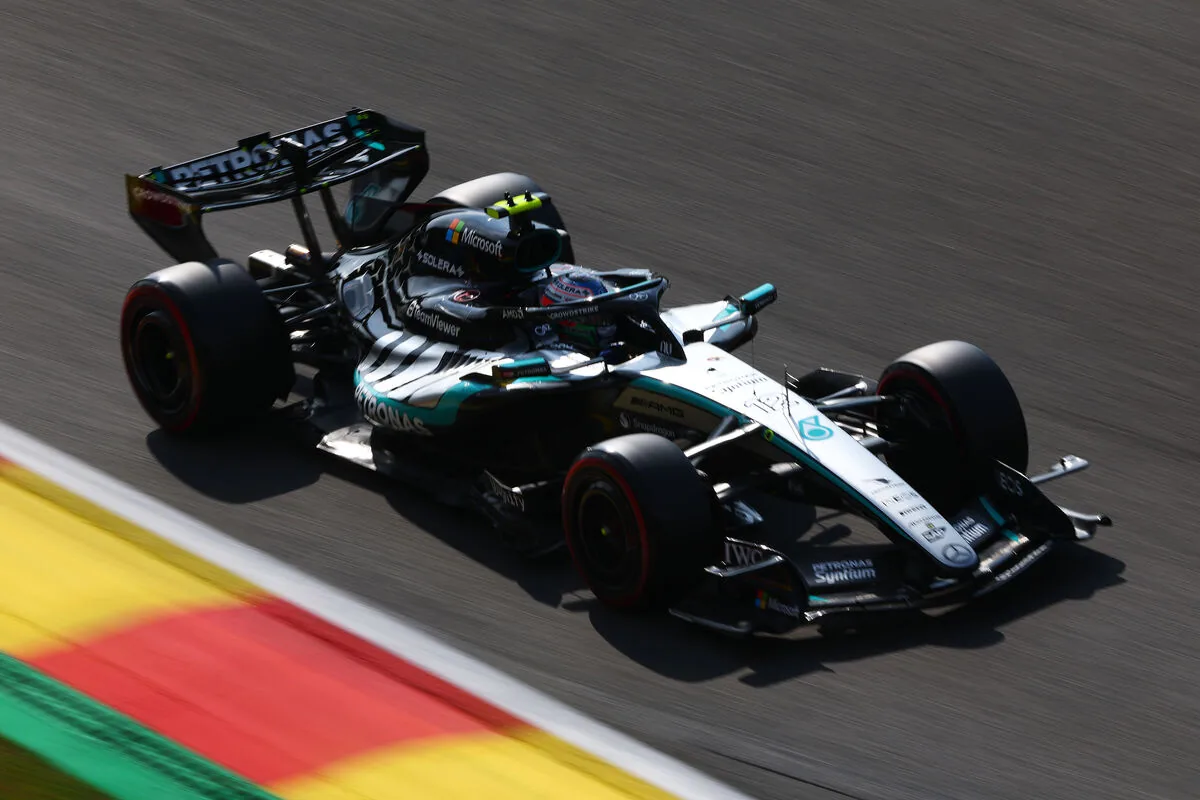
There was a long discussion during the Spa weekend about the impact that this new technical regulation has on tracks of this kind, old style and very fast, with long straights and few zones to recharge the battery. The pole lap was four seconds slower than that of 2025, as was the fastest lap in the race, but even more than the time reference, what made many fans frown was the evident drop in speed that the cars suffered on the long Kemmel straight and then in the Blanchimont section up to the Bus Stop chicane, despite keeping the throttle wide open. This is because the battery boost running out caused the so-called phenomenon of superclipping which had already been seen at the start of the season on tracks such as Melbourne and Suzuka.
Read more Peugeot 208, thermal versions alongside the EV
During the weekend, however, F1 often (fortunately?) avoided showing on-board footage with the speedometer in the most ‘critical’ sections for this phenomenon. An Instagram channel, Debrief Race, revealed how massive the speed loss was – despite keeping the throttle wide open – in the two main stretches of the circuit. The reference taken was what in theory should be the maximum example of speed of the whole weekend, that is the pole position lap set by Andrea Kimi Antonelli on Saturday, with a time of 1:44.361.
View this post on InstagramA post shared by Debrief | Racing Data & Analysis (@debrief.race)
Speed plummeting while staying flat-out: what a bad spot for F1
Starting – obviously – with the maximum possible battery, Antonelli already uses up a good part of it on the Kemmel straight, where the speed drop with the foot on the gas is 38 km/h; the situation however worsens at Blanchimont, where reconstructions estimate that the battery of the Mercedes #12 ends up running out. Despite staying ‘flat out‘ the speed plummets from a maximum of 336 km/h down to 285 km/h. A drop of 51 km/h, which happens while still ‘fully’ on the accelerator.
Read more Official, in 2027 David Alonso will be in MotoGP with Honda, but the team remains a mystery
These figures were also confirmed by our Federico Albano, who with his telemetry assured us that the order of magnitude of superclipping was this throughout the weekend.
A heavy slap to the image of F1, which confirms how problematic the current technical regulation is and how limiting it becomes for the drivers themselves, who have repeatedly explained that they are anything but happy to have to deal with this type of phenomenon. At least for the current season, however, it is now clear that there is no viable solution. And concern is growing for tracks such as Monza or Las Vegas, which have fast straights as their main characteristic.
Read more Red Bull tries again: in Hungary the Macarena wing will arrive ‘encore’