






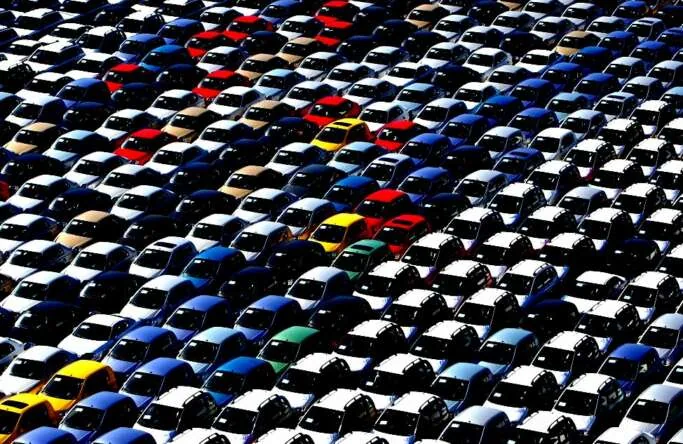
August, in Italy, is the month when the country pretends not to exist. Cities empty out, dealerships close around Ferragosto with the same solemnity with which factories used to close, and the silence of the streets seems made to remind us that the car, the national object par excellence, can also rest. Then, in the last three working days, the usual little administrative miracle happens: more than one in two cars is registered in a rush, as if the whole month had been just a bureaucratic preamble. 53.3 percent of August 2026 registrations arrived on the 27th, 28th, and 31st.
Read more Yamaha responds to Quartararo: “Take example from Miller, who always gives his best”
With one more working day than last year — twenty-one instead of twenty, an accountant’s detail but decisive — the eighth month closed with growth: plus 3 percent for cars, plus 4.5 percent for vans. For commercial vehicles, it is the first positive sign of 2026. Volumes remain the usual, very modest, like a semi-desert beach. But even on semi-desert beaches, if you pay attention, you understand something about the country.
The approach changes
The first thing you understand is that Italians are slowly stopping buying cars as if buying a nice dress. Private buyers still hold the largest share, almost 55 percent, but grow only by 2 percent, after months of galloping at 11. Some will say the incentives at the end of 2025 ended and the deliveries of electric cars booked when the state still distributed discounts as if it were Christmas. That is true. But beneath the numbers, there is also another, older fatigue: the idea that the car must be mine, with the registration document in the drawer and the smell of new plastic in the living room on wheels, is giving way to renting.
Renting takes off
Long-term rental grows by 10 percent, short-term even by 58. Among vans, long rent, in August, became the first channel, surpassing companies that buy on their own. There is something important and a bit sad in this overtaking. For decades, the van was the extension of the craftsman’s body, the company, the professional who “needs the vehicle to work.” Now the vehicle for work is rented, like renting an apartment in July. Italy learns late, but learns, that owning is tiring.
Self-registrations, those somewhat fake plates that dealers and manufacturers stick on to boost volume, have dropped by 6 percent. It is good news, if you like small news. It means that, at least for one month, the market pretended a little less. Then you discover that BYD, Jeep, Alfa Romeo, and Citroën continue to use that channel with some boldness, and you come back down to earth. The country is like that: even when it improves, it improves halfway.
On the fuel front, the show is that of a transition that does not have the courage to call itself a revolution. The “real” hybrids — full and plug-in — have surpassed mild petrol hybrids. Almost twenty thousand registrations against eighteen thousand. Pure electric vehicles approach five thousand units, plus 48 percent, and reach 7.1 percent of the market. It’s not Norway. It’s Italy, which, after swearing for years not to want the plug, begins to tolerate it. Meanwhile, diesel has fallen below 10 percent. Not with a crash, but with that somewhat embarrassed discretion with which a family stops smoking. LPG holds around 9: gas, in Italy, is like parsley. It’s not news, but it’s always there.
And Fiat. Fiat in August is up 21.4 percent and remains first, with 11 percent of the market. It is the most Italian figure of all. While groups think in platforms, in Chinese, in electric, in Stellantis’ share which in August falls below 30 percent, the Panda — and now also the Grande Panda — continues to do what few in this country know how to do: be necessary. Volkswagen is second, Toyota and Dacia fall, Renault catches its breath with the new Clio. Then come Kia, BYD which triples, MG, Omoda, Jaecoo, Leapmotor. The Chinese do not ask permission. They enter, sit down, and at some point, they are in the rankings.
Lancia disappears from the Top 30. Alfa Romeo remains below a thousand cars per month. These are two sentences that, in another country, would be just statistics. Here they are autobiography. Italy’s car industry is full of names that once meant elegance, speed, pride of the workshop, and today mean catalog. Jeep in difficulty, Ford in difficulty, Hyundai in difficulty. It is not the collapse of an era. It is the dull noise of an era changing rooms.
From January to August, new cars were more than 1.1 million, ninety thousand more than last year. The year-end forecast remains the same as always, cautious like a tax clerk: 1,605,000 registrations, plus 4.5 percent. Vans, instead, remain in the red cumulatively: almost 111 thousand, six and a half thousand less. Here too, renting pulls, companies buy less, craftsmen stay still. Work, in Italy, has always had a complicated relationship with the means of work.
The models read the national character better than an essay. Petrol winners are still Panda, C3, Avenger, Grande Panda, 208: the Stellantis Group like an old relative occupying the whole sofa. Among diesels, Germans and a bit of Kia. Among full hybrids, Toyota and then, suddenly, Omoda and MG. Among plug-ins, four out of five are Chinese. Among electrics, Leapmotor, BYD, the 500e, again Leapmotor, and a BMW for decorum. At LPG, Sandero and Duster, that is the province that has no intention of making a revolution. Among vans, Scudo, Doblò, Ducato, Daily, Sprinter: diesel leaving cars and stubbornly taking refuge in work.
BYD is scary
BYD registered almost 77 percent of its cars last minute. Citroën and Jeep over 70. Jaecoo, Dacia, and Mercedes, instead, seem like people who really go on vacation and register when it happens. This too is a mirror. There are those who organize the month and those who fix it at the last minute, between a beach umbrella and a paperwork at the Motorization Office. In any case, BYD is scary: in August it registered 2,580 cars, equal to a 3.7% share, with a growth of 194.9% compared to the same month in 2025… A result that brings, for the fourth consecutive month, the brand into the Top 10 of the Italian market. The growth trend emerges more clearly observing the year-to-date; in the first eight months of 2026 BYD totals 36,539 units, almost three times those of the same period in 2025, for an increase of 194.6% and a 3.2% annual share.
In the end, what remains of August is an impression: the Italian car is no longer the totem it once was, but it is not yet a household appliance on four wheels. It is a middle way: a bit ownership, a bit service, a bit expired incentive, a bit hybrid that does not know if it is the past or the future. Fiat resists. Lancia evaporates. The Chinese advance. Diesel withdraws with dignity as a conceptual employee. And the country, between one more working day and three days of rush for registrations, continues to do what it does best: move, even in August, as if movement were a form of identity.
Read more Aston Martin: Newey holds 4.7% of the shares and cannot leave before 2030