

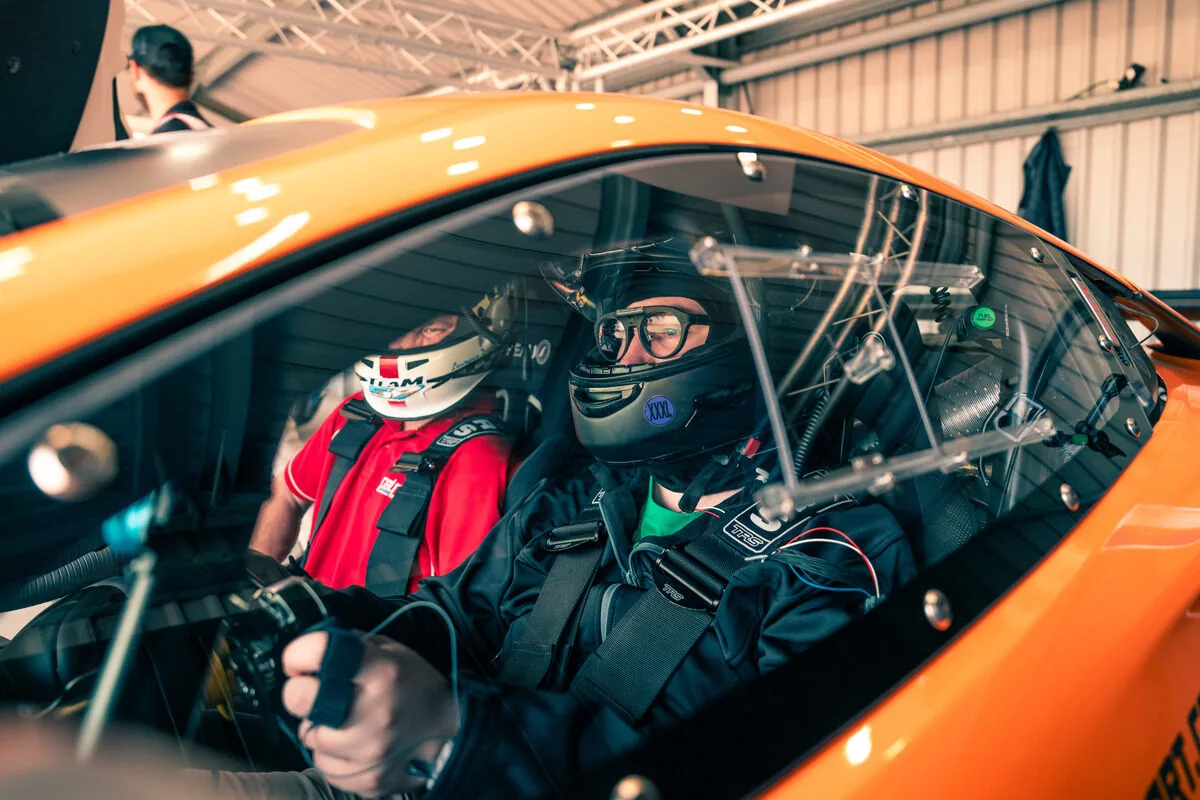
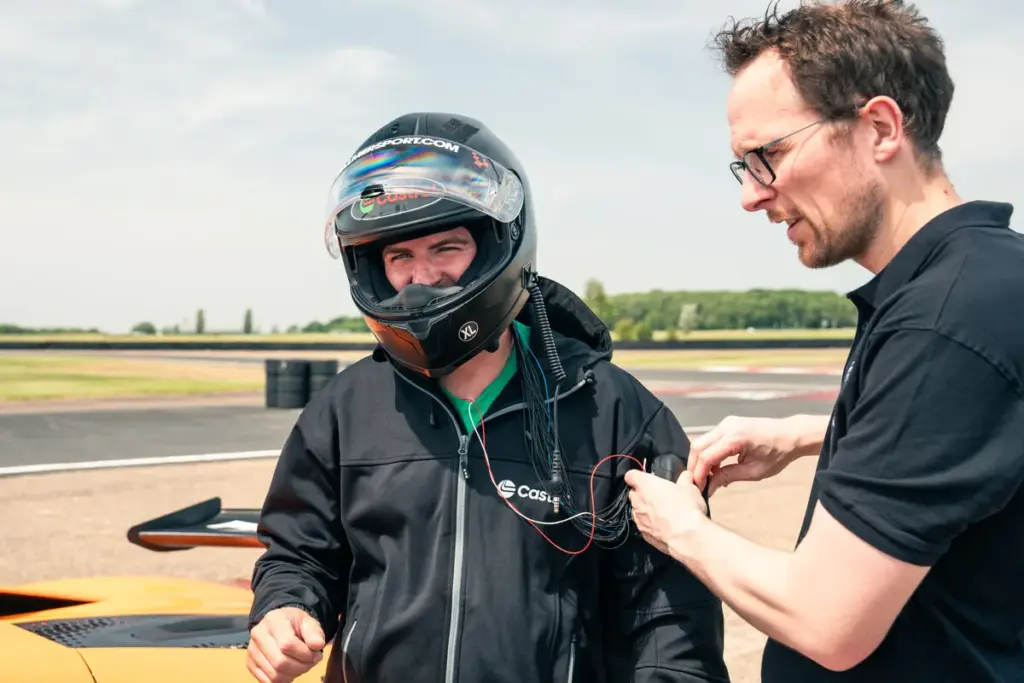
Thrill of Driving. The thrill of driving. That’s what Castrol calls it, which conducted a study to understand the factors that affect the driver in this regard. There are three key ones: visceral, intellectual, and emotional. The study participants wore devices to monitor brain activity, eyes, heart, and skin during five different driving experiences, all carried out on a private circuit. And the results have been released these days.
Read more Verstappen, show event at Silverstone on September 16: on track with karts against 100 opponents
The thrill of driving according to Castrol
Fundamental element: the intense emotion experienced does not come from speed, but from concentration. The data indeed show that it manifests at the moment when the driver reaches maximum attention, an experience involving the brain, heart, and eyes. The collection and analysis of the large amount of neurophysiological data was entrusted to Brainbox, a British company specialized in neuroscience. In this sense, the analysis was multimodal and involved the detection and cross-comparison of various neurophysiological indicators related to visceral, intellectual, and emotional responses.
Between off-road and track
Specifically, participants drove off-road at low speed in a Land Rover Defender, on a course specially designed for off-road driving, with steep climbs and descents, water crossings, and steering precision tests. Additionally, at the wheel of single-seater karts on a dedicated karting track, they drove on a narrow and winding course under controlled conditions. Then they drove a McLaren Artura GT4 on a closed race circuit, for non-competitive driving in a race-prepared vehicle, under controlled conditions and under professional supervision. Finally, on a closed race circuit, they both drove an open-cockpit race car and experienced a passenger ride alongside a professional driver always at the wheel, pushing the vehicle to the limit of its performance.
Concentration is everything
According to Castrol, the test that recorded the highest thrill level was the one where participants drove a McLaren Artura GT4 race car. “It is not a single parameter that defines excitement. Rather, it is the combination of multiple factors, which reach high levels and converge: the individual experiences a state of increased neurophysiological activation, perceives full control of the vehicle, and is immersed in the experience, both cognitively and emotionally”, commented Dan Phillips, Co-founder & Director of Brainbox.
Click here to add Formula Passion as a preferred source on Google Discover: you will find our content more easily!
Read more Di Giannantonio: “Aragon is not Silverstone, but a year ago in the tests we had turned the corner”