



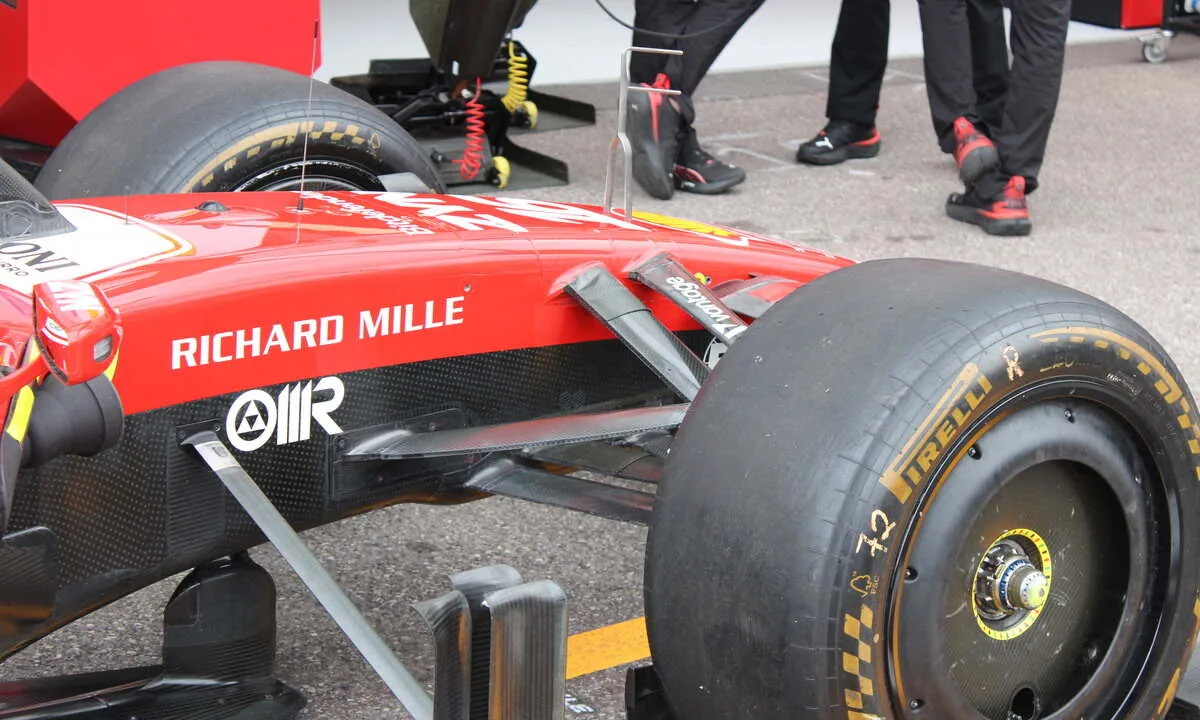
Changes to the power units are not the only novelty in the technical regulations for next year. The Federation has decided to revise the section concerning suspensions, adding several articles to clarify what is allowed and what is not. The FIA rarely intervenes without a valid reason, fueling suspicion that some team has developed one or more solutions that were preferred to be curtailed.
Read more Hamilton: “At Spa there will be long straights, I will have to do better than at Silverstone”
How the regulation changes
The first version of the 2027 technical regulations contains almost an entire extra page in the section concerning suspensions. The Federation had already wanted to simplify the mechanical part with the 2022 regulations, banning, for example, inerters and gas springs. For next year, however, the FIA has decided to explicitly prohibit any component whose response does not depend on the speed or position of the suspension rods. Specifically, elements whose behavior is influenced by a specific excitation frequency, the car’s accelerations, or the acceleration of the suspension group rods will not be allowed.
The FIA has adopted a decidedly strict approach especially regarding the shock absorbers. For elements that react to the movement of the individual wheel, for example, a maximum damping coefficient of 10 will be provided within a precise range of compression or extension speeds of the components. Anti-roll bar shock absorbers, on the other hand, must have a damping coefficient that increases as the ride height decreases and does not exceed double the initial value. Finally, the Federation has established the obligation for teams to provide all necessary documentation to demonstrate compliance with the new technical regulations, including graphs with the damping coefficient curves of the shock absorbers used.
Read more Ferrari Luce, the specimen with chassis number 0 at auction
Possible reasons
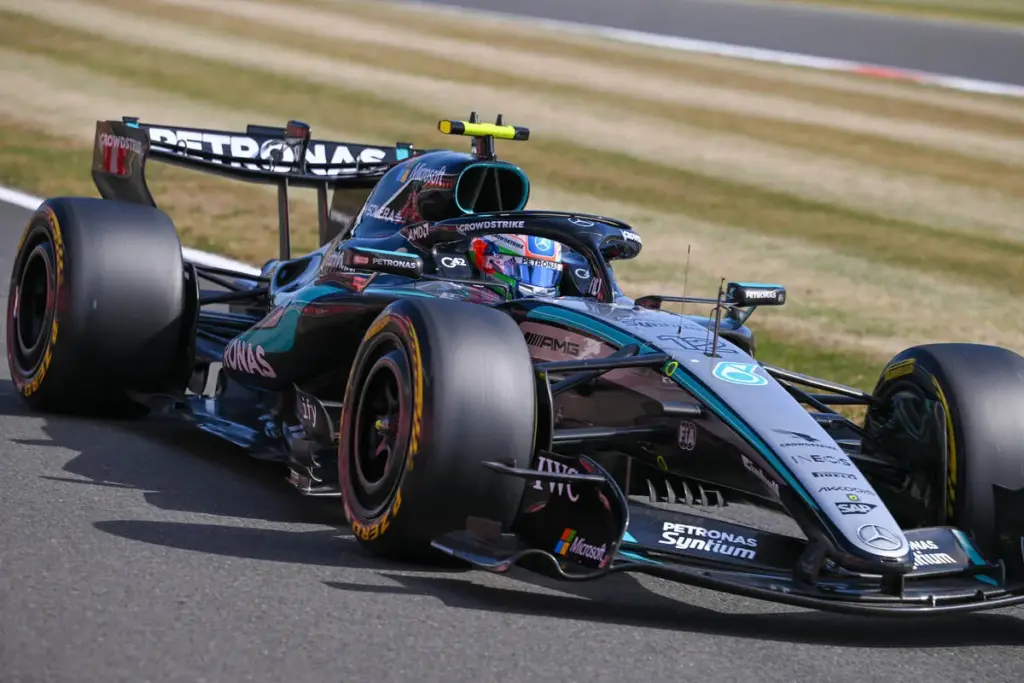
History teaches that the FIA rarely intervenes in regulations without a valid reason. The changes do not concern safety aspects, which is why it is reasonable to think that some team may have invested in expensive or elaborate solutions that the Federation preferred to contain. The 2026 cars do not have the same need to run close to the ground as ground effect cars, but they still run lower than the pre-2022 generation. With the current cars, there is also the difficulty of stabilizing the ride height in high-speed sections with closed wings, where the maximum aerodynamic load generated presses the car against the asphalt, wearing the skid block. Therefore, it would not be surprising if some team had developed a system to better control this aspect, but will have to give it up from next season.
Read more Ogura, chat with Marquez: “You could have gone faster, right?”