





Changes yes, but with caution
Immediately after the end of the Australian GP in Melbourne, the race began – on the part of those who had not liked some aspects of the race – for rules to be modified. Thus, there are those who have called for a change in the ratio between the thermal and electric engine, those who are loudly calling for a reduction in usable energy to avoid super-clipping, and those who still point the finger at the starts and their danger.
Read more Nissan X-Trail, the off-road SUV gets a makeover
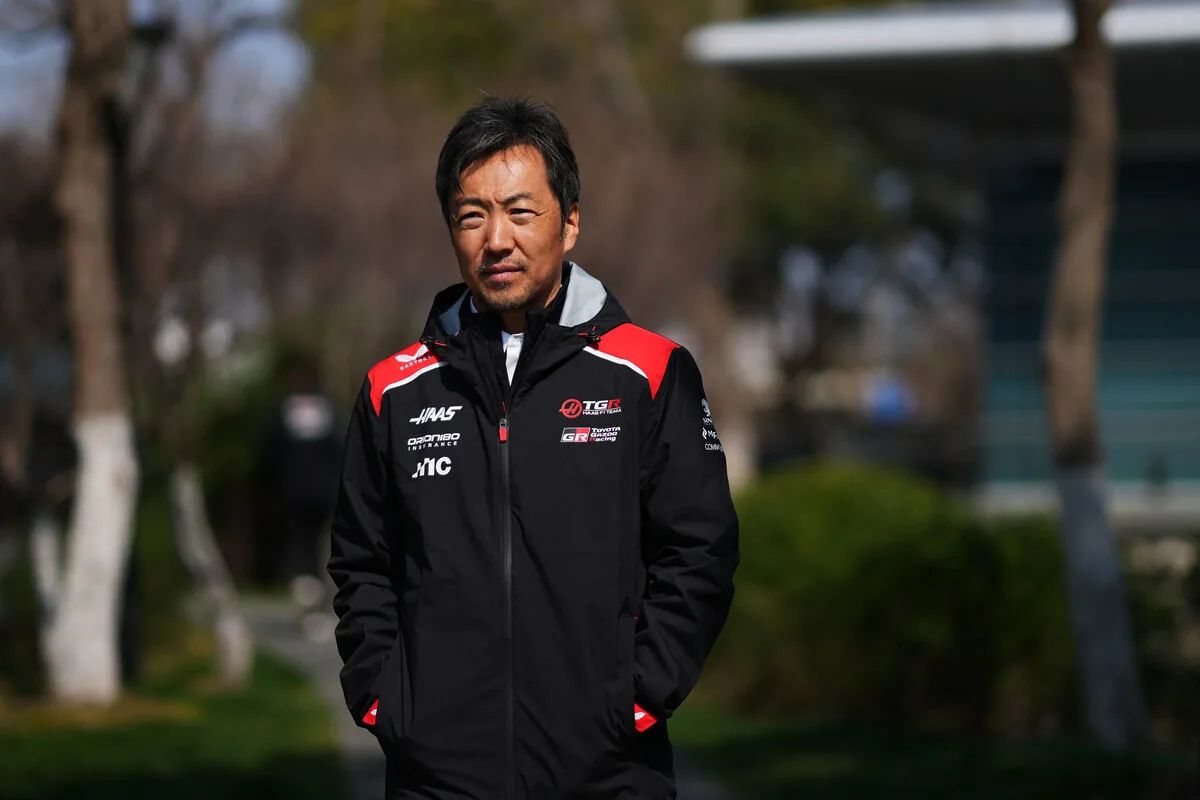
Haas team principal Ayao Komatsu expressed a different opinion, calling for everyone to remain calm. The Japanese manager said he was open to interventions on the newly introduced regulations, but only on the condition that they occur after having ‘tested’ a significant sample of tracks. His fear, in fact, is that by acting too quickly, there is a risk of further worsening the situation instead of improving it.
The risk is doing damage
“Two races are still a very limited sample – Komatsu warned, speaking with journalists present in China – we had also talked about it in an F1 Commission meeting in Bahrain and we told ourselves that we certainly shouldn’t react impulsively. Because if we have to change something, we should change it only once so as to fix it definitively. Some things depend a lot on the type of circuit – continued the number one of the Haas team – and as far as overtaking is concerned, even in the previous generation of cars, Melbourne and Suzuka were two tracks where it was very difficult to overtake. In Shanghai it is slightly easier. Bahrain, if we were to race in Bahrain, would be a much easier circuit to overtake on. In my opinion, we need to wait until we have faced several circuits and then decide. At that point we can think about what the global problem is and what we need to focus on to solve it. Because if we did it after only one or two events, I don’t think we could have a balanced opinion, with sufficient feedback. Approximately we have to wait at least five races“.
Komatsu extends this reasoning to those who, like George Russell, would like to change the regulatory procedure that defines the formation lap and the start: “Let’s not rush to react impulsively – reiterated the number one of the Haas pit wall – because it would be the worst thing we could do. If something changes, the engineers have to learn the news, the drivers have to learn the news. And then ‘oh, but look, we have a new unintended consequence. Now there’s a new problem and we have to change everything again’. Let’s not do that. Let’s observe and let the teams learn, because we are learning fast. Not just us, everyone. Give the drivers some stability so they can adapt to these new regulations. Imagine if we changed the formation lap now, moving the goalposts. What would we be doing? I’m sure if you have these impulsive reactions, you’ll have unintended consequences. So that’s exactly what we need to avoid“.
Read more Hadjar: “We are the fourth force, Ferrari and McLaren are ahead of us”