



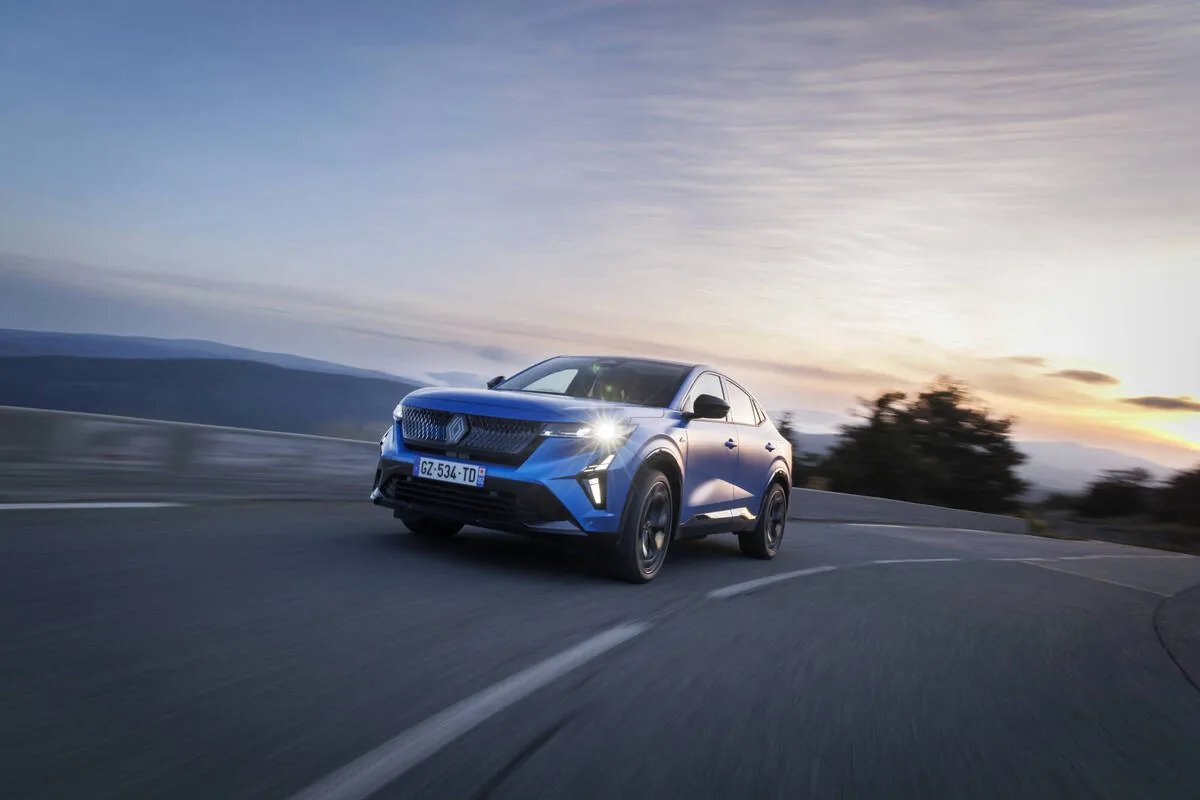
On one side Espace, on the other Rafale. The common thread is very clear, and it is that of hybrid technology. Renault also in the D segment tries to put into practice a simple idea: less consumption, less emissions, but without giving up the pleasure of driving. During our road test on a mixed route from Milan to Varese (and back), the constant was always the same: the car always starts in electric mode, while in urban driving (up to 80% of driving time) the feeling is of moving in a “clean”, smooth and silent way, with a control of the electric/thermal transition that tends to be forgotten.
Read more Ferrari Purosangue Handling Speciale, what character
Renault focuses on hybrid technology
The declared numbers are interesting: consumption not exceeding 5 l/100 km and overall range over 1,000 km, a threshold that, on paper, changes the real use of the vehicle: less refueling anxiety, more continuity in daily and extra-urban trips. With Espace the heart is the Full Hybrid E-Tech with 200 HP, entrusted to a powertrain that focuses on efficiency without sacrificing responsiveness. The system combines a 1.2 turbo three-cylinder petrol engine with 130 HP, with a torque of 205 Nm, and two electric units: the main one of 50 kW (70 HP) with 205 Nm, powered by a 2 kWh/400V lithium-ion battery, and a high-voltage starter of 25 HP and 50 Nm.
Agile hybridization on Espace
On the road the feeling is of an “agile” hybridization: the electric start makes the launch immediate, and in acceleration the intervention of the thermal engine happens progressively, rarely perceived as a real change of pace. In mixed driving, the behavior convinces especially for the absence of jerks: Eco mode helps maximize efficiency, Sport gives more responsiveness and Comfort tends to keep everything smooth, while Perso allows to “push” the management logics according to one’s own style. The consumption and emission data, then, are the piece that closes the circle. Renault declares 4.8 l/100 km, 109 g of CO2/km and up to 1,100 km with a full tank, with performance that remain absolutely credible for a car of this category: 0-100 km/h in 8.8 seconds and 80-120 km/h in 6 seconds.
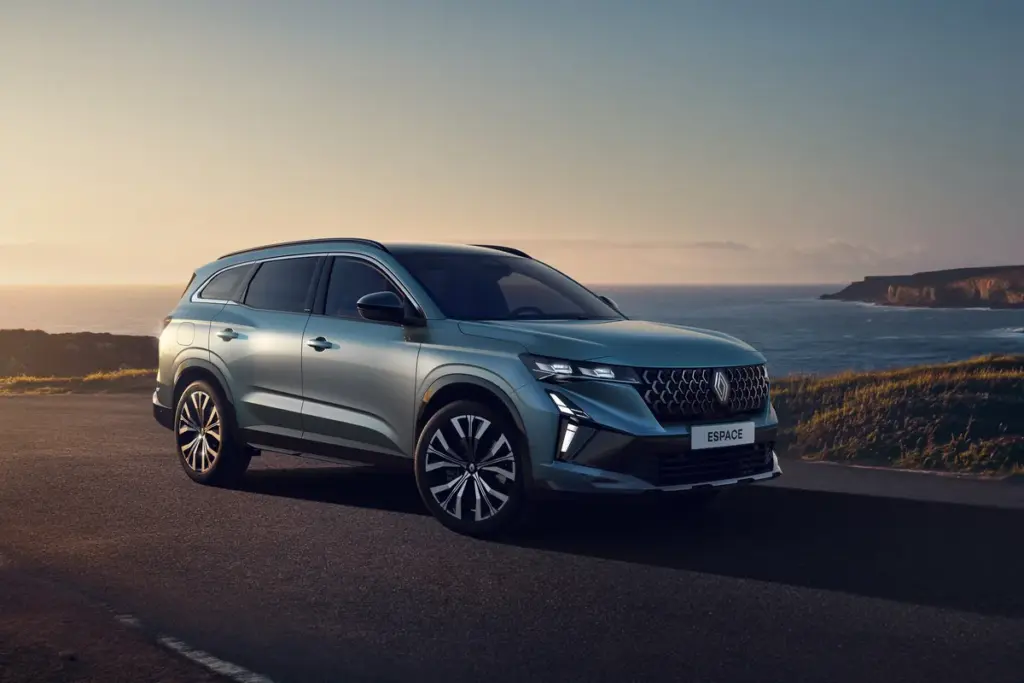
When driving, what strikes is that efficiency is not “bought” by giving up performance. In fact, the system seems to always choose the most rational way, alternating electric and thermal based on speed, acceleration and mode selection. The transitions, in practice, become almost a background: the car just does what is needed and the driver focuses on the road and trajectory.
Read more Bottas: “Representing Cadillac in its first home GP is a special moment”
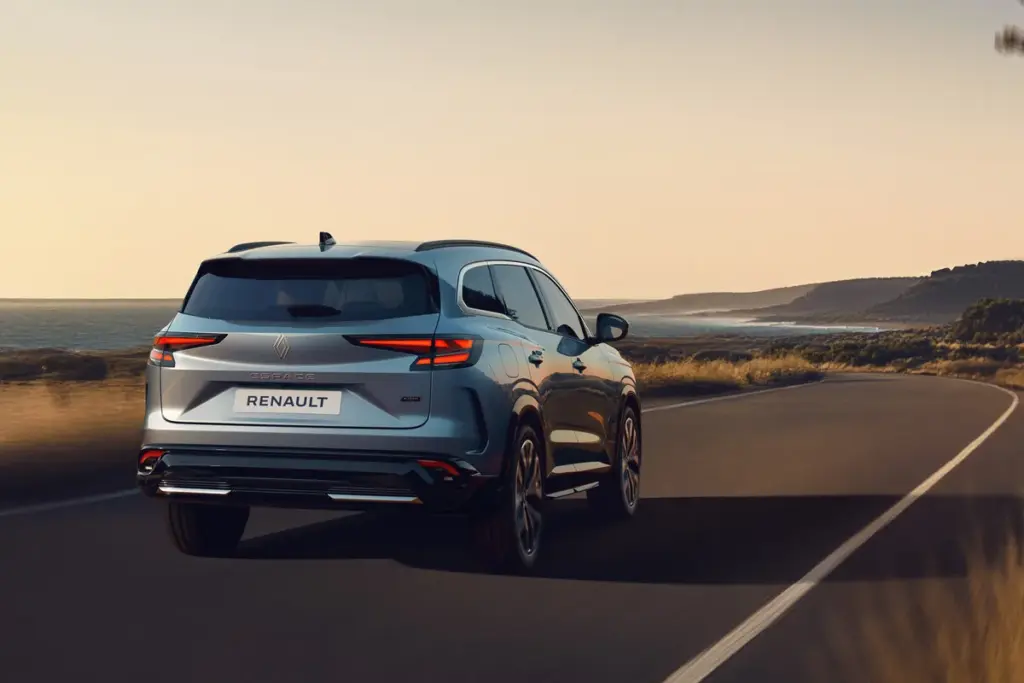
Rafale becomes hyper hybrid
If Espace is proof of the maturity of the full hybrid, Rafale pushes it further thanks to a 300 HP hyper hybrid plug-in rechargeable system. Here the leap happens in the battery: beyond the principle of advanced hybrid management, there is a capacity of 22 kWh and a configuration that allows up to 105 km in 100% electric mode. In terms of driving, the impact is very concrete: in the first kilometers of the day the Rafale flows like an electric car, with immediate available torque and ready response; when it is necessary to regain power, the thermal part comes into play with a more “muscular” inertia compared to the full hybrid.
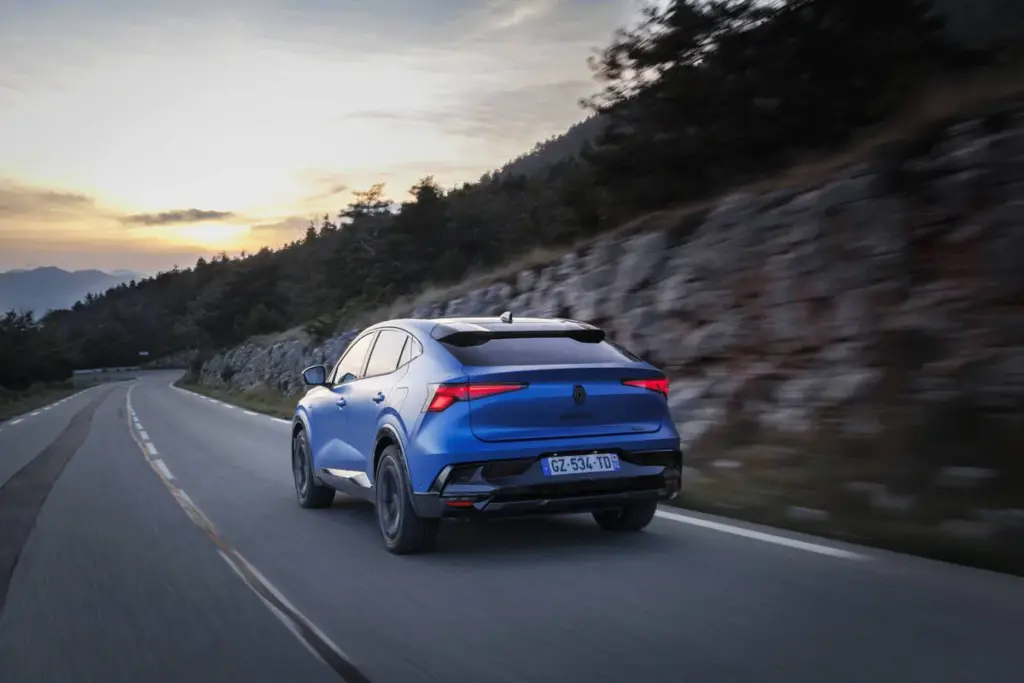
Consumption and performance
On the consumption front, the indicated WLTP values are 1.7/2 l/100 km with a charged battery and 5.9 l/100 km with a discharged battery, while the sporty push is supported by the enhanced thermal engine: the 1.2 three-cylinder goes to 110 kW (150 HP) and 230 Nm thanks to a new turbocharger, with an increase of 20 HP and 25 Nm compared to the 200 HP base. Besides the mechanics, the chassis also makes a strong statement in the way the car handles the pace. The declared times speak of greater responsiveness: 0-100 km/h in 6.4 seconds (against 8.9 of the 200 HP) and 80-120 km/h in 4 seconds, with charging that, at the maximum allowed power of 7.4 kW, requires about 2h10 for 80% and 2h55 from 0 to 100%.
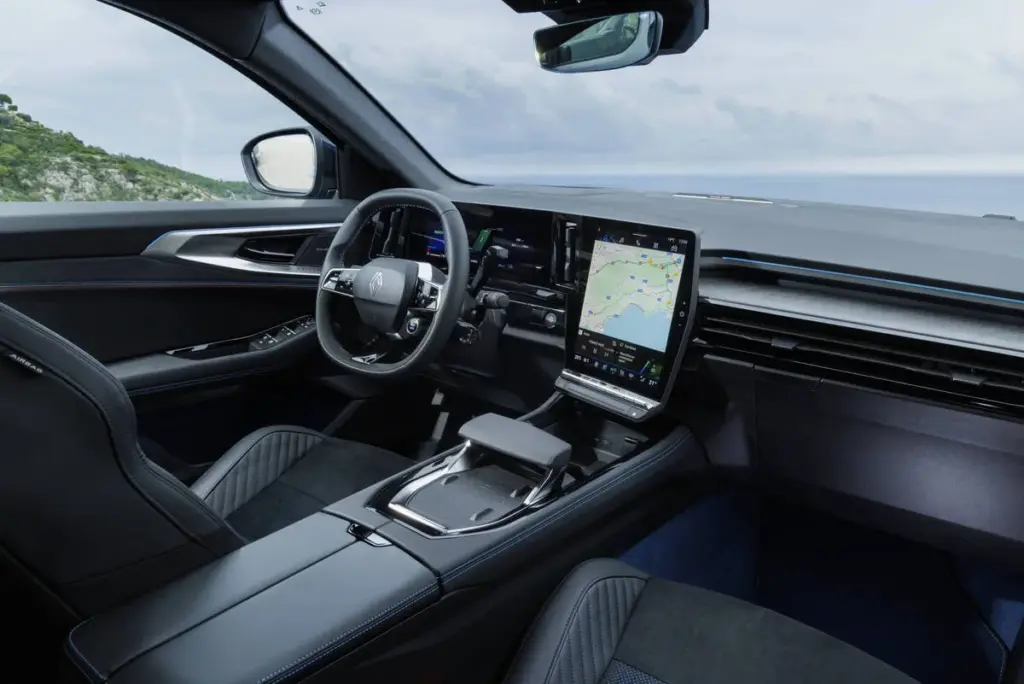
Different prices
Moreover, Rafale adds features that are felt during the test drive: 4Control Advanced with rear steering wheels, also rear-wheel drive and, only in the Atelier Alpine version, an active intelligent suspension with predictive camera. In conclusion, the difference in price tells the positioning: Espace Full Hybrid E-Tech 200 HP starts from 42,900 euros, while Rafale Hyper Hybrid E-Tech 4×4 300 HP from 52,900 euros.
Read more Honda Crisis: changes to the ADUO regulations are being considered to help it