

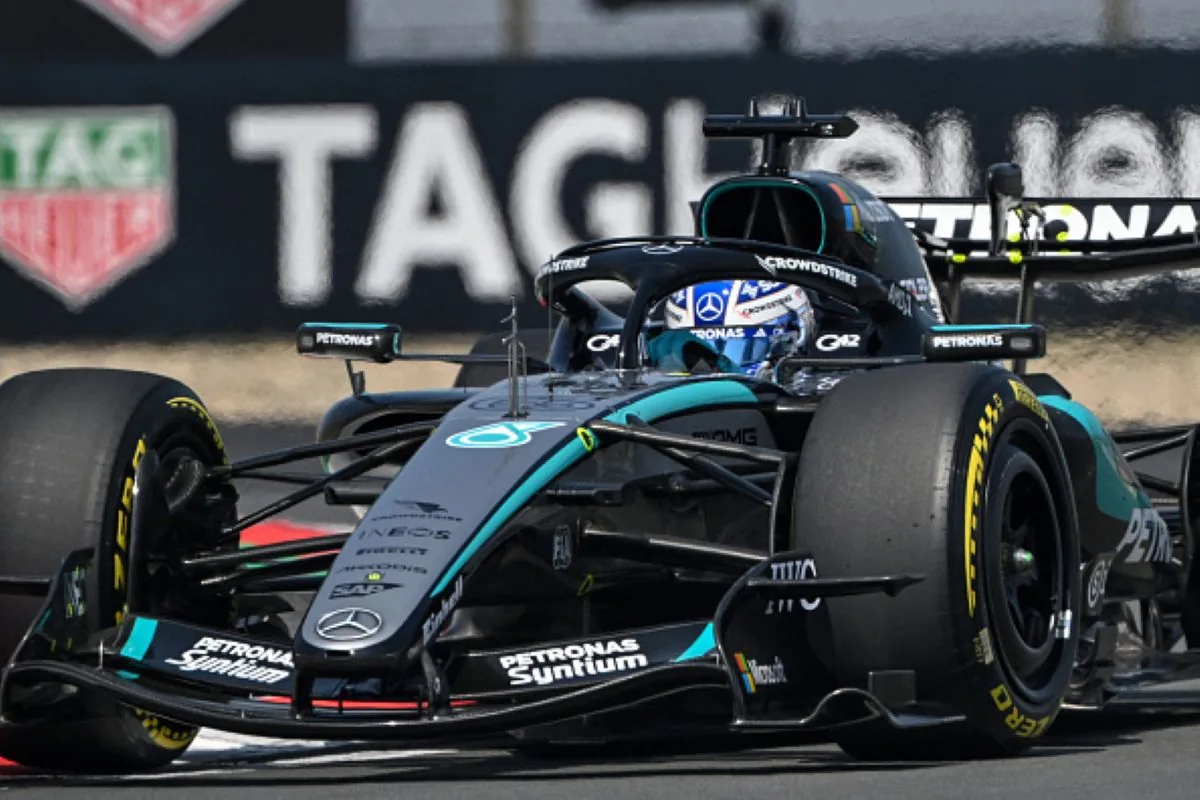
It is a simply stratospheric Mercedes, confirming its overwhelming superiority over a single lap. Reducing everything to the engine and software would be reductive, given that the dominance of the W17 stems from a 360° competitive package, with which George Russell also immediately shows excellent harmony. The Shanghai sprint qualifying resulted in abysmal gaps between all participants, a spectacle to say the least desolate, but which in return shows what is needed to succeed in this new Formula 1.
Read more Racing Bulls takes a step back: double elimination in SQ2
The driver makes the difference
Despite a track significantly less severe than Australia, energy management continues to be king in China as well. Being the best in this field is not just a matter of engine and software, but also of the way corners are approached, trajectories, and how one gets back on the gas. These are all aspects with a great impact on consumption and which change significantly between qualifying and the race, partly explaining Mercedes’ great strength over a single lap, being skilled at understanding in the simulator how to adapt management strategies to the circumstances.
In a Formula 1 where the approach to corners makes even more of a difference, the drivers’ driving style becomes of absolute importance. It is no coincidence that sprint qualifying resulted in wide gaps between all teammates, with the emblematic case of Leclerc and Hamilton, alternately ahead of each other at various moments of the session. The gaps for everyone become maximal in the third sector, whose long straight imposes a progressive power cut to preserve the battery, leading to the emergence of differences in terms of energy accumulated in the rest of the lap.
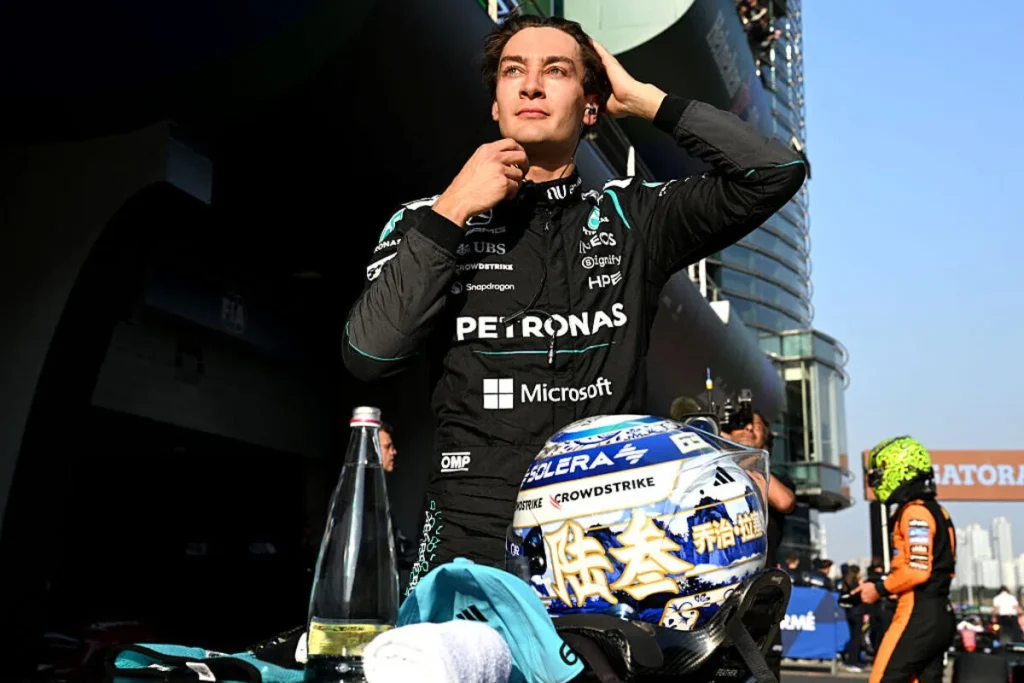
The secret with these machines is to be clean and repetitive in driving, so as not to ‘disorient’ the battery management software. “It is very important that the driver’s inputs are constant and precise, because this makes the difference,” Antonelli explained. Just one mistake or a corner approached slightly differently and the control unit finds itself without references, altering the charging strategy for the rest of the lap. Credit then to Russell, who is emerging as one of the best interpreters of qualifying even with this new generation of cars.
W17, chassis also promoted
The Englishman from Mercedes can dream big, behind the wheel of a car boasting the best power unit on the grid, but also an equally competitive aerodynamics. Until last year, there was talk of how a good balance benefited tire performance, helping to keep them in the correct operating window. Now the beneficial influence is also on energy, as a predictable car does not force too many corrections, allowing corners to be approached in the same way and facilitating the task of the management software. The quality of the Mercedes in terms of balance shines through from the body language of the W17, but also from the ease with which the drivers manage to set times at the start of the session since the first free practice. Another important signal is the tranquility perceptible in the pit box half an hour before qualifying, with the silver cars ready on the stands, while in the opposing garages they were scrambling to put everything back together.
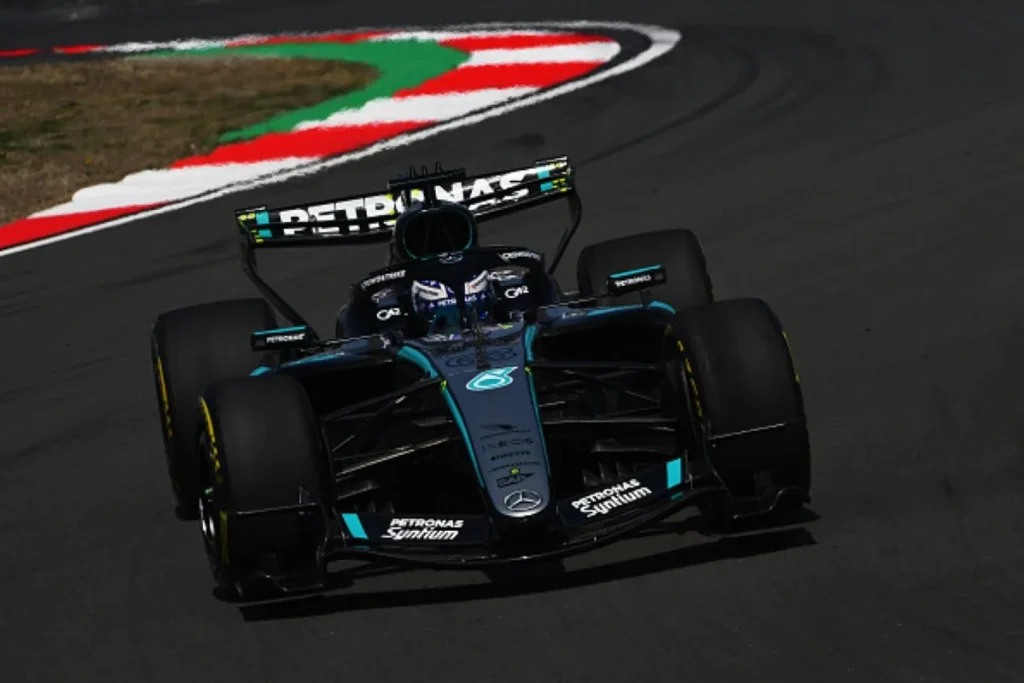
This time the first of the pursuers is McLaren. Lando Norris grabs third position thanks also to the better track evolution, unintentionally exploited thanks to the choice of performing two preparation laps, considered the optimal compromise between getting the tires up to temperature and energy consumption. The MCL40, however, appears to be lagging behind in terms of chassis-aerodynamics, as well as in the exploitation of the power unit. It is not a matter of software version, but of how it is used, the data it is fed, and knowing what the greatest sensitivities for consumption are. In all this McLaren is still behind Mercedes, whose deep knowledge of the dynamics at play becomes a decidedly precious advantage in Sprint weekends, when time to prepare is scarce.
Ferrari does not get closer
Ferrari is the protagonist of a double step back on Shanghai Friday. The first concerns the inverted mobile wing, abandoned after the only free practice session. The team, however, would not have rejected the system, having brought the ‘Macarena’ in China with the priority of collecting data and verifying its correct operation. In fact, there still seems to be some criticality for a solution that was planned for later, as suggested by the radio instructions given to Leclerc to anticipate the closing of the wing by a few moments compared to the braking point.
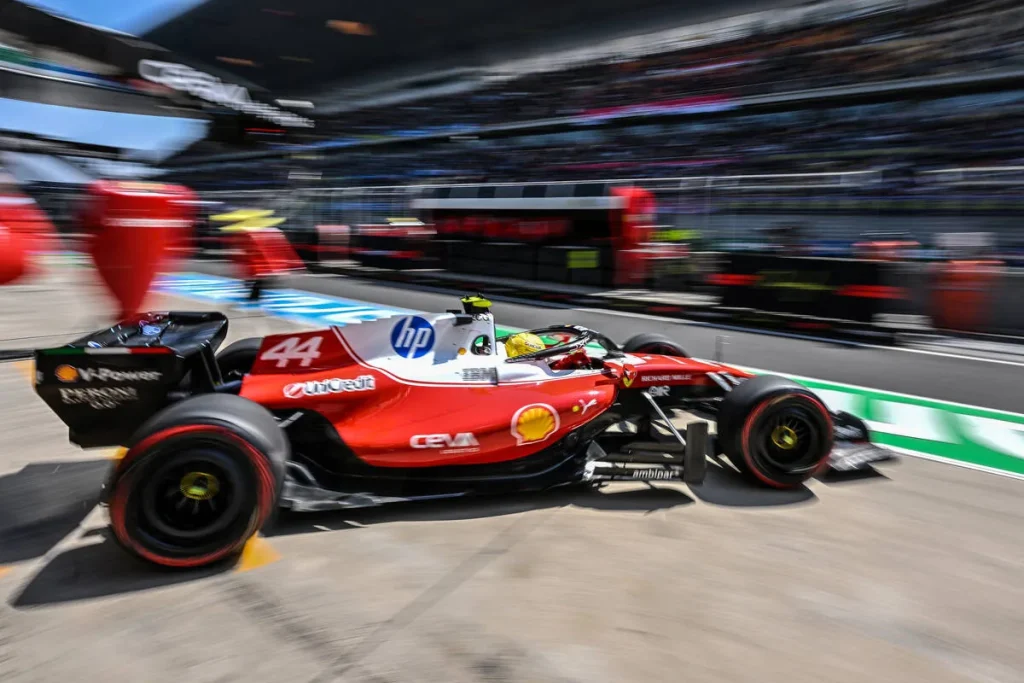
In any case, the absence of the rotating wing is certainly not enough to explain the wide gap suffered from the Mercedes, as well as the temporary step back in comparison with McLaren. One of the problems at Ferrari is that Leclerc and Hamilton fail to express themselves with continuity. In particular, the Monegasque pays for a sudden loss of speed on the back straight, a sign that the team and drivers do not yet have full mastery of energy strategies. It goes even worse for Red Bull, more in difficulty than in Melbourne on a track that exposes the weaknesses of the RB22 in slow corners. Verstappen also does not hesitate to define the drivability of the power unit as horrendous, evidently afflicted by a sudden power delivery, forcing the drivers into many corrections which in turn penalize energy management.
Towards the Sprint
Attention is now all focused on the Sprint race, where front tire graining could be the main theme. Certainly McLaren is not happy about it, giving Ferrari the opportunity to fight for positions immediately behind Russell and Antonelli. Much will also depend on the start, which will be a dress rehearsal for Sunday. Teams and drivers will have the opportunity to evaluate the pace to maintain on the formation lap to warm up the tires without draining the battery, as happened instead in Melbourne. However, the greatest curiosity is what Mercedes’ advantage will be over the long distance, after having shown everyone what it is capable of in qualifying.
Read more Red Bull sinks, even Hadjar has no explanations: “I was close to Max, but we lost half a second…”