






Where is F1 going?
“Previously F1 was a B2B business, now there is an opportunity to transform it into a B2C relationship,” Stefano Domenicali clearly stated at Global Alts in Miami. Formula 1 is no longer a platform that connects companies (B2B), but is turning to consumers (B2C): this is the direction Liberty Media is following for the future of its investment.
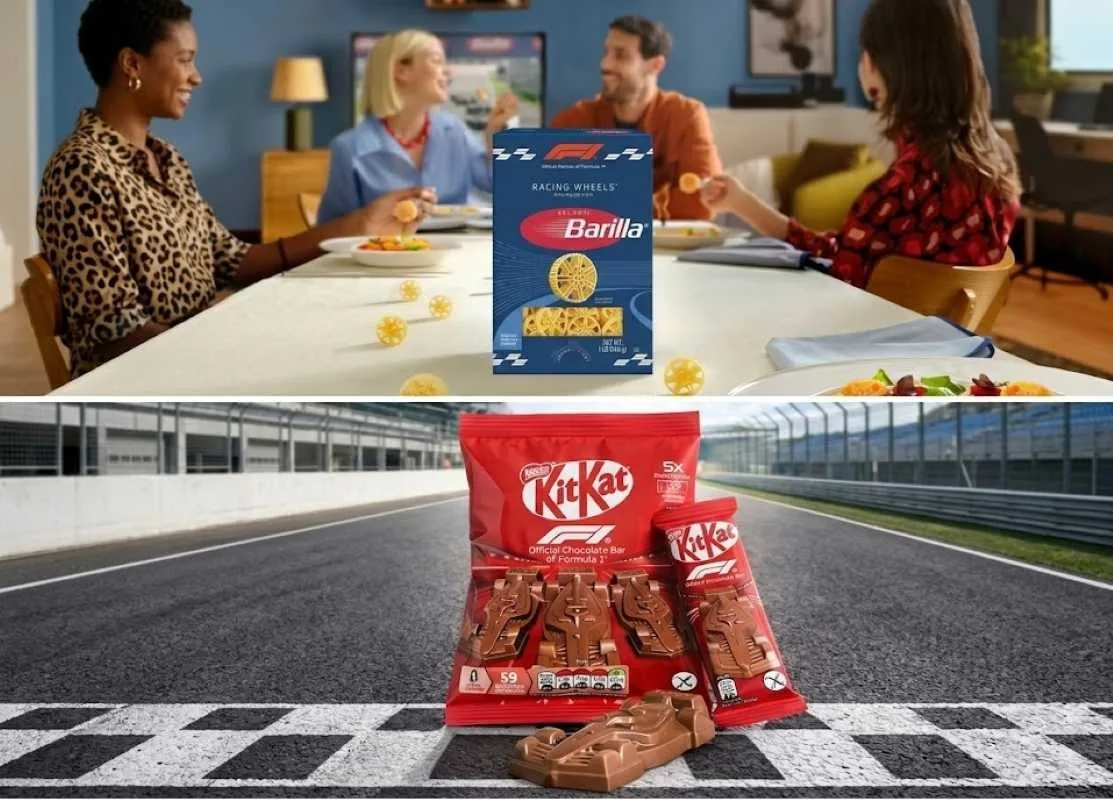
Chocolate bars replicating the shapes of a single-seater have arrived in supermarkets, pasta in the shape of an F1 wheel will land on the American market, and building blocks that mimic the cars of Hamilton, Verstappen, and Leclerc are popular on toy shelves.
Read more Smart Concept #2, two-seater electric icon
It’s a clear strategy, which Domenicali confirms: “We are getting closer and closer to our fans. We are collecting their data to get in touch with them, to ensure they truly appreciate the sport we offer and the experience we want to give them.” With modern tools, profiling the ideal target for companies investing in F1 is not complex.
A special eye on young people
To further increase the fan base, the focus is on increasingly younger enthusiasts. Domenicali again, this time in an interview with Autosport: “It’s not just about KitKat, but also Lego and Disney. We are shifting our focus to younger generations. We are moving towards the consumer side, especially with them, to show them and let them experience F1 in places we would never have thought of in our time. We need to be relevant to young generations, to make them understand that we can be everywhere.”
It’s no coincidence that there are very young influencers – even minors – who connect companies with the so-called GenZ with #adv or #gifted.
Derek Chang, CEO of Liberty Media, highlighted the work done: “When we acquired F1, it was run from Bernie Ecclestone’s house in London. Now it’s a global organization. It was a somewhat dated and declining brand, we had the vision to transform it into a global entertainment brand as well as a sports brand.”
By doing so, horizons expand: “Our competition is not in the world of sport. Our competition is being relevant in that finger that continuously scrolls on the phone looking for novelty. We are competing with movies, with television, with theaters, with events,” Domenicali emphasized.
Read more Ducati, Bagnaia aims for the friendly Jerez track to turn the tide: “Many beautiful memories”
In this sense, the relationship with social media has been overturned: “We have opened up to this world to interact with new fans and we speak with a different tone and language, with different narratives,” “Instead of penalizing drivers for being on social media, we encouraged them,” both the F1 president and Liberty’s CEO highlighted.
…and TV ratings soar
In recent days, journalist Thomas Maher brought to light interesting data on the audience, both at the track and on television, for these first three races of 2026.
From the surveys of television audience for qualifying and races in the top 10 F1 television markets, compared to the previous year, Australia recorded a +23%, China a +30%, Japan a +20%.
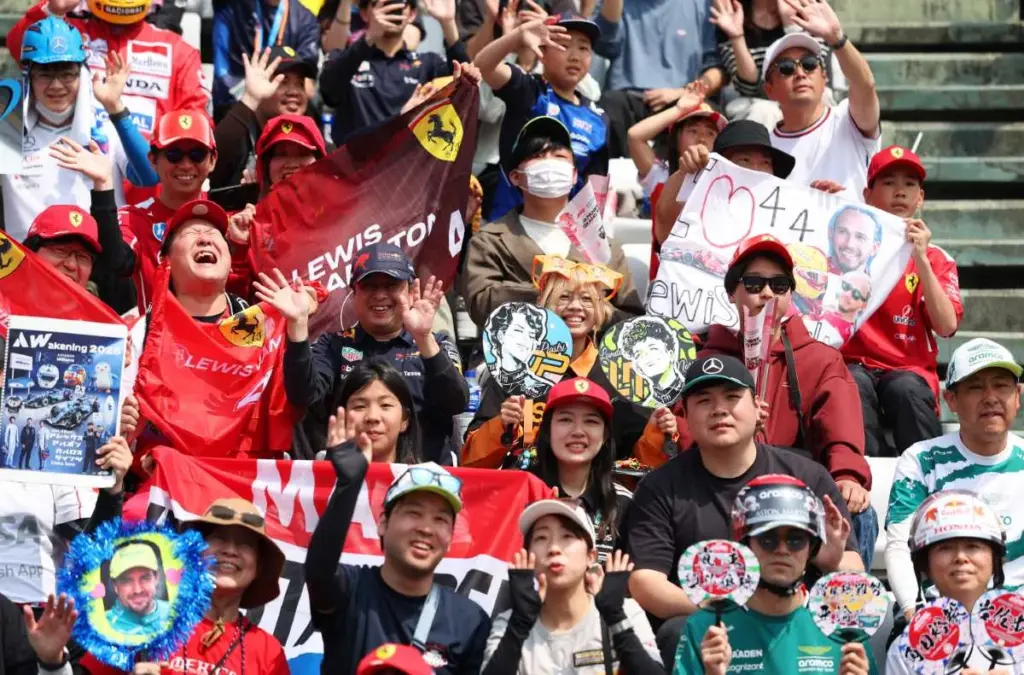
In track attendance, Melbourne +4%, China +4.5%, Japan +18%.
In short, in the face of these numbers, Domenicali strongly defended the F1 product in recent days: “If I look at the surveys of what is happening around the world, the result is magnificent, fantastic. Everyone says: ‘Wow, what’s happening?’. There’s so much action and people appreciate it.”
How many truly care about the technical side of F1?
Liberty Media must hold together various souls: new fans and long-time enthusiasts, lovers of spectacle and glamour, and those of technique. A truly arduous task.
Salesforce, F1’s partner since 2022 operating in cloud computing, revealed a rather disconcerting fact on its website: “F1 is younger and more diverse than in the past. Yet, less than 1% of the total fan base will ever attend a Grand Prix. Most fans experience the excitement remotely through touchpoints such as TV, video games, merchandising.”
Is Formula 1 becoming more virtual than real?
More for scrolling than for watching on track?
More for an overtaking show – whatever its nature – than for automotive technical experts?
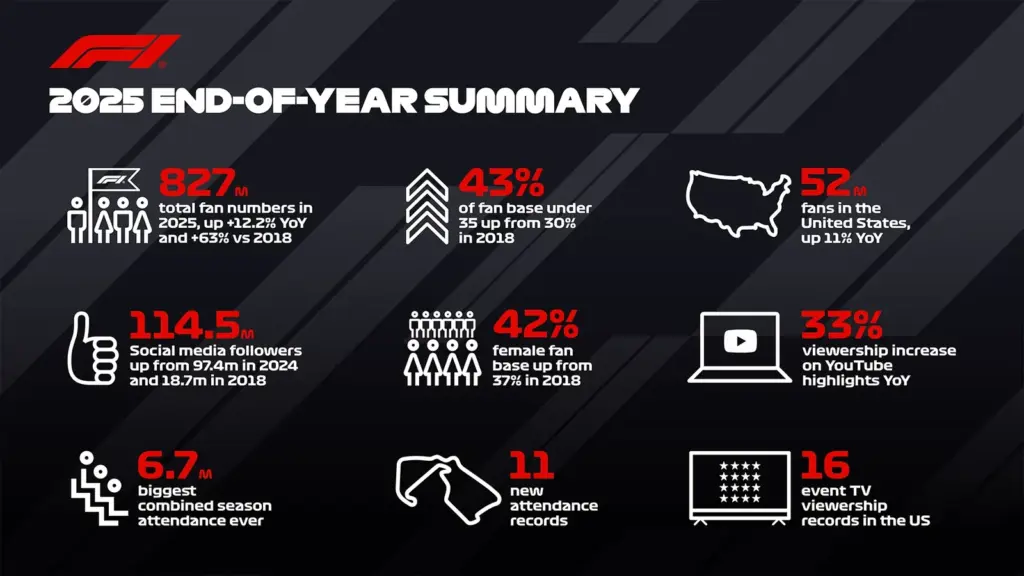
The 2025 season had record numbers: a fanbase of 827 million people, 6.7 million attendees at circuits, 2.3 billion social interactions: F1 is the most followed sports series on the planet.
43% of the audience is under 35, 42% are women. On TikTok, F1 shows a +91% compared to the previous year, on YouTube +53%.
A question arises spontaneously: how many of these will have read the document of regulatory changes that will take place from Miami?
Read more Razgatlioglu ready for Jerez: “I really like the track”