
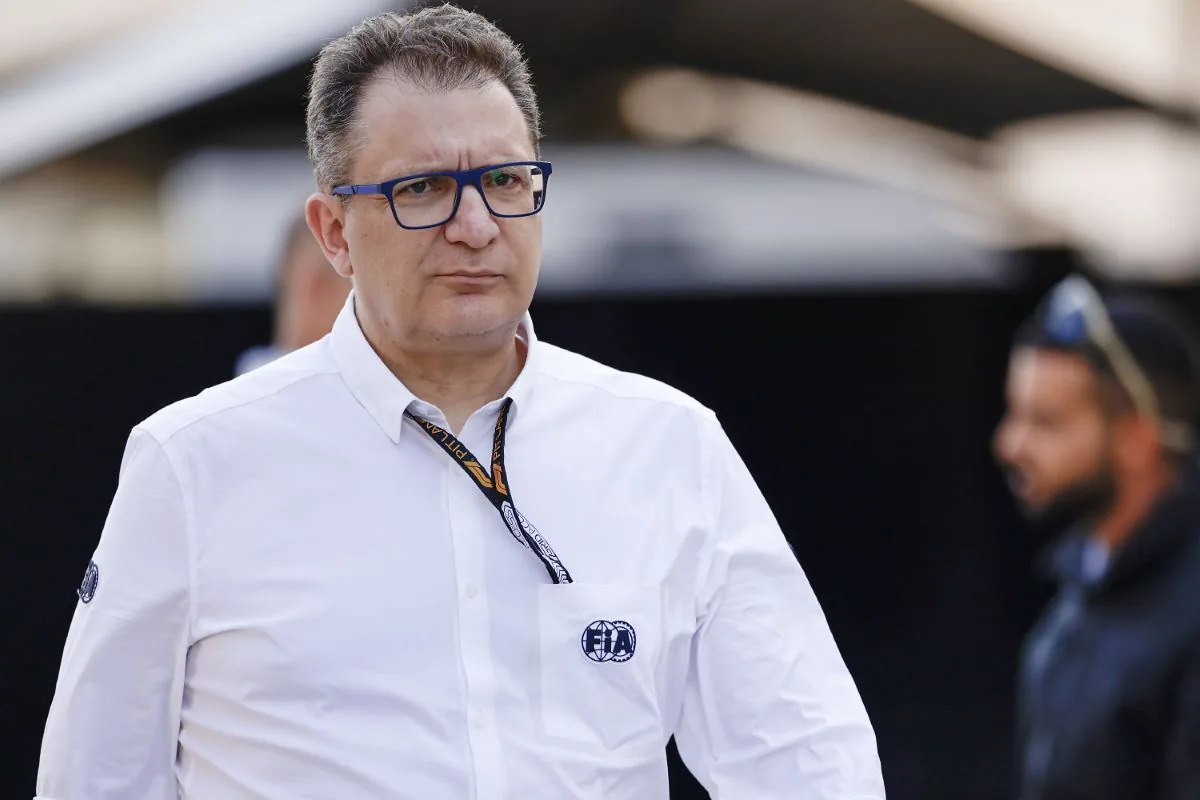
Tombazis and the regulatory changes
After the first three races, Formula 1 has partially changed the technical regulations to meet the needs of drivers, teams, and especially the spectacle. To appreciate them, we will have to wait another ten days: the Miami Sprint weekend will be the first test of the improvements approved by FIA, FOM, teams, drivers, and engine manufacturers. And while there are critics who continue to be skeptical, FIA single-seater director Nikolas Tombazis defended this “phase 2.0”, defining it as an evolution aimed at improving the basic product, and in turn not definitive.
Tombazis’s words
“There was broad unanimity on all aspects, which will help drivers focus on driving and push to the maximum in qualifying. Drivers will push harder on Saturday; this will be perceived by watching the on-board cameras and hearing the engine sound. Furthermore, the type of problem we saw with Ollie Bearman’s incident at Suzuka should be substantially avoided from the next race,” commented the Greek engineer. “Regarding the risks at starts, it will probably take two or three races to implement the changes. We will do some tests in Miami and Canada, but in practice, we will have a safety net. So, if a car is detected to have an extremely problematic start, the electrical system will activate and take control, ensuring the car starts safely to avoid problems for following cars.”
“These 2026 regulations represent one of the biggest changes Formula 1 has ever had in its history, and they were fundamental to maintaining technological relevance with increasing electrification and so on. We knew from the outset that they would present challenges, and we had always stated that we would review them after the first few races. The first races went quite well in many respects: the races were exciting, hard-fought, and with many overtakes, but there were certainly also situations where intervention was necessary. So, the approach we adopted was one of evolution and refinement, not revolution,” he added. “In addition to the positive and unanimous vote for these changes, I believe that most power unit manufacturers and teams have expressed their support for the FIA and gratitude for all the work we have done. I think the same applies to the drivers, who felt very involved in this process. Now we hope that the fans feel the same way. But we are all learning about these regulations; it’s not like the work is finished now and we can all go on holiday. We will continue to monitor, review, and analyze the situation: if further interventions are necessary, we will not hesitate to adopt them.”
Read more Smart Concept #2, two-seater electric icon
The adopted changes
The changes to qualifying and energy management aim to make driving more aggressive and less focused on saving: the maximum recharge drops from 8 to 7 MJ, reducing energy recovery and limiting the superclip to 2–4 seconds per lap, but with power increased from 250 to 350 kW, so drivers will have to worry less about management. In the race, the boost will be limited to +150 kW to contain sudden performance differences, while the MGU-K will remain at 350 kW in key phases (acceleration and overtakes) but will drop to 250 kW elsewhere, with the aim of reducing approach speeds without penalizing the spectacle.
Read more Ducati, Bagnaia aims for the friendly Jerez track to turn the tide: “Many beautiful memories”