

Yo-yo race
The 2026 Italian Grand Prix has laid bare the main characteristics of the current Formula 1 season. An “engine-centric” regulation, born from the desire to adopt this type of Power Unit and which has built an entire car around it, saw on the most “engine-centric” track of the season the simple expression of the expected values on the eve and which we have been talking about since the beginning of the year, adding a lot of “yo-yo” action that can be liked or not but is inherent to these cars.
Read more Red Bull always at the top in marketing: “Red Bull and ICE, what a (duo)”
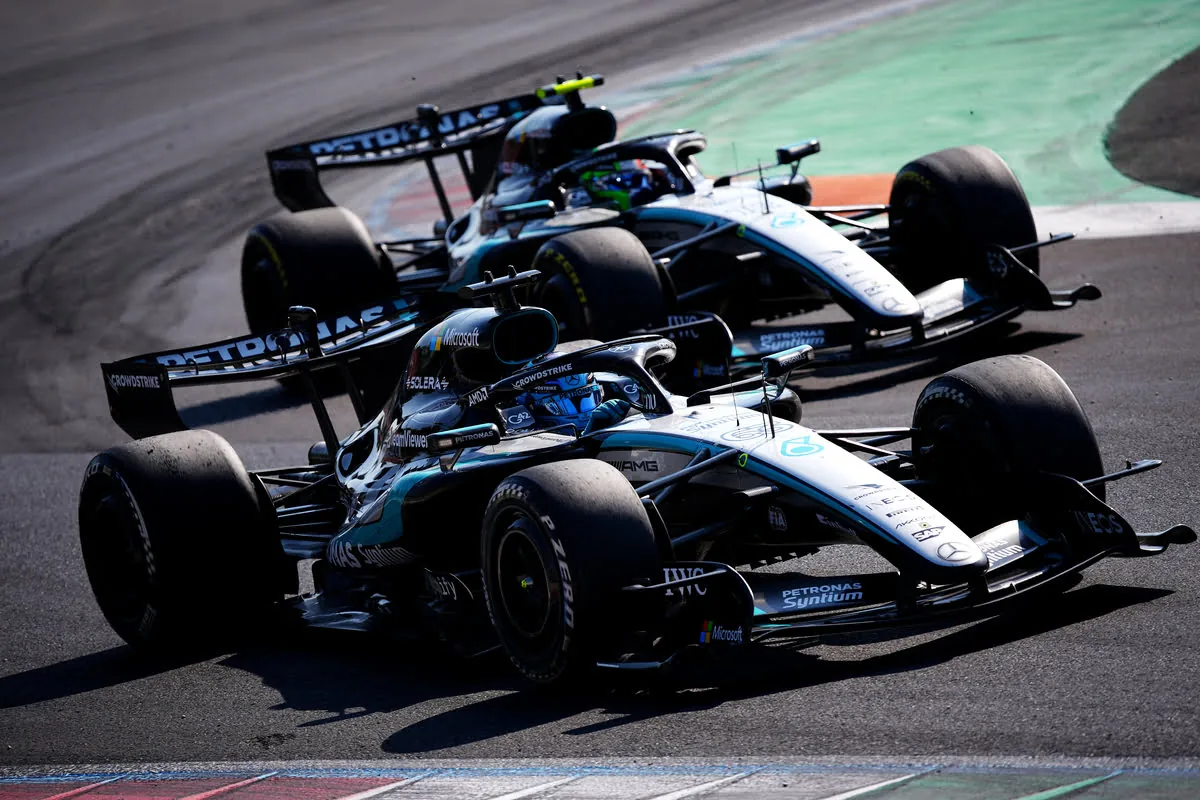
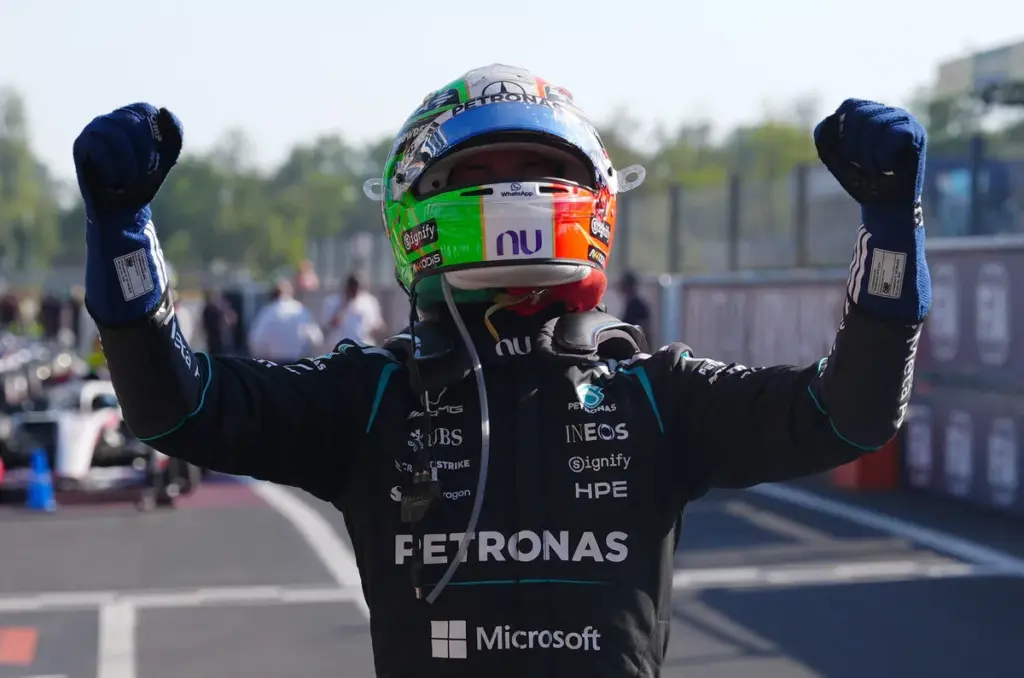
Objectively, it must be said that so much movement in the race at Monza had not been seen for years, mixing the positive and negative characteristics of these rules: the infamous deployment led to dramatic speed variations, but also narrower and more manageable cars, with a lot of downforce with closed wings and an overtake mode more effective than DRS (virtually useless at Monza in past years). That said, if it was necessary to touch with hand how great the advantage of the Mercedes Power Unit is this year, Monza showed it without mincing words. The Brackley team (and its way of using the engine) appeared from another planet compared to all the others. So superior that one (to say the least) extraordinary Kimi Antonelli was able to win starting from 19th position, passing opponents like skittles.
The coolness of the veteran, the determination of the cannibal, the talent of a phenomenon, the luck of a champion
Antonelli had a historic race, to be clear: two brilliant starts, in which he was very careful not to incur contacts or off-track excursions, but in which he also seized the opportunity to quickly gain positions. A frenzied race pace but without a single mistake, an endless series of overtakes (including the long and tense mid-race battle with his teammate and (former) title rival) without ever locking up, touching, nothing.
For the record, the mini excursion a few laps from the end was due to a strip of asphalt that had opened and hid a trap for those who did not stay in line, and Kimi had gone off line because Russell had gone wide. The coolness and concentration of a veteran, the determination of a cannibal, the talent of a phenomenon, all in a 20-year-old boy who was racing his second Italian Grand Prix, arriving as world championship leader and starting from the back.
Antonelli had by far the best car, there is not the slightest doubt, but such a performance can only be achieved by those who have something extra inside, as we have seen many champions do in the history of this sport. The road to really compare himself to certain names for Antonelli is still long, but an important page of this story was written yesterday on the Brianza track.
The young Bolognese was also lucky, the kind of luck that sometimes you don’t understand where it comes from and that offers the opportunity that only champions can then seize. The double restart gave him the chance to recover many positions losing little time, but above all it led to an inevitable change of strategy.
Antonelli had started on hard tires, Russell on mediums. Both compounds could do the whole race, so to avoid the mandatory stop Mercedes swapped the compounds for both drivers during the red flag. Kimi found himself on medium tires and had a VSC just when he needed to change them.
Mercedes, to minimize risks, had to differentiate the strategy at that point, and Russell was on the hard compound and no longer had new tires. It was therefore natural to keep the Englishman out until the end. A combination of factors that sometimes almost seems to indicate how fate, in some way, has already decided who will be the next to have the right to become a champion.
Read more Polestar Formula 2030, a concept that looks to the future
The Mercedes PU of others and the 7 MJ recoverable
Obviously, on track it was not only Mercedes using its PU. There were those who decided to squeeze a few more horses, from the abundance available (which is usually not fully used for reliability reasons) and snatched an unexpected pole position, like Alpine and Pierre Gasly. The French team then also found a double points finish in the race (with Colapinto who was even fourth at the restart).
Or those who, like McLaren, finished the race just off the podium, fighting for it for most of the race despite a car with a lot of drag and the shortest gear ratios of all, an extremely penalizing factor on this track. The Woking team understood in qualifying how to best exploit the energy recovery phase and gained a huge advantage in the race. The possibility, in fact, to recover up to 7 MJ of energy per lap was a factor that especially helped the most efficient engines.
It may seem counterintuitive, but the reasoning to follow, as simplistic as it is, is that when there is the possibility to recover a lot of energy, those who are very efficient at doing so can manage to recover all that is available while spending less time in the recovery phase. Those less effective in this phase end up either not recovering all that is available or losing much more time trying to recover as much.
The result is that the most efficient power unit has an advantage that then becomes exponential, since it spends less time in the recovery phase and has more energy to spend when needed, a difference that on a track like Monza has become abyssal. Red Bull has the second-best power unit in the field, at a fair distance, and a car with low drag that found a good operating window at Monza and the podium with Verstappen. The good performance of the Red Bull-Ford engine is also seen from the double points finish of the Racing Bulls with another excellent weekend from Lindblad and a good race from Tsunoda. Clearly the ADUO evaluation that gave the Milton Keynes power unit as the best does not seem to hold up to track verification, but, remember, it is the teams that agreed on which parameters to check.
Monza does not make the season, but it does not lie
Monza, in short, cannot be taken as an absolute snapshot of the values in play, because it exaggerates characteristics that elsewhere have much less weight. At the same time, however, precisely for this reason it represents a sort of magnifying glass on what this regulation has put at the center of Formula 1: the Power Unit, its efficiency and above all the ability to manage energy over the lap.
From this point of view, the verdict of the Brianza weekend was hard to misinterpret. Mercedes today has an important advantage, not only in terms of pure power, but in the entire use of the propulsion system, and on a track that demanded practically all that advantage from the engine it became enormous. This does not mean that from now until the end we will necessarily see Mercedes dominate everywhere as at Monza. Chassis, aerodynamics, tire management and circuit characteristics will regain much greater weight from the next races. But it means that, when the regulation puts the engine at the center of performance, the Star today has the technical benchmark of Formula 1.
Then you need someone who knows how to turn that advantage into something special. At Monza Mercedes clearly had the best weapon. Antonelli simply proved to already be one of those worth entrusting it to.