
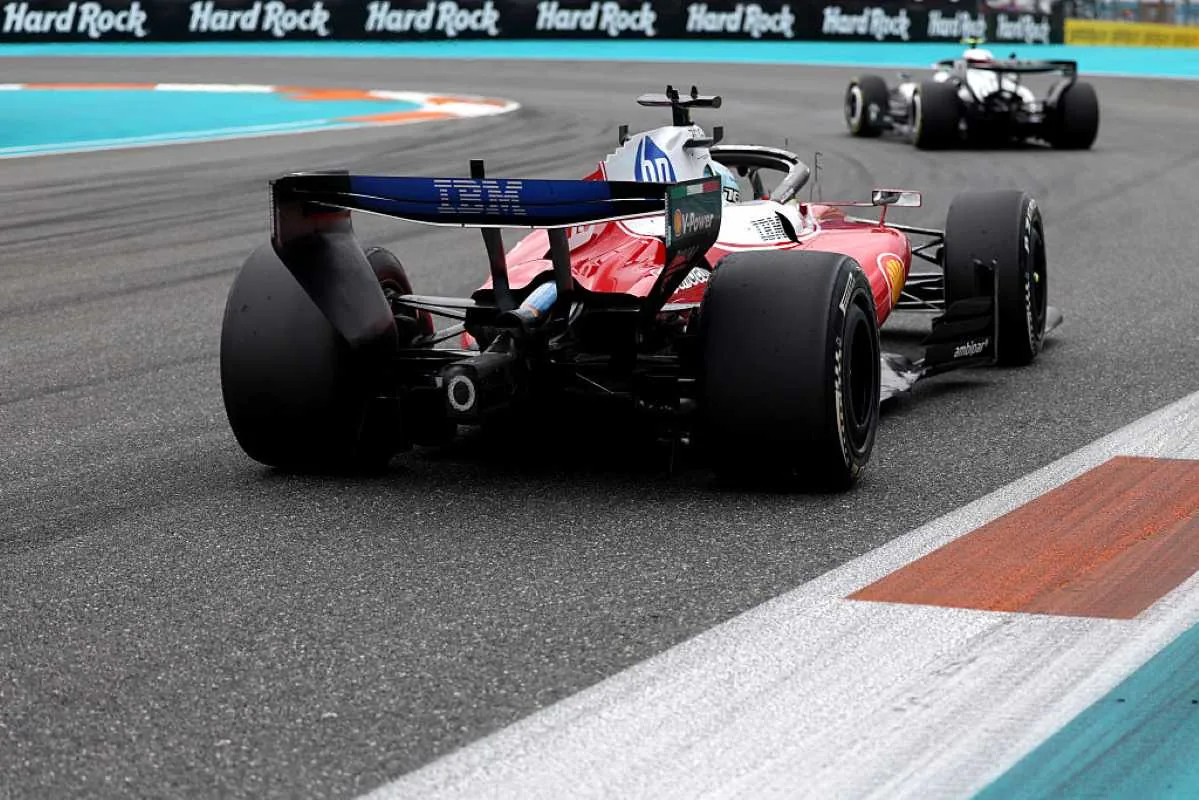
Enzo Ferrari stated that “aerodynamics is the compensation for those who cannot express horsepower from the engine”. Unfortunately for the Drake, at the moment it is precisely the engine that limits the ambitions of the Maranello Scuderia. The causes are multiple, some of which are outside Ferrari’s control, which will nevertheless have to reflect on the design choices made. The ADUO could be the opportunity to get closer to Mercedes engines, but it remains to be seen whether the Prancing Horse intends to develop the existing concept or start from a new one.
Read more Razgatlioglu ‘debuts’ at Mugello: “For me it’s almost like rediscovering the track from scratch”
The floor concept
Vasseur has repeatedly hinted that the Maranello power unit department did not prioritize absolute power, but opted for a compromise philosophy, considered better from the lap time point of view. The engine, for example, is designed to operate at higher temperatures than would have been possible, losing efficiency but reducing the cooling work required. All this allowed for smaller radiators to be mounted, with advantages in terms of lightness and aerodynamic resistance. The smaller turbo, moreover, is just the tip of the iceberg of an engine concept that values responsiveness and corner exit thrust over power at the end of the straight. After all, it is increasingly profitable to reach maximum speed as soon as possible rather than expressing very high peaks, also to avoid having to resort to the hybrid to compensate for the engine’s response delay.
We must not forget the FTM, the flap mounted behind the exhaust outlet that ensures great aerodynamic advantages. Inevitably, however, blocking the duct compromises the turbo’s performance and wastes more engine power to expel hot gases, reducing useful work. Therefore, the goodness of the choices made should not be evaluated solely in terms of horsepower, but based on the overall competitiveness of the SF-26, which currently suffers a significant delay from Mercedes. It will be interesting to see if Ferrari will exploit the ADUO concessions to enhance the existing engine or if it will decide to start from a new concept, also in light of the evolution of the regulations.
Regulatory issues
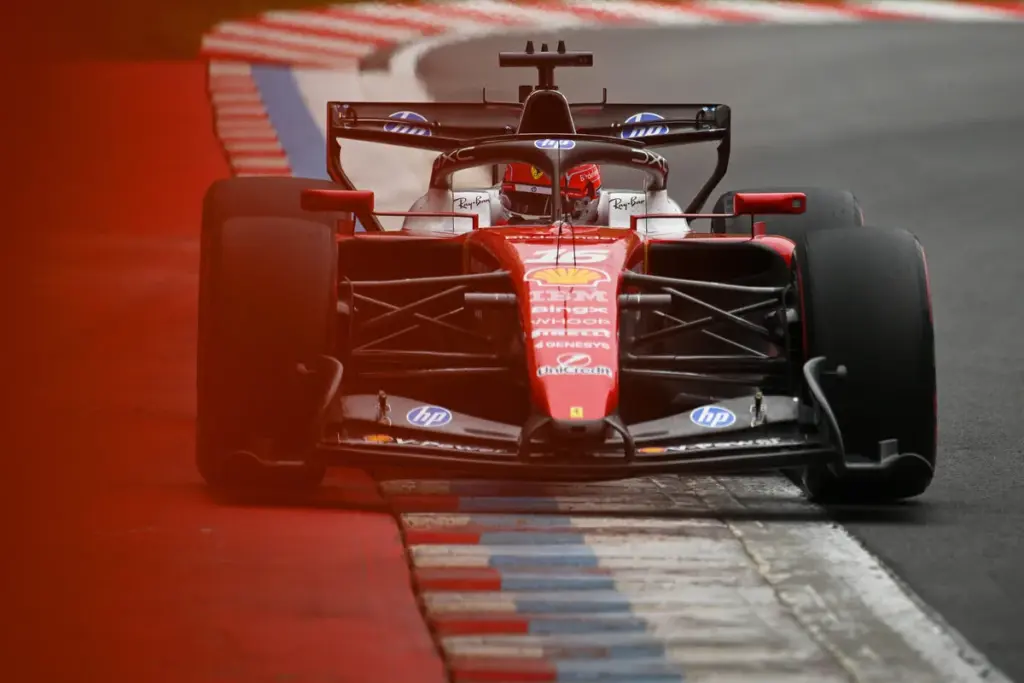
A crucial turning point for Ferrari’s fate was the FIA’s decision to extend the starting procedure, accommodating the difficulties of those who could not load the turbo in time and struggled to leave the grid. Although it was impossible to overlook such a safety issue, the final decision seriously damaged the Prancing Horse and not only because of the lost advantage at the start. If Maranello pursued a less powerful and more responsive engine concept, it was also to ensure it could start, after repeatedly raising the issue with the FIA. Giving 5 seconds’ notice before the lights go out effectively undermined Ferrari’s foresight, rewarding the design choices of the competition and nullifying their side effects.
Another episode was the saga of the increase in the compression ratio of Mercedes engines, skillful in identifying an opportunity in the ambiguity of the technical regulations, catching the FIA by surprise. Nikolas Tombazis assured that the advantage for Brixworth power units is minimal, relegating the great media clamor to a phenomenon of collective hysteria. In any case, part of Ferrari’s delay also stems from this, although it is impossible to say by how much.
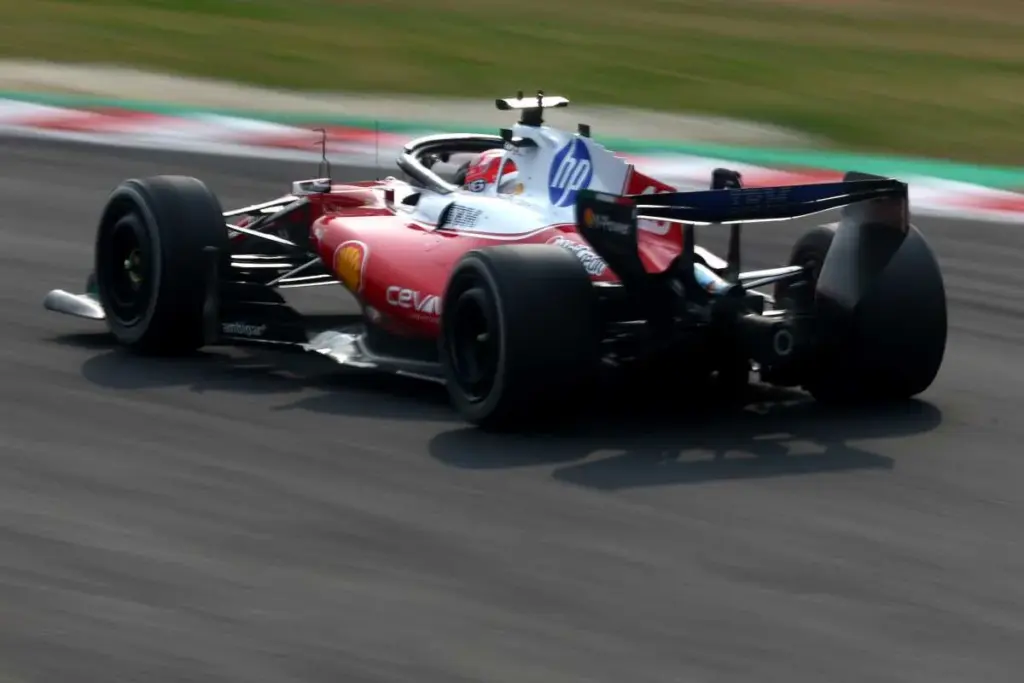
For the Prancing Horse, the great opportunity to catch up on this front will be 2027. Next year the cold measurement test will disappear and it will be possible to build an engine with a higher compression ratio at ambient temperature, which then stabilizes at the regulatory maximum of 16 once 130°C is reached. The important thing will be not to focus only on this, since even the debutant Red Bull-Ford probably has an engine advantage over Ferrari, despite lacking Mercedes’ solution.
Read more Martin: “Injuries? I’ve gotten used to them by now, it’s become normal not to be at 100%”
Fuel
Another major novelty of 2026 was the switch to sustainable fuels. Already in 2024, Vasseur identified the new fuels as an important field of challenges, so much so that he stated the game would be played mainly around them and the batteries. It is legitimate to ask whether Shell’s choice, Ferrari’s historic partner, to develop a fuel with a strong biological component, unlike the predominantly synthetic ones of the competition, has contributed to the engine’s delay.
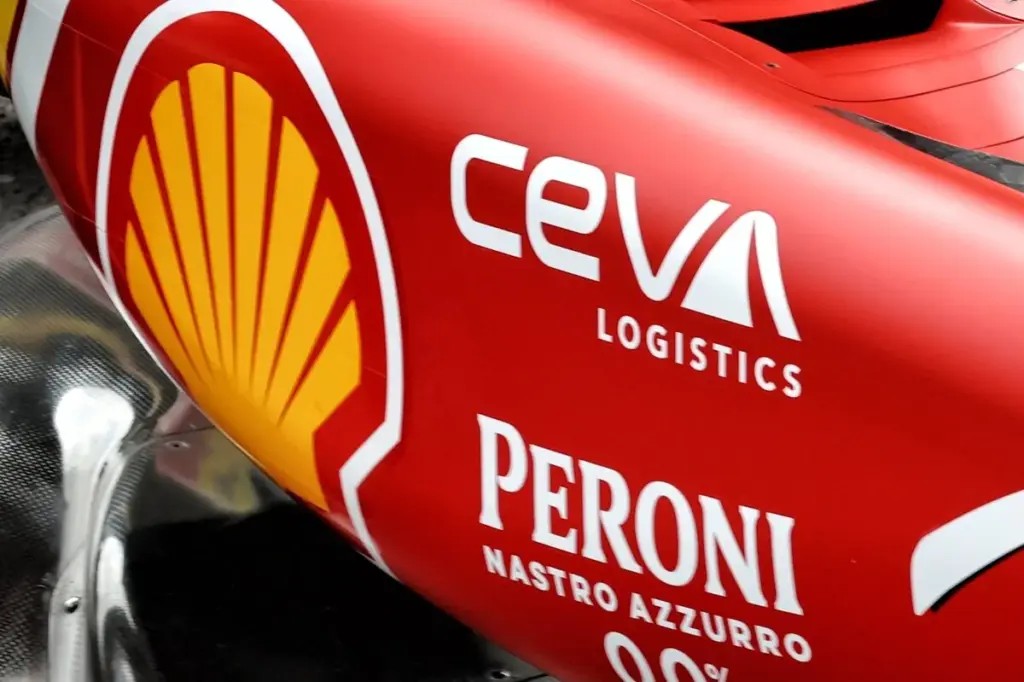
The new fuels, in reality, do not differ much from the previous ones in terms of chemical composition, still being mainly composed of hydrocarbons, that is, molecules of carbon and hydrogen. The novelty lies in the origin of these elements, no longer fossil-based, but derived from components and processes with high environmental sustainability of organic and/or synthetic nature. The entire extraction and production process must respect a maximum cap for equivalent carbon dioxide emissions, a sort of budget that determines the possibility of obtaining a certain chemical composition. In Maranello, Shell’s decision to focus on biological components will have to be evaluated from this perspective, keeping in mind that the final fuel formulation is made according to the engine concept.
The 2027 game
The only certainty is that Ferrari’s recovery will have to come from an improvement in thermal efficiency. Despite maintaining the same architecture and displacement as previous engines, the 2026 regulations have overturned combustion strategies, changing fundamental parameters such as compression ratio, turbo pressure, fuel flow, or the number of spark discharges. The Prancing Horse has room for improvement in interpreting all this and development will depend on the decisions made for the 2027 and 2028 regulations. Increasing fuel flow and thermal power could favor some design choices and disadvantage others, which, together with the management of the ADUO, explains the divergence of opinions on the issue between Ferrari and Mercedes.
Click here to add FormulaPassion as a preferred source on Google Discover: you will find our content more easily!
Read more Bezzecchi: “What a struggle in Barcelona, I am happy for the great weather at Mugello”