






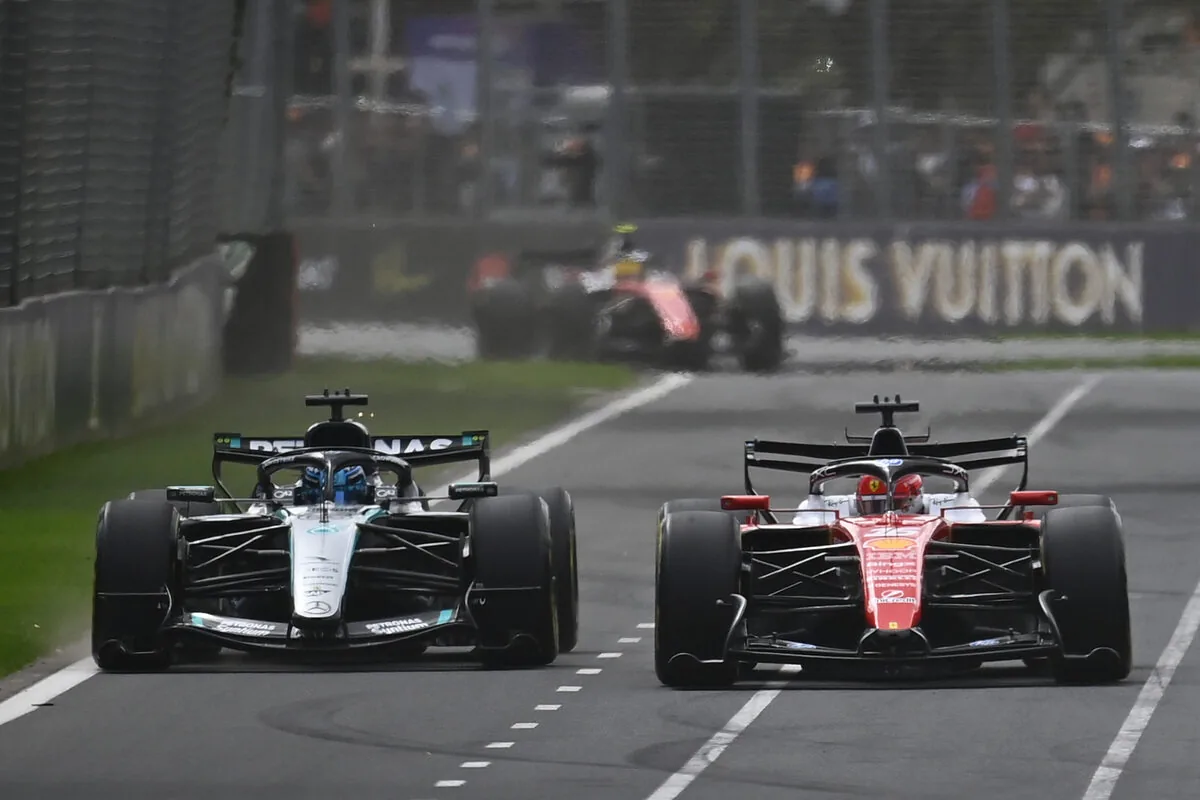
The Melbourne weekend highlighted the importance that energy management has on the balance of power and race dynamics, immediately leading to questions about what the situation will be in China. Data suggests that the situation may be less critical than in Australia, but with the great unknown of the impact that the long sections to be tackled with closed wings will have. The extent of Mercedes’ advantage will depend on this, on a track that will better highlight Ferrari’s more reactive engine.
Energy data
The numbers from the Shanghai circuit present a different picture for energy management. Data from the ground-effect era, although different from that of the new cars, says that in 2025 in China, each lap was driven at full throttle for up to 400 meters less than in Melbourne. Also in comparison with Australia, the qualifying average in Shanghai was almost 40 km/h lower, reducing fuel and energy consumption.
On the other hand, the long back straight remains a problem for the battery. There, with the old cars, you stayed at full throttle for as long as 17 seconds, compared to 15 seconds on the straight in Melbourne’s second sector, but with an important difference. In Australia, the section in question was preceded and followed by very light braking that did not allow the battery to recharge much, with the additional obligation to save energy for the subsequent fast section between turns 10 and 11. In Shanghai, however, the longest straight is located between two violent braking zones, dampening the “oxygen debt” of the hybrid part.
| GROUND EFFECT ERA STATISTICS | ||||
| China | Australia | Bahrain | Seasonal average | |
| Full throttle time [s] | 50 | 53 | 55 | 50 |
| Full throttle distance [m] | 3706 | 4116 | 3950 | 3724 |
| Average qualifying speed [km/h] | 216 | 253 | 217 | 227 |
| Time on brakes (Brembo data) [s] | 16.3 | 8.3 | 16.2 | 13.0 |
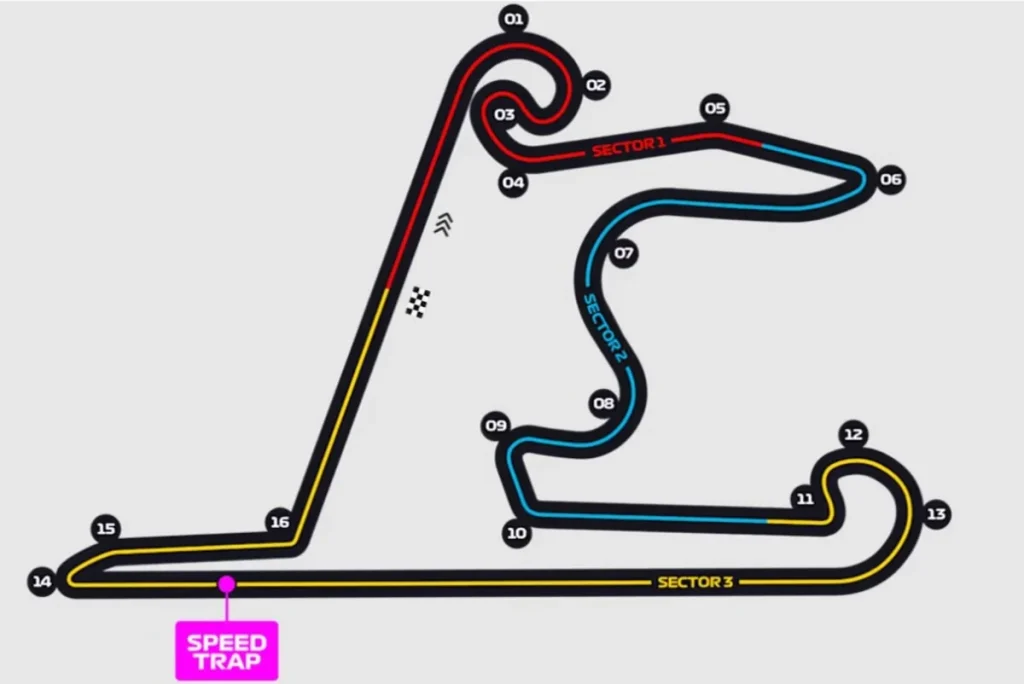
Speaking of brakes, in 2025 Brembo estimated that their usage time in China was almost double that of Albert Park. Knowing that during braking the battery can recharge up to 350 kW of power, a rough calculation gives a recoverable energy under braking of 5.7 MJ, compared to 2.9 in Melbourne. If this were confirmed, less extreme clipping and straight-line management strategies would be needed in Shanghai, making driving more natural.
The risk of the technical sections
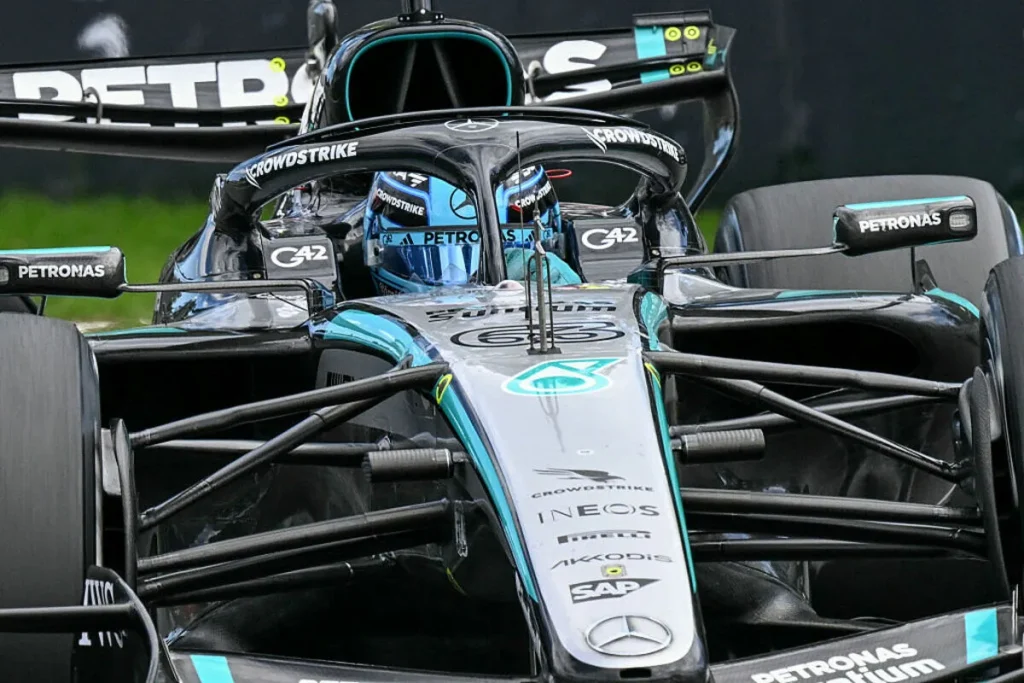
On paper, all this would standardize charging strategies, offering more traditional overtaking and race dynamics. Another possible effect would be the downsizing of Mercedes’ strength. The Silver Arrows have shown clear superiority, especially in qualifying, also thanks to the powerful power unit from Brixworth. The abundance of horsepower allows part of it to be used to recharge the battery and/or not to be too dependent on the extra boost from the hybrid, an advantage that diminishes the more points there are to recover energy under braking.
The conditional, in any case, remains mandatory, as there is another unknown to take into consideration. The technical section of the second sector of Shanghai is a long zone to be tackled at high speeds and with closed wings, a combination that will increase consumption. Much of the weekend’s dynamics will depend on what the impact of all this will be and whether it will weigh more than the other aspects that, instead, should facilitate energy management.
What is certain is that the teams will already put into practice what they learned during the first weekend, adjusting their battery charging strategies. The comparison between the new Formula 1 and Formula E is not only valid for the driving style, but also for a development race that is played out as much on management software updates. In Australia, Leclerc explained that the system learns from previous laps and adapts in real time, which leads to expectations of growth for everyone on this front after a full weekend, which will be even more tangible after the first three races.
The power unit is not enough
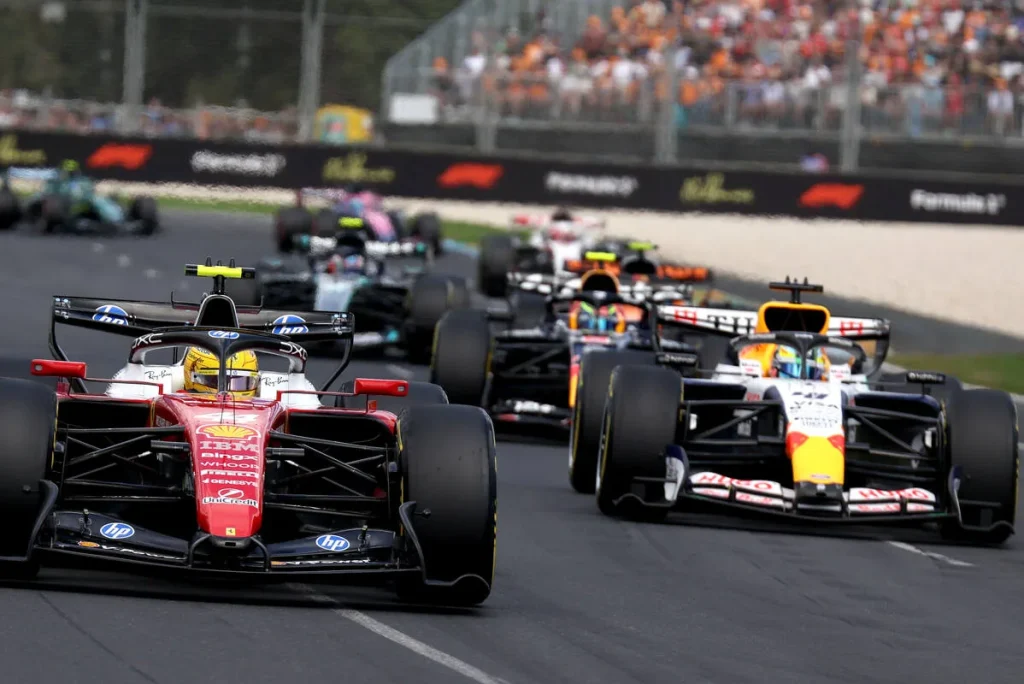
As important as it is, energy management will not be the only factor that could change the gaps seen in Australia. The data on the increased time spent braking, for example, is evidence of the presence of several low-speed zones, where the drive out of corners will be important. In this, Ferrari will be able to leverage the smaller turbo and in general an engine that offers a lot of torque at low revs, qualities overshadowed in Australia by a track that highlighted absolute power more.
Keep an eye also on aerodynamic and chassis qualities, with the many long corners that will primarily show the stability of individual cars. Furthermore, the long sections to be covered with closed wings will lead the tires to experience great stress for prolonged periods under the push of maximum aerodynamic load. Pressures and temperatures will tend to rise and with them thermal degradation, inviting even more attention to tire management.
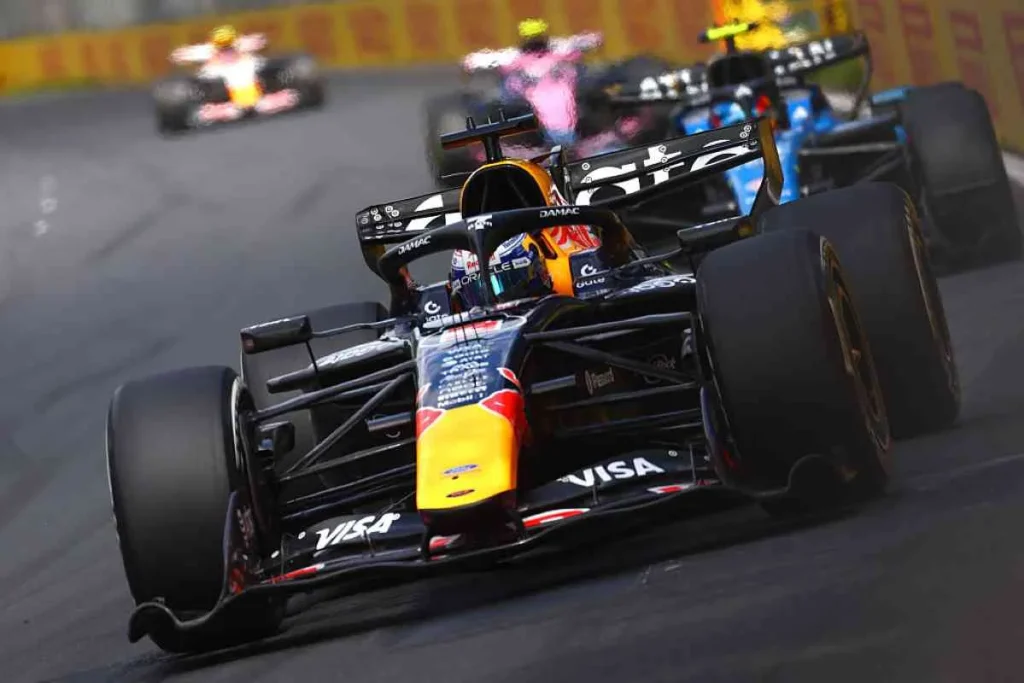
Overall, there are many factors that will affect the balance of power. Vasseur himself, while acknowledging the strength of Mercedes, which remains the big favorite, said that in China the situation could be different compared to Australia. It is not even a given that the first of the pursuers will be Ferrari. Red Bull has shown itself to be a very competitive car in fast corners, but in Shanghai it will also have to deal with its own shortcomings in the many low-speed sections.
The Sprint returns
To all this is added the Sprint format, the first of the six weekends scheduled. The reduction to a single free practice session will be even more impactful this year, as there is a need to run to experiment and find the optimal energy management strategy. With two races there will also be two starts, with a distance between the grid and the first corner of 315 meters, about forty more than in Australia. Ferrari-powered teams hope to capitalize on the start advantage shown in Melbourne, though nothing that can change a prediction that remains favorable to Mercedes.
Read more The rumor – Ferrari with the Macarena wing already in China