




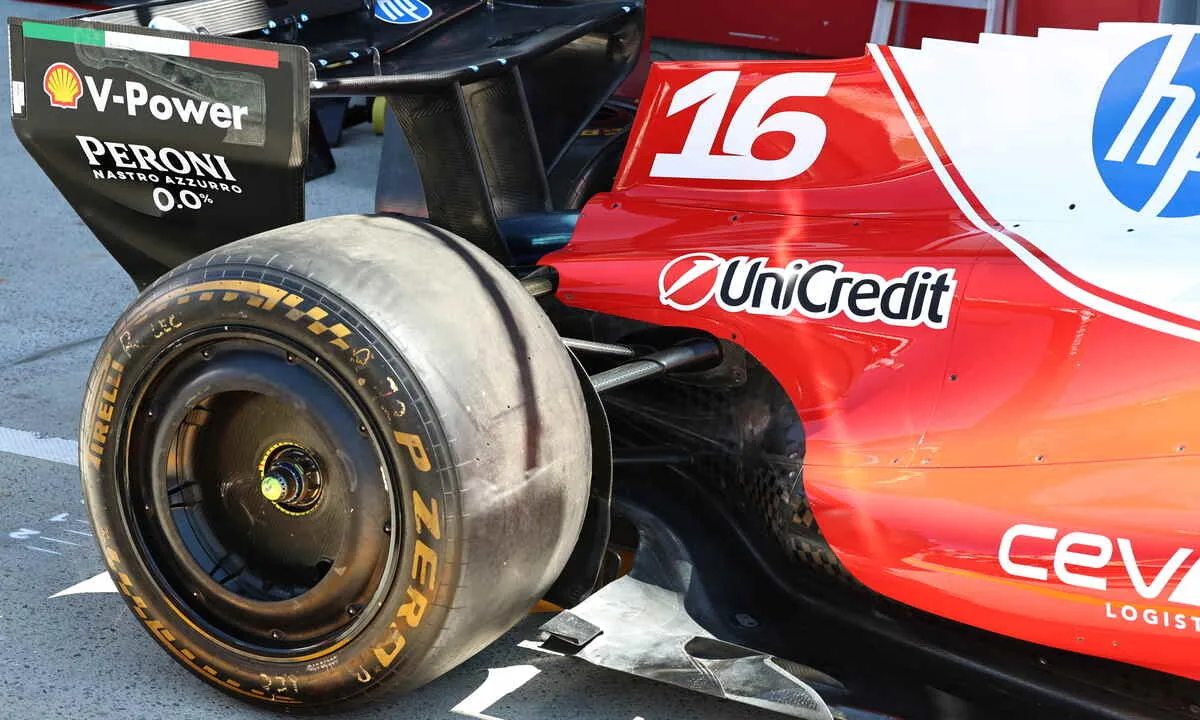
There is another technical battle being played out quietly. While there is much talk about engines and aerodynamics, behind the scenes there is also a strong push on the development of the rims, which from this year has returned to the teams. Pirelli has found different schools of thought in managing tire temperatures, which are expected to emerge with the arrival of the European summer. All eyes are on Mercedes, which, according to Antonelli, has pushed hard on tire cooling.
Read more Ferrari, Pier Guidi aims for Le Mans: “New tires, we need to discover a bit of everything” – VIDEO
The battle over the rims
Even with the new generation of single-seaters, the balance of power continues to be affected by temperature variations. This is a direct consequence of the attention teams are paying to tire cooling, each following a different path, as Simone Berra, Pirelli’s Chief Engineer, explains: “There is a trend and in my opinion in hot races the difference will emerge more between those who have worked to try to cool more and those who instead work the tires at higher temperatures”.
Already last year there was much talk about the brake cooling baskets and ducts, particularly McLaren’s, designed to regulate heat transfer between discs and tires. Now the battle is even broader, since the new regulations have liberalized the development of the rims. “The big difference compared to last year is that the rims are no longer standard, but are an actual component that teams develop,” explains Berra. “Each has its own philosophy, also regarding the heat exchange between rim, internal air, and tire. Depending on the teams’ design choices, we see temperature and pressure evolutions of the tires with much more marked differences between individual cars.”
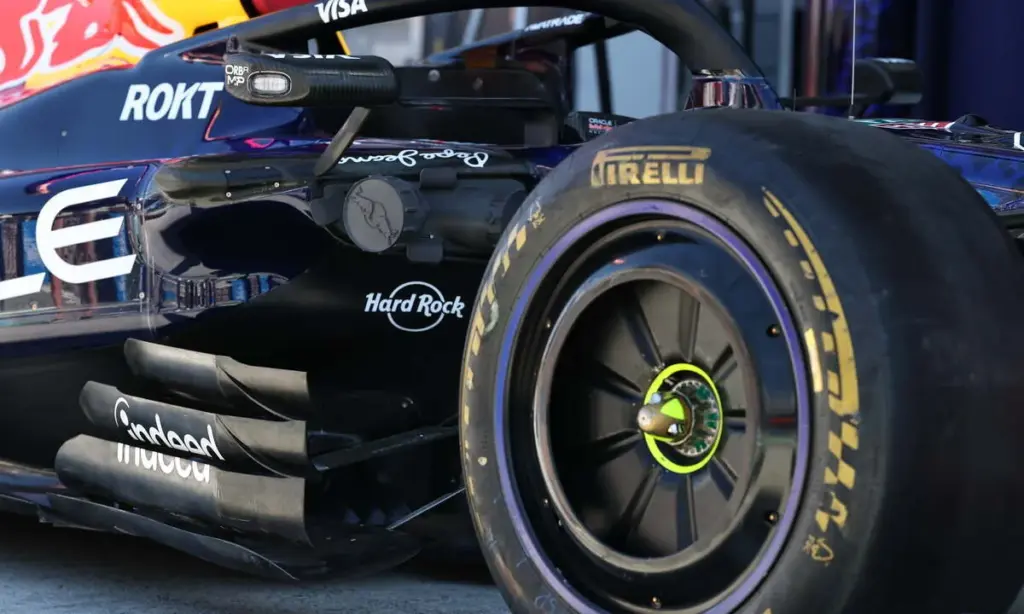
“Each team has made its own choices to reach certain temperatures and operating pressures. Clearly, when it’s colder, some design choices backfire a bit, because if with the rim you tend to want to cool the tire a lot, then you have problems getting it up to temperature. Others, instead, who have chosen a path more similar to last year, with a more linear pressure evolution to have a bit more temperature on the tire side, are favored in these [cold] conditions.”
Watch out for Mercedes
In Canada many teams had difficulty getting the tires up to temperature. This is not new, since the Montreal circuit always generates little energy in the tires, added to a decidedly cool climate. Until last year, Mercedes was the car that performed best in cold conditions and generally when the tires worked at lower temperatures than usual. Initially, it was thought that the W17 had inherited the same characteristics, but according to Antonelli it seems that the cold in Canada actually slowed down the Silver Arrows.
Read more Tesla grows in the main European markets. But in Italy…
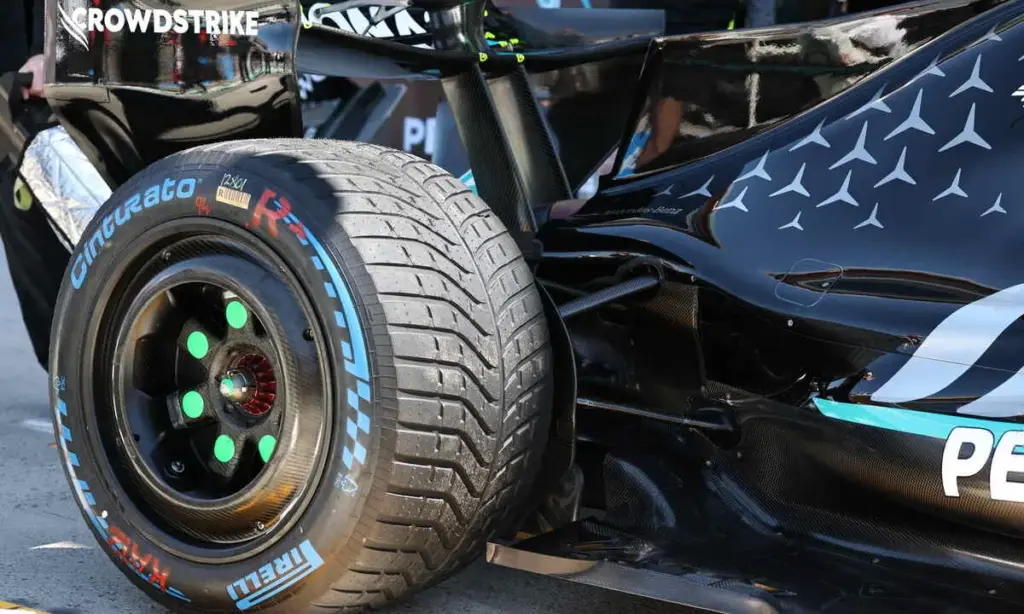
“Our car is very good at cooling the tires,” comments Kimi. “This weekend it was so cold that it was difficult to get them up to temperature and I think this penalized us a bit.” The words of the Italian driver suggest that Mercedes is among the teams that have designed the rims to limit tire overheating as much as possible, continuing to push in this direction with the updates brought to Canada. “This package gives you more downforce and we felt it, but it also improved the cooling level,” Antonelli says. The W17 could therefore prove even more competitive with the arrival of the summer heat, especially in managing thermal degradation, but Ferrari also seems to appreciate high temperatures, called for on several occasions by Fred Vasseur.
A mix of factors
Surely summer and European circuits will increase the relevance of thermal degradation. Generating high aerodynamic load will be an important quality to manage tires over long distances, but it is not certain that those with more grip will better contain the performance drop. Engineer Berra explains: “In hot races thermal degradation is the main factor. Overheating and going outside the operating window leads to greater pace decay. Even if one can generate more downforce and has a more stable car in corners, they may generate more temperature [in the tire] precisely due to a different rim design choice.”
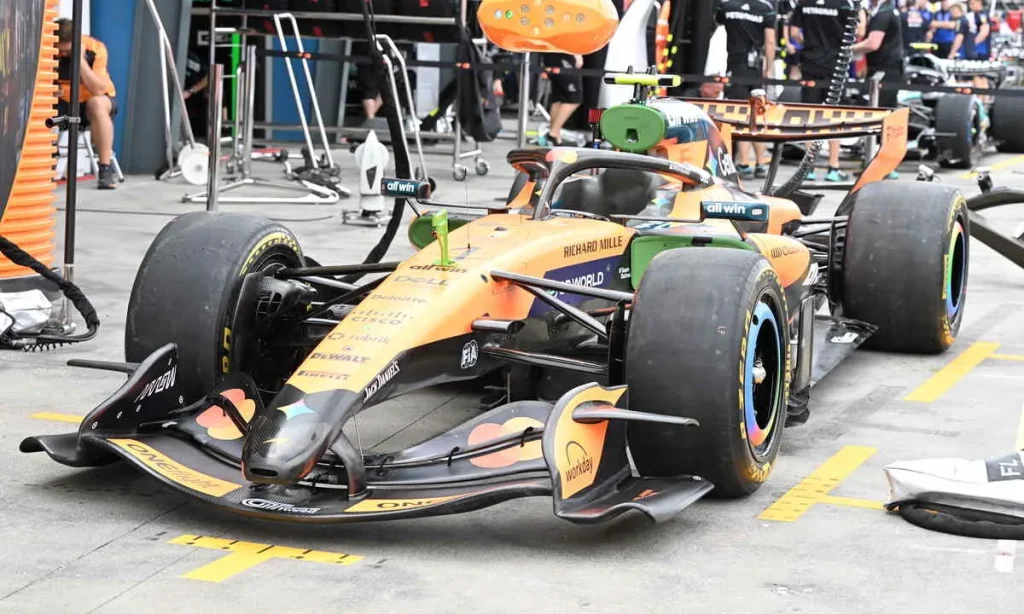
“Certainly there are several factors,” continues Pirelli’s Chief Engineer. “Load also influences, because if you slide, you induce micro-slips that generate high surface temperatures and cause terrible thermal degradation. It’s a combination with the philosophy of the rims and generally the whole car. It also depends on how the suspension makes the tire work in high-speed corners and how it distributes energy on the tread. That is another important effect that significantly influences degradation.” In short, we will have to wait for the first real hot race to judge the best car in managing degradation, but what is certain is that rim development has become an important battleground again capable of making a difference.
Click here to add FormulaPassion as a preferred source on Google Discover: you will find our content more easily!
Read more Di Giannantonio: “Balaton Park is the opposite of Mugello, I want to return to the podium”