







Every year, at the end of July, Italy prepares for one of its most predictable and least governable migrations: the summer exodus. Almost a national deadline. And like all respected deadlines in this country, this one is also accompanied by an imposing apparatus of plans, coordination tables, press releases, and prohibitions.
Read more Racing Bulls, in Hungary also Lawson with the updates: “The team works hard”
This year, Viabilità Italia, the body that has been managing national road crises for twenty years, has released the usual calendar of “bollini” (traffic forecasts/restrictions) for August and September 2026. This is a serious document, drawn up by a committee that brings together the Traffic Police, Fire Brigade, Civil Protection, Anas, motorway concessionaires, Anci, and the Union of Provinces. A small general staff of mobility that, every summer, tries to bring some order to the great mass movement towards tourist destinations.
Critical days
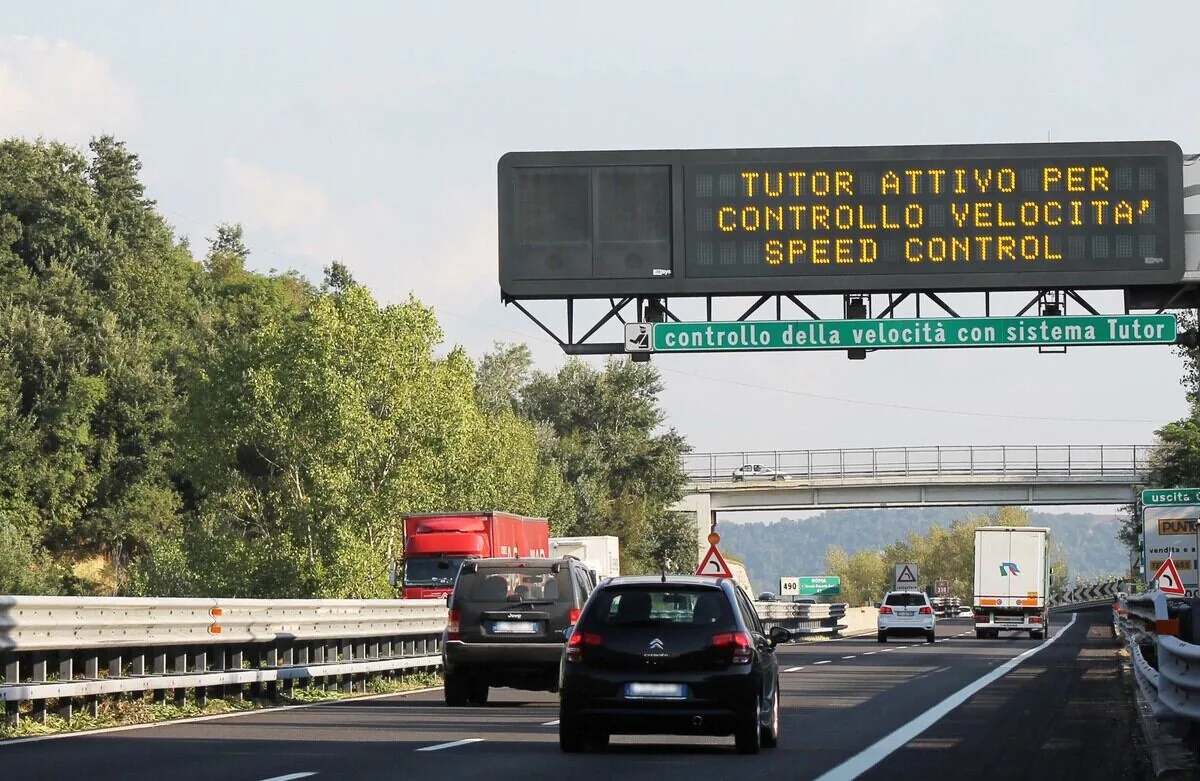
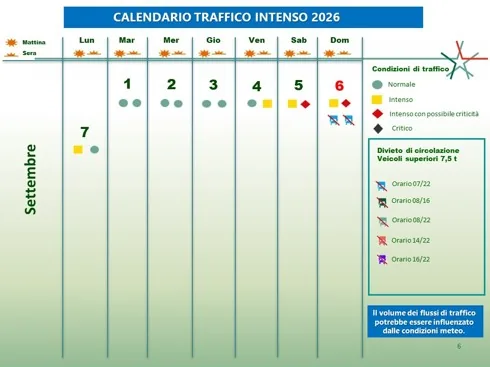
The most critical dates are already marked. Black sticker (heavy traffic/restrictions) on Saturday, August 1st, from 8 AM to 10 PM, and Sunday, August 2nd, from 7 AM to 10 PM. The same treatment applies to the following weekend, with a black sticker also on Friday, August 7th, from 4 PM to 10 PM. The Ferragosto peak includes prohibitions on Saturday, August 15th, and Sunday, August 16th, both from 7 AM to 10 PM. This continues with red and black stickers on August 22-23, August 29-30, and all Sundays in September until the 27th. During these time slots, the circulation of heavy vehicles over 7.5 tons is prohibited outside urban areas. For private cars, however, there are no formal prohibitions, but only the wish that everyone behaves with “prudence and common sense”.
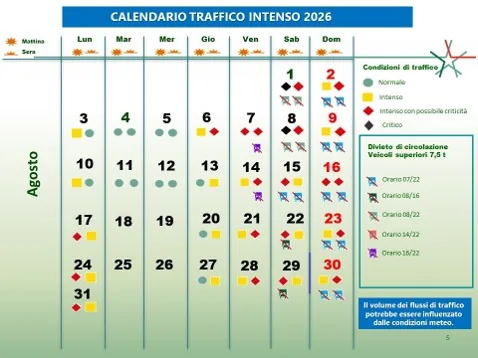
Anyone wishing to try their luck with a minimum of information can consult the State Police website (www.poliziadistato.it), where the complete calendar is published with indications of immovable construction sites and traffic flow forecasts on the busiest routes. For real-time updates, there is the free CCISS number, 1518, along with the websites www.cciss.it and mobile.cciss.it. Those traveling on Anas roads can use the “VAI” app or call 800.841.148. On toll motorways, however, individual companies provide their channels (websites, apps, and dedicated numbers), while aggregated information can be found on www.aiscat.it.
Meanwhile, authorities are preparing for the wave. The Traffic Police and Carabinieri will increase patrols, including motorcycle and aerial units. Controls with breathalyzers and drug precursors will be intensified, especially during evening and night hours along tourist routes. Particular attention will be paid to commercial vehicles, coaches, and the correct use of emergency lanes. Security measures against petty crime will be strengthened in service and parking areas.
Even those who choose the train are not entirely safe from scheduling issues. Until September 30, 2026, enhancement and modernization works are planned on the railway network, many of which are linked to the PNRR (National Recovery and Resilience Plan). The construction sites mainly affect high-speed lines and major interchange hubs. Trenitalia warns that there may be reductions in service and longer travel times. For those traveling by train, therefore, it becomes almost mandatory to regularly consult the Trenitalia Infomobilità website and pay attention to announcements at the station.
Read more F1 or “FormuIA 1”? Hadjar and the slipstream to Verstappen: “The software was confused”
Before departing, the Viabilità Italia plan recommends the usual things: checking vehicle efficiency, arranging luggage without overloading the car, securing animals properly, avoiding heavy meals and alcohol, and above all, being well-rested. During the journey, remember to fasten seat belts, including rear ones, use child seats for children, avoid distractions, make frequent stops, maintain a safe distance, and travel in the right lane on three-lane motorways.
The strategy
All of this, put down in black and white, has something reassuring about it. It almost seems as if, with a well-made calendar and a sufficient number of controls, the great summer migration could transform into an orderly and less stressful event. The reality, as every year, will probably be different. Queues will form anyway, especially in sections where long-distance traffic flows combine with local weekend traffic. Delays will occur at the narrowest points, at construction sites that cannot be moved, and at times when too many decide to leave or return simultaneously.
In short, we are facing the continuous attempt to regulate the unregulated. Every summer, the same pattern repeats: detailed plans are made, targeted prohibitions are issued, controls are multiplied, and appeals for caution are spread. Then, punctually, millions of people set off at the same time, creating a chaos that no coordination tool can truly eliminate. The plan serves, ultimately, two purposes: to provide a minimum of useful information to those who want to avoid the worst queues and, above all, to demonstrate that someone, somewhere, is trying to keep things under control.
That the control is partial, that the queues will still be there, and that many will depart anyway on black sticker days, is another story. A story that, like every year, will be written on the motorways between the first of August and the end of September. With or without a plan.
Read more Nissan, over 1 million electrified sales in Europe