



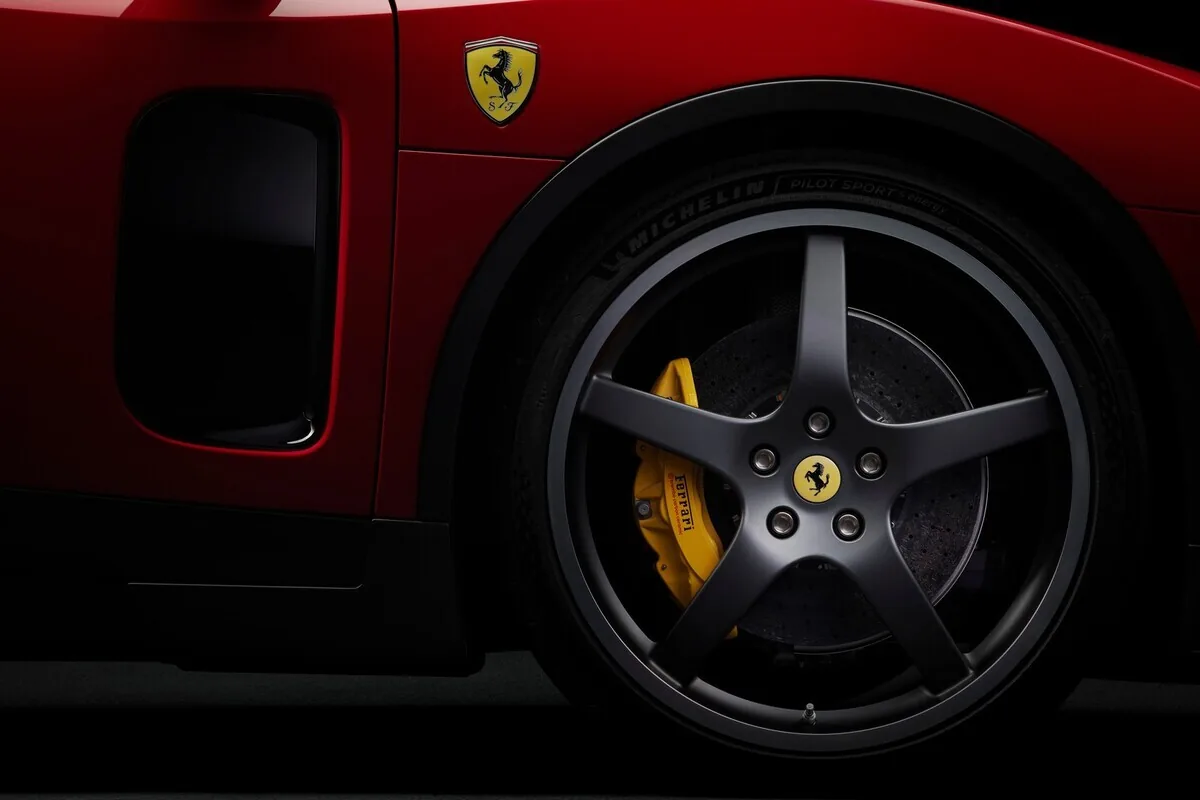
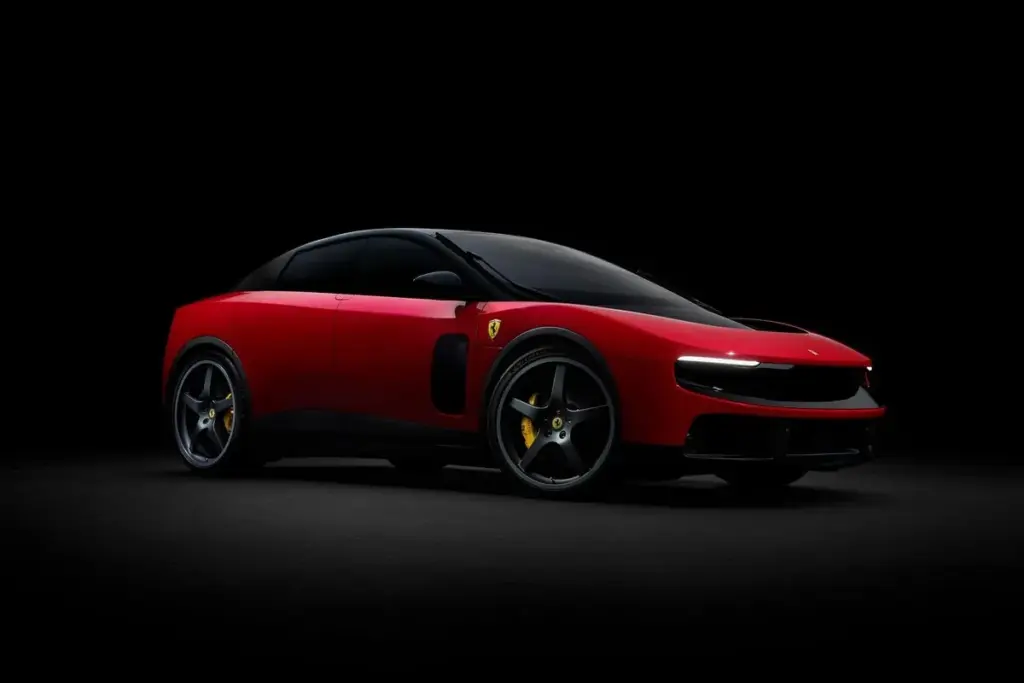
Ferrari Luce was born with a precise mission: to make a high-performance electric car also easy to use every day. To pursue such ambitious and interconnected goals, therefore renewed ergonomics and habitability, very fast charging, high range, the car was designed around a decisive factor: aerodynamics. Reducing the drag coefficient (Cx) to minimal levels was not a mere purely numerical exercise, but a fundamental engineering choice. With the aim of maximizing the range, setting a new record in Ferrari’s history.
Read more Montoya: “Verstappen has more problems in life than he should if he pays attention to what I say”
The aerodynamics of Ferrari Luce
The aerodynamic development of the Luce required more than five years of work and a rigorous approach, based on continuous analysis and checks. Ferrari carried out about 6,000 CFD simulations, with over 250 hours of wind tunnel testing on models and about 80 hours of tests with a 1:1 scale vehicle. The path followed by the Maranello house followed a step-by-step logic. First the macro volumes and the “master” sections, then close collaboration with LoveFrom and the Ferrari Design Studio to define the shapes, finally the refinement of every detail. From decompositions to fittings, from clearances to profiles: even seemingly secondary elements, such as the windshield wiper, were treated as full aerodynamic components. Because every turbulence can compromise efficiency and performance.
Maximum drag reduction
To achieve the maximum drag reduction, the silhouette was built as a set of solid and convex volumes, without interruptions, edges or bends. Air permeability interfaces with advanced solutions. A suspended front wing and a blowing on the rearview mirror, completed by the rear wing that reproduces a typical behavior of a sports car with a truncated tail. This strategy is integrated into the design language. A central cell houses the passengers and the mechanical core, while body elements seem to float around the shell, including the two suspended wing elements. In parallel, the Maranello house designed the cooling management to reduce aerodynamic impact: active grilles shield the radiators when cooling is not needed and, in specific driving conditions, can also help cancel the associated drag.
Read more Bottas: “The whole race with oversteer problems, but we keep improving”
Performance and comfort are not sacrificed
Even the aerodynamic and thermal “behind the scenes” of the Ferrari Luce works to preserve efficiency, comfort, and reliability. The cooling system adopts an architecture based on multiple circuits and fluids, integrating sophisticated logics to balance consumption, aerodynamic drag, and thermal exchange needs: cooling through coolant, water management at multiple temperature levels (800 V battery, inverter/axles/active suspensions and cabin) and air use regulated by active grilles. Furthermore, the control software coordinates valves, pumps, and strategies such as combined warm-up, pre-conditioning during charging, and rapid preparation even remotely, thus reducing or canceling the energy taken from the battery at the most delicate moment. Overall, between aerodynamic wheels inspired by turbine geometries and constant attention to aero-acoustics, rain, and water flow management, the car aims for a consistent result: more efficiency on the road, less noise, more range, and charging that does not “steal” performance or comfort.
Click here to add Formula Passion as a preferred source on Google Discover: you will find our content more easily!
Read more Raikkonen: “Antonelli has a special talent, he will not be like Piastri in 2025”