


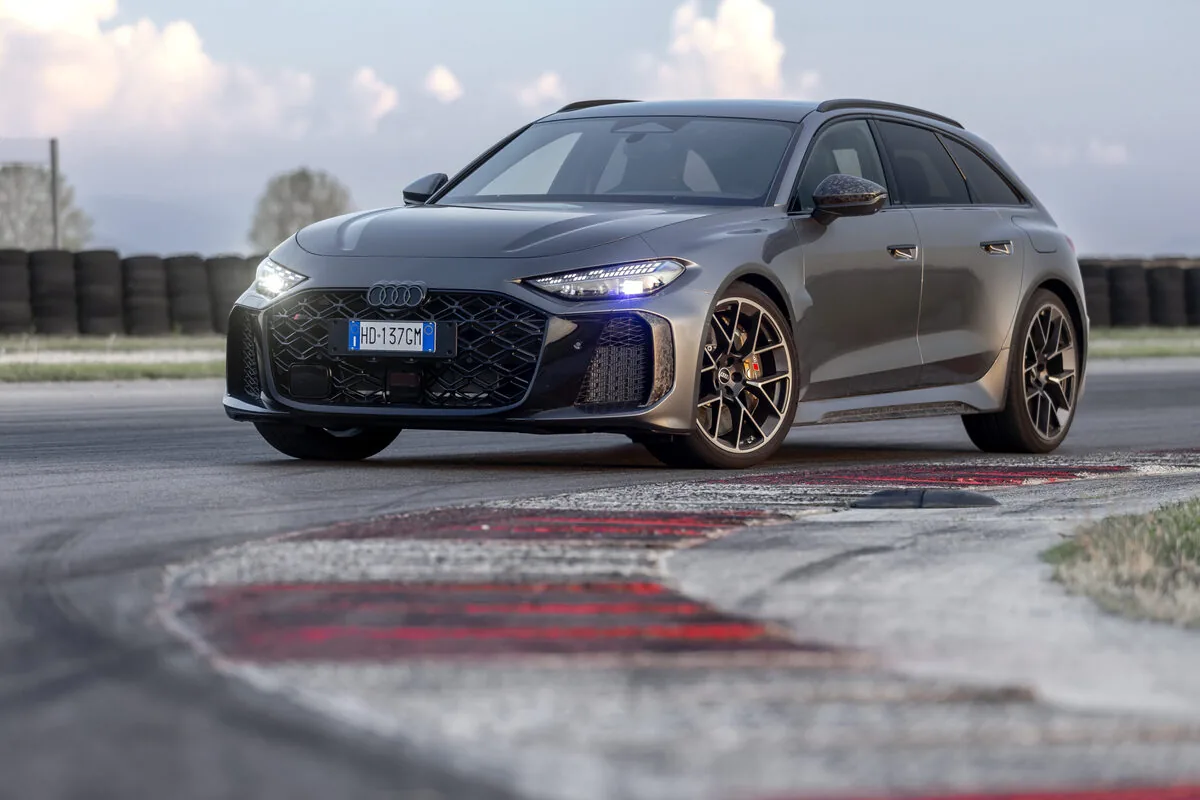
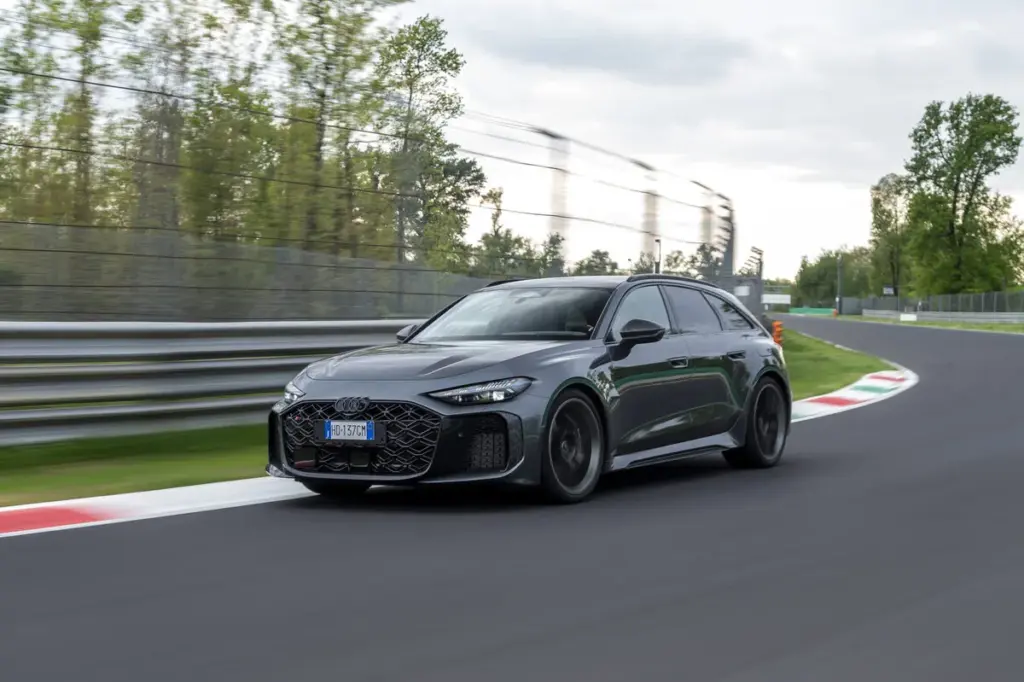
If for the new S5 Audi used the label “sporty balance,” for the new RS 5 the most fitting terminology inevitably sounds like “track grand tourer”. From the first contact, you can feel how the upgrade is more than just an update: the car doesn’t just “go fast,” but interprets driving in a more aggressive way, with a more responsive traction and a decidedly more immediate overall response compared to the S5. On corner exit and during acceleration from medium-low speeds, the difference is immediately noticeable: it’s as if the hybrid engine is constantly in the torque window, ready to fill gaps and continuously boost.
Read more Ferrari, Mercedes and McLaren: a crucial first response for the future in Miami
The new Audi RS 5
The heart of the bet is the hybrid powertrain: V6 2.9 TFSI with two VGT turbos, direct injection, air-water intercooler, and Miller cycle, paired with a PSM electric motor. Here the feeling changes because the PSM architecture, with an external rotor, high power density, and integration into the tiptronic transmission, redesigns responsiveness at mid-range revs. On the road, this means fuller acceleration. On the track, it translates into greater effectiveness in energy management phases, with the car always seeming ready for the next step change. The overall impression is of an RS 5 that doesn’t wait: it accompanies.
For the road and the track
Performance, then, speaks without appeal. Audi declares a V6 efficiency +20% compared to the RS 4, but behind the wheel what strikes most is the substance: the V6 reaches 510 hp, so 60 hp more, and a torque of 600 Nm between 2,000 and 5,000 rpm. Furthermore, maximum power can be unleashed up to 6,800 rpm, 100 rpm more than before. The electric support is equally incisive: the 177 hp and 460 Nm motor is powered by a 25.9 kWh high-voltage battery, with a declared zero-emission range of 84 km. Additionally, AC charging up to 11 kW promises a full charge in about 2 and a half hours: in terms of real use, this detail reduces the gap between performance and practicality.
Feeling and driving dynamics
On the driving chapter, the feeling becomes “of a working car” also thanks to the 8-speed tiptronic: faster shifts, close spacing, and optimized components (reduced weight and specific cooling radiator). You notice it in two moments: when you ask for a close gear change in sporty style, and when on the track you rely on responsiveness in speed realignments. The new response logics combine with the wide torque range and the tendency to rev higher, so the 0 to 100 km/h sprint in 3.6 seconds (half a second less than the RS 4) is not just a number.
Read more Hadjar and the memory of his entry into the Red Bull Junior Team: “I couldn’t believe it”
Traction and suspension
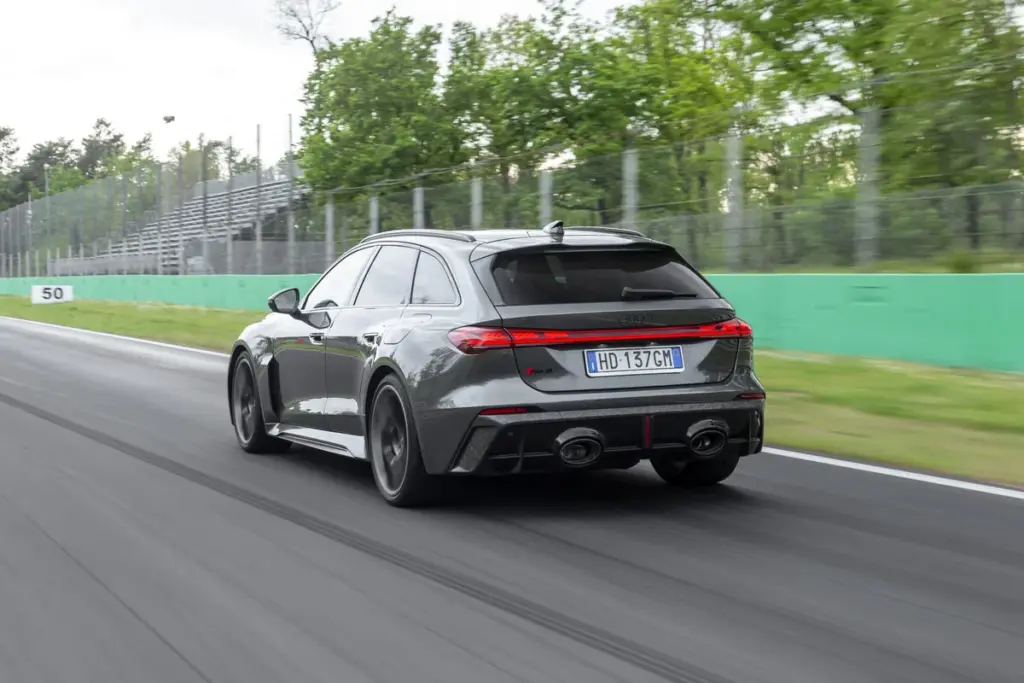
Completing the picture, the adoption of the new generation quattro traction with self-locking central differential and Dynamic Torque Control makes torque management faster and better synchronized with grip. Here emerges a discontinuity element: Audi talks about a first-ever system integrating a dedicated PSM electric motor, an overlapping gear pack, and a conventional differential, to actively distribute torque between the rear wheels. Also debuting is the electromechanical Torque Vectoring: faster than purely mechanical solutions, active in every driving phase, more compact than a two-motor system, and with a range superior to the RS torque splitter of the RS 3. Translation at the wheel? Remarkable agility and oversteer managed with surgical precision, without that “delay” feeling that sometimes afflicts less responsive systems.
Prices and range
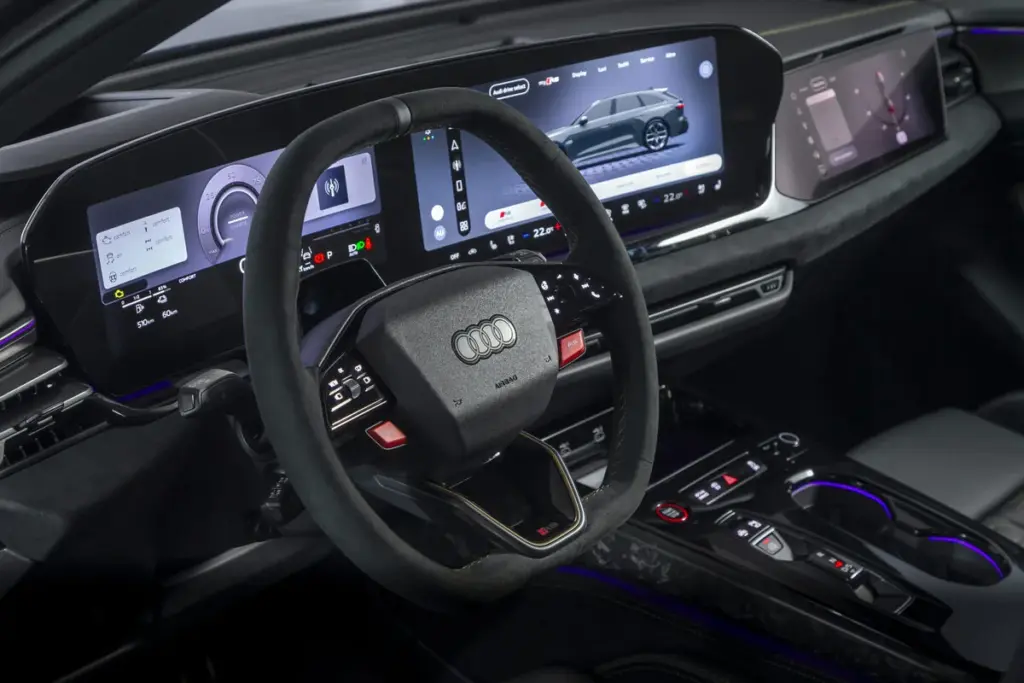
Finally, the RS doesn’t forgive: the setup is a concrete choice made of increased stiffness (body +10%), Audi Sport axles, double-valve shock absorbers, and very direct steering, with the declared goal of mixing track handling and GT comfort. On the braking front, RS brakes with sporty electro-hydraulic braking and carboceramic discs 30 kg lighter add bite and responsiveness, while specific software aims at efficiency and performance. In use, the buttons count: the Boost on the steering wheel increases temporary delivery, while RS sport and RS torque rear modes help customize aggressiveness. To conclude: prices from 111,110 euros for the RS 5 and 113,500 euros for the RS 5 Avant.
Read more Volkswagen ID. Polo, the iconic compact is now electric