




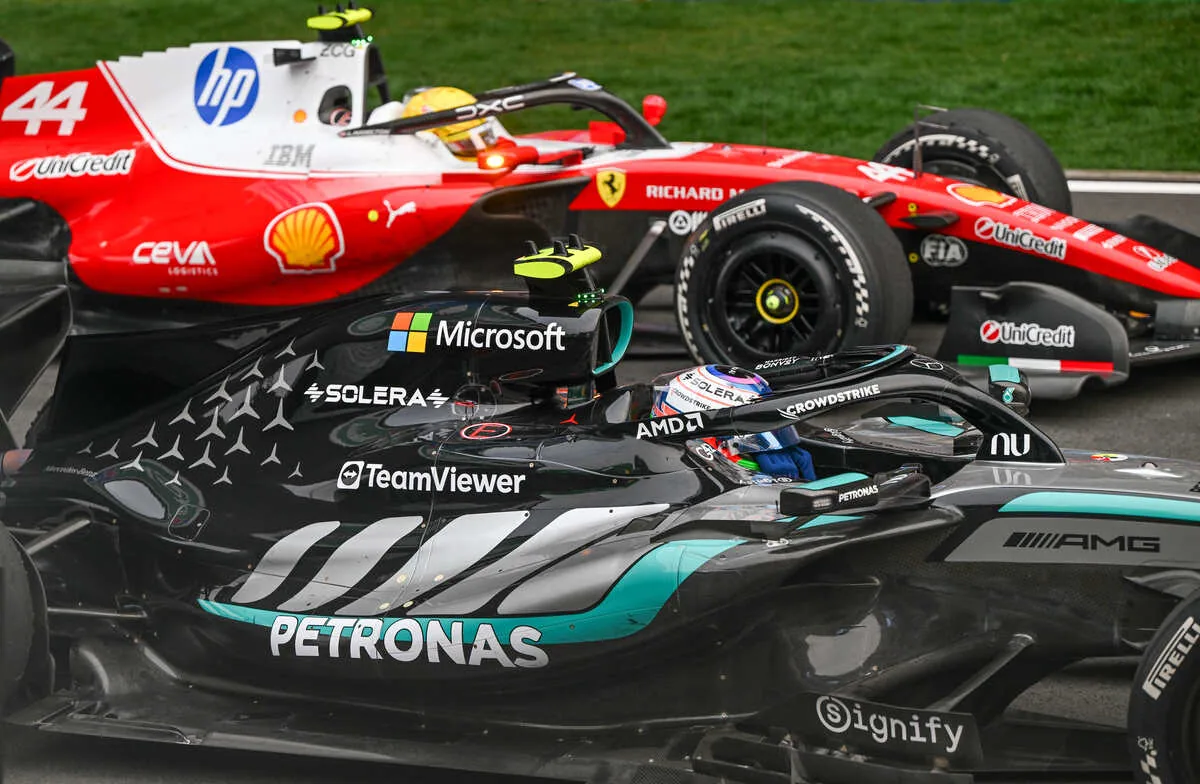
After making the first changes to the regulations, the FIA is preparing for the next big technical issue. Indeed, the decisive month for ADUO is approaching, the mechanism for assigning extra development opportunities for struggling engine manufacturers. Some teams have expressed some doubts about the correctness of the formula used, but Nikolas Tombazis reveals that the manufacturers themselves opposed a more complex procedure. The director of the FIA single-seater department discussed the topic with the Italian press, explaining the procedure that will determine the ADUO ranking.
The Procedure
The Federation’s task will be to draw up a ranking of the most performing engines, on the basis of which development concessions will then be assigned. The calculation will be based mainly on power, but with some adjustments. Tombazis explains: “Power is calculated in a lap-weighted manner: where power is more relevant, typically at the beginning of a straight, it weighs more than where it is less important.” The result will therefore not be a simple ranking of the peak powers of the various engines. Instead, their performance indices will count, taking into consideration the evolution of power at various speeds, with a particular focus on thrust out of corners.
Tombazis also reveals what data the FIA’s calculations will be based on: “For each race, we take the best car from each engine manufacturer, collect [data] over many laps and average it. Therefore, we have a fairly reasonable statistical approach that we have discussed and shared with the teams. We also have much better sensors this year than in previous ones, so we believe the measurement can be quite precise.” As for the timing, however, we will have to wait at least until the Monaco Grand Prix: “We are still evaluating. We have at least a month until the first tranche of ADUO results, so we will definitely have Miami and Canada before then.”
Read more Dixon still KO: Honda will replace him with rookie Yuki Kunii in Hungary

No Correction
As the time for allocation approaches, some team representatives have begun to express concerns about the formula used by the FIA. For example, those who, like Ferrari, opted for a smaller turbo, deliberately sacrificed maximum power in favor of torque in traction, considering it more profitable in the overall balance on the stopwatch. Also in the case of the Prancing Horse, the SF-26 features a flap behind the exhaust tailpipe for aerodynamic reasons, which obstructs the free exit of gases, leading to a further loss of engine power. With the formula used by the Federation, ADUO could thus guarantee extra development opportunities for engines that are not necessarily underperforming, but whose maximum power has been sacrificed in favor of other aspects of performance.
Tombazis responded to these objections, revealing that the FIA had tried to act in time, only to encounter resistance from the engine manufacturers themselves: “It is clear that various important, but secondary, parameters influence the pure performance of the engine in terms of horsepower, such as plenum temperature, turbo, or even exhaust pressure. Approximately a year ago, we offered engine manufacturers a slightly more complicated formula that would also take these parameters into account. They were quite categorical in saying they didn’t want it, so at the moment we have no corrections of this nature. The regulation is clear, engine power is taken.”