


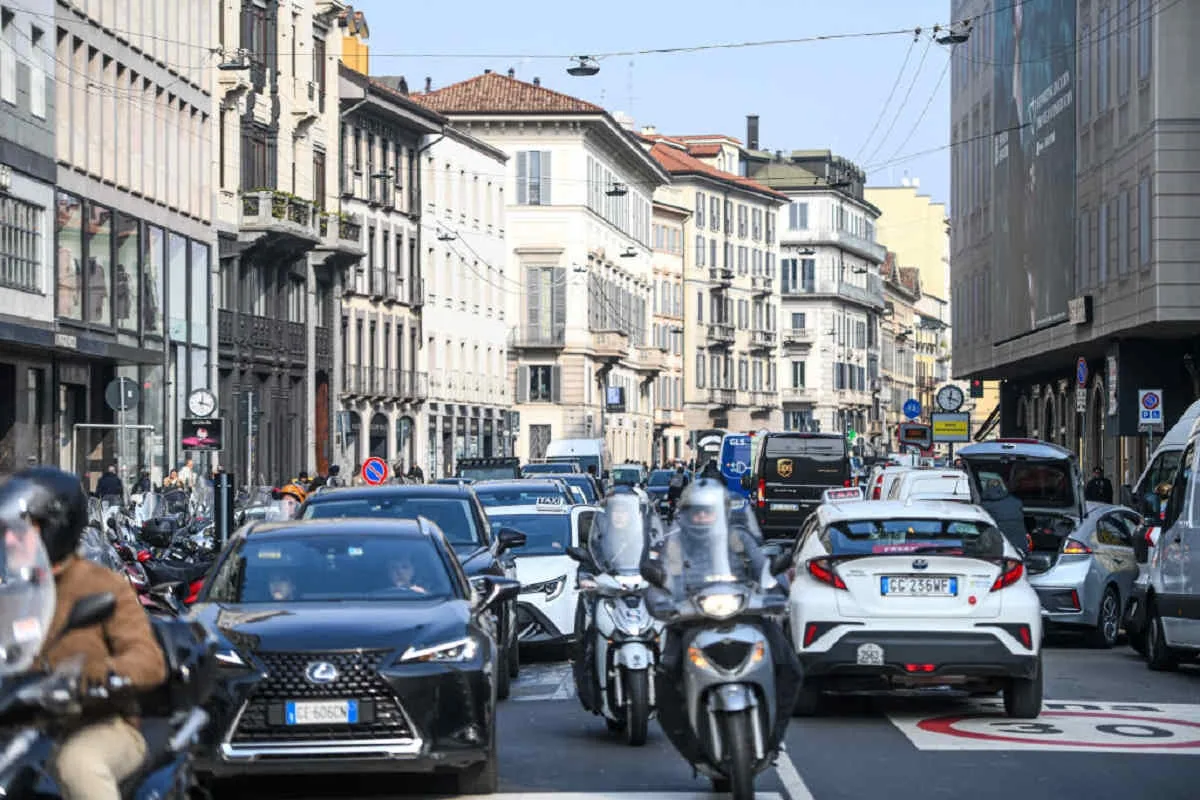
The European Sustainable Mobility Week is coming. In Italy, it coincides, with commendable punctuality, with the week in which people continue to take the car. With the navigator, however. This, apparently, is our digital contribution to saving the planet.
It is certified by the Foundation for Digital Sustainability: 32 percent of Italians regularly use an application to find the fastest route by car. Everything else — bus tickets, car sharing, bike sharing, carpooling, mixed routes, emission calculations — ranges between 7 and 4 percent. Four Italians out of ten know what carpooling is. Then, prudently, they do not use it. 64 percent have heard of car sharing. Same fate. Between knowing and doing, here, there is always a parking lot.
Mobility from the Stone Age
Outside large cities, the desert is not only of bike lanes. In municipalities under three thousand inhabitants, half the population does not even know that apps exist to buy a bus ticket. Which, when you think about it, is a form of realism: if the bus does not pass, the application that sells it is a metaphysical object. The same goes for those over 65. Between 65 and 75 years old, almost no one uses “soft” mobility services. 7 percent turn on the navigator. The others, it is assumed, still orient themselves with bell towers, which at least do not ask for an operating system update.
Read more Lindblad: “A not very exciting race, but I am happy to have brought home 2 points”
Small businesses on the brink
Micro-enterprises, which make up 94.5 percent of our productive fabric, are even worse off than citizens. Regular use of any digital tool to move differently from one’s own car is at 1-2 percent. Corporate carpooling, a noble idea designed for those who have to go to the same place at the same time, clashes with an anthropological fact: in companies with zero to nine employees, that coincidence rarely happens, and when it does, it is resolved with a phone call, not with an app.
Cultural disaster for electric cars
Then there is the electric car, a separate chapter of our inner life. 54 percent believe that hybrids and electric cars pollute as much as others. 64 percent, asked shortly after, claim that they are good for the environment. 58 percent would be willing to pay more for them. 66 percent would want them, but without paying more… Believing simultaneously in one thing and its opposite has been, for centuries, one of our national specialties. A cultural effort is needed, says the Foundation’s president Stefano Epifani. Right. In Italy, cultural work is always the last on the list, after downloading the application that shows us the shortest way to stay exactly where we are.
Read more Tesla Roadster, here we are: end of the soap opera