








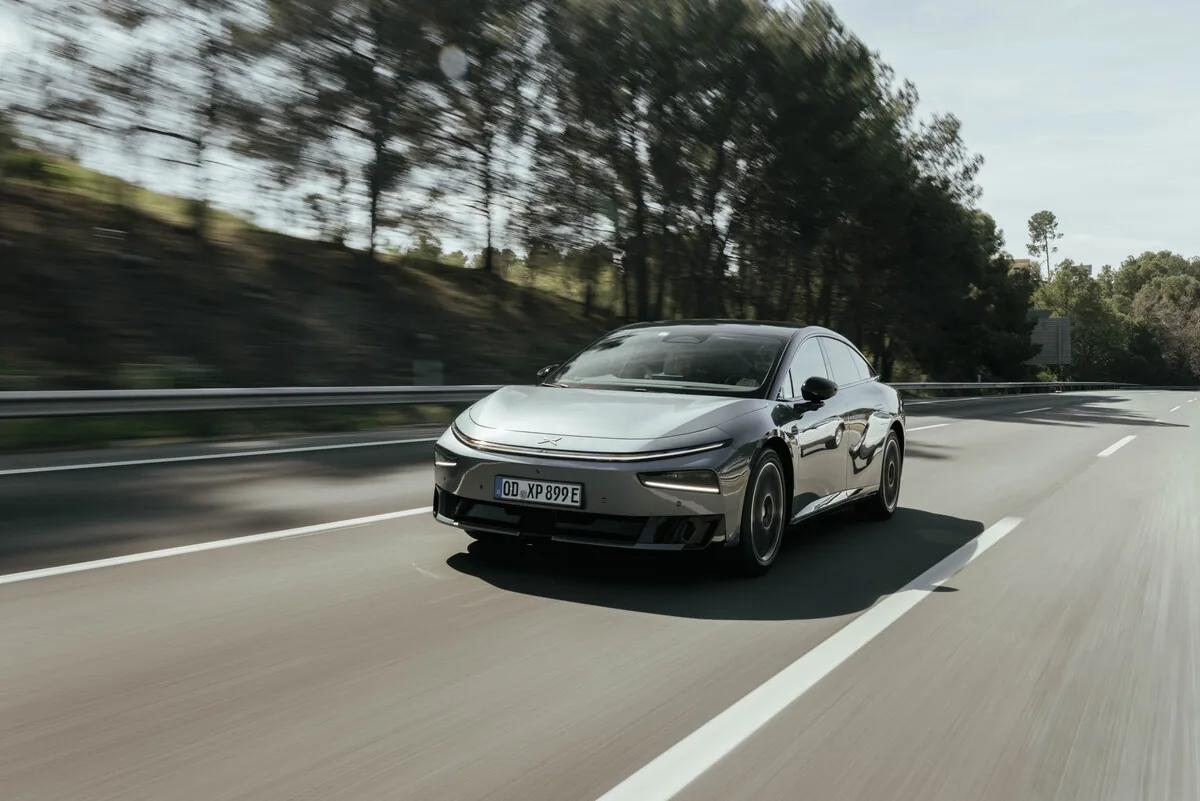
Xpeng has chosen to start from technology rather than the automobile. This concept makes the new P7+ an original product in the EV landscape. While traditional manufacturers have often started with the bodywork design and “added” electronic solutions on top, the Chinese brand has built around its intelligent computing platform a car that exploits every resource. From this comes a 100% electric fastback designed for an integrated driving experience from the start. The new P7+ that we have driven in recent days on Spanish roads, in and around Barcelona, and which will arrive in Italy in June, is concrete testimony to this.
Read more Jeep Compass, orders open for two new versions
The new Xpeng P7+
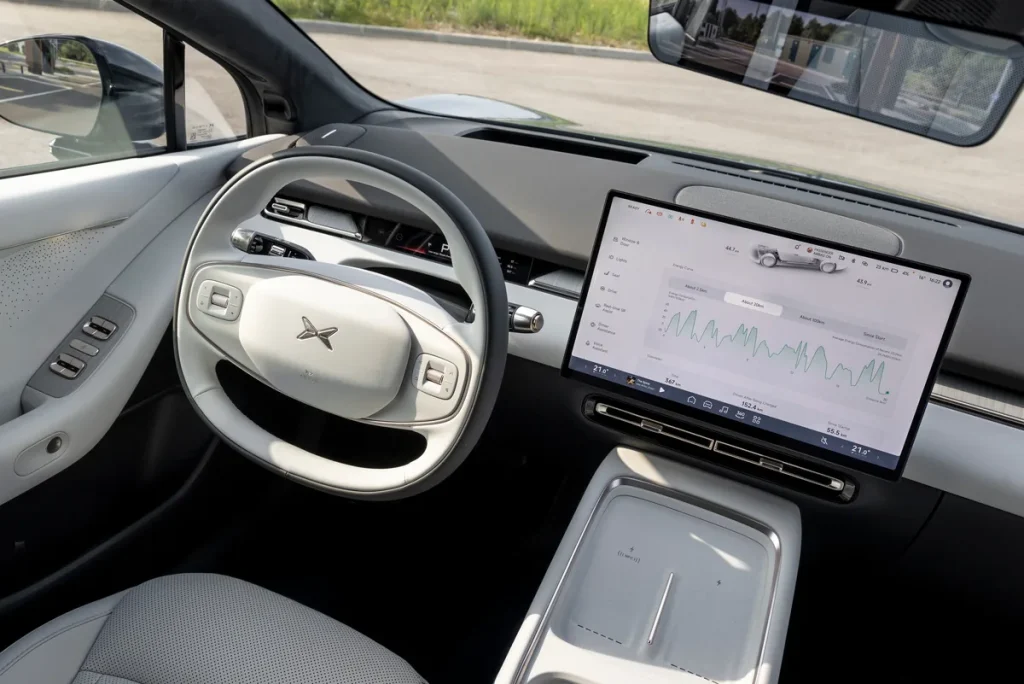
The technological character of the P7+ is immediately readable in the elements that dominate the cabin. At its core is Xpeng’s latest computing platform and the AI Turing chip architecture, capable of 750 tera operations per second. Numbers that do not remain theory, but translate into three screens: a 15,6″ central display, an 8,8″ instrument cluster, and a W‑HUD head-up display. A combination that amounts to an ecosystem of functions managed in a coherent and fluid way. The minimalist approach to physical controls puts the main display at the center of daily driving. With all the risk and advantage that this entails: cleaner interfaces, but a strong dependence on software ergonomics.
Ultra-fast charging
From a construction standpoint, the P7+ is a fastback with generous volumes and interiors designed according to new parameters of space and premium comfort. Speaking of space: the trunk capacity is 573 liters, expandable to 1.931 with the rear seats folded down. The 800-volt platform allows for ultra-fast charging, with support for 5C technology, and concrete numbers: from 10% to 80% in about 12 minutes on high-power charging stations. In our practical tests, charging proved to be fast and reliable: in one session we went from 35% to 83% in about ten minutes, with an average charge of around 250 kW and peaks that exceeded 360 kW.
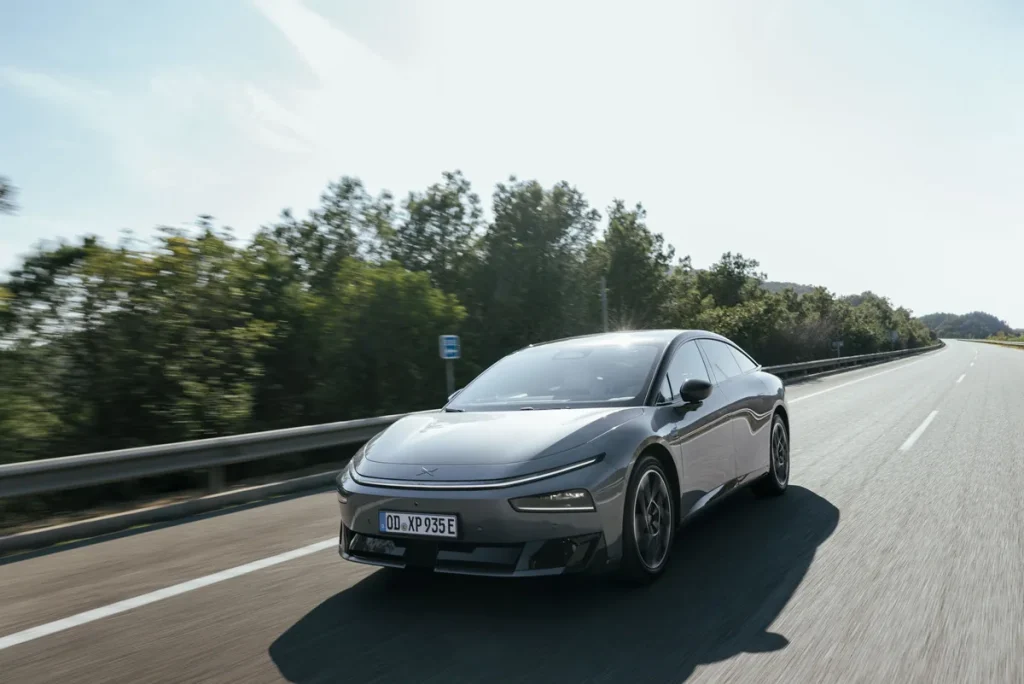
Three versions on the market
The engine range is varied and covers the needs of those looking for efficiency, range, or performance. The Standard Range two-wheel drive delivers 245 hp and 450 Nm, sprints from 0-100 km/h in under 7 seconds, and claims a 455 km range thanks to a 61,7 kWh battery. The Long Range also relies on rear-wheel drive, although power rises to 313 hp while maintaining torque and gaining range up to 530 km with a 74,9 kWh battery. The Performance, with all-wheel drive and the same 74,9 kWh battery, prioritizes sportiness: 503 hp, 670 Nm, and a 0-100 that takes 4,3 seconds, albeit with an estimated range of around 500 km. In all cases, the top speed is electronically limited to 200 km/h.
Read more Car market, growth in Italy also in March
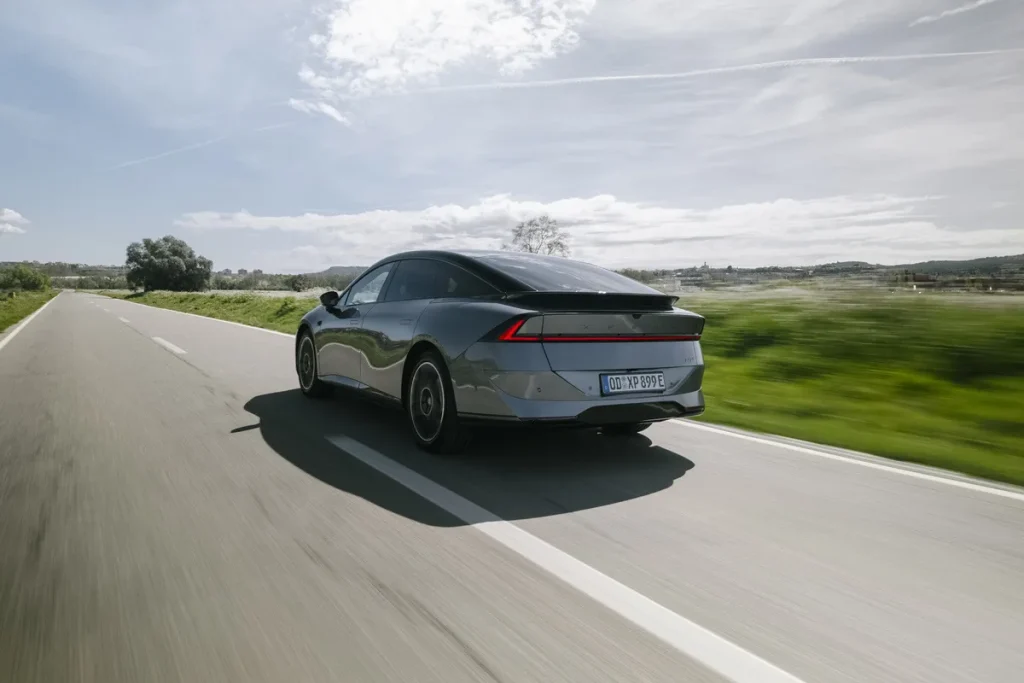
How it performs on the road
On the road, this battery-powered fastback behaves almost impeccably. Road holding is optimal, the steering is precise and soft in just the right way. And the power delivery is also immediate and consistent with the input the driver gives to the accelerator pedal. Top marks for comfort, both for the driver and the passenger. A real strength in this sense is the quietness of the ride; the acoustic insulation work carried out by the Chinese manufacturer has been commendable. The fact that it is a car suitable for every context is also evidenced by Xpeng’s decision to rely on a shock absorber system that combines a double-wishbone front suspension with a five-link multilink rear suspension: no asphalt roughness can stand in its way.
Top-tier safety, although…
In terms of safety, Xpeng has not held back. Although it must be said that the driver assistance systems are a bit invasive, though they can be deactivated from the central display. Speaking of the latter: it is the absolute protagonist in the cabin, all functions are managed from there, whether talking about driving modes or mirror adjustment, which however is then adjusted by interacting with the steering wheel. It is a very specific choice that Xpeng wanted to make, so as to minimize the presence of physical controls. The charging experience was also positive, as mentioned before: in just 10′ we went from 35% to 83% energy in the battery, charging at an average of 250 kW (with maximum peaks of about 360 kW). In short, the new P7+ is a full electric sedan that can suit many people. At a price that in Italy starts from 46.170 euros.