


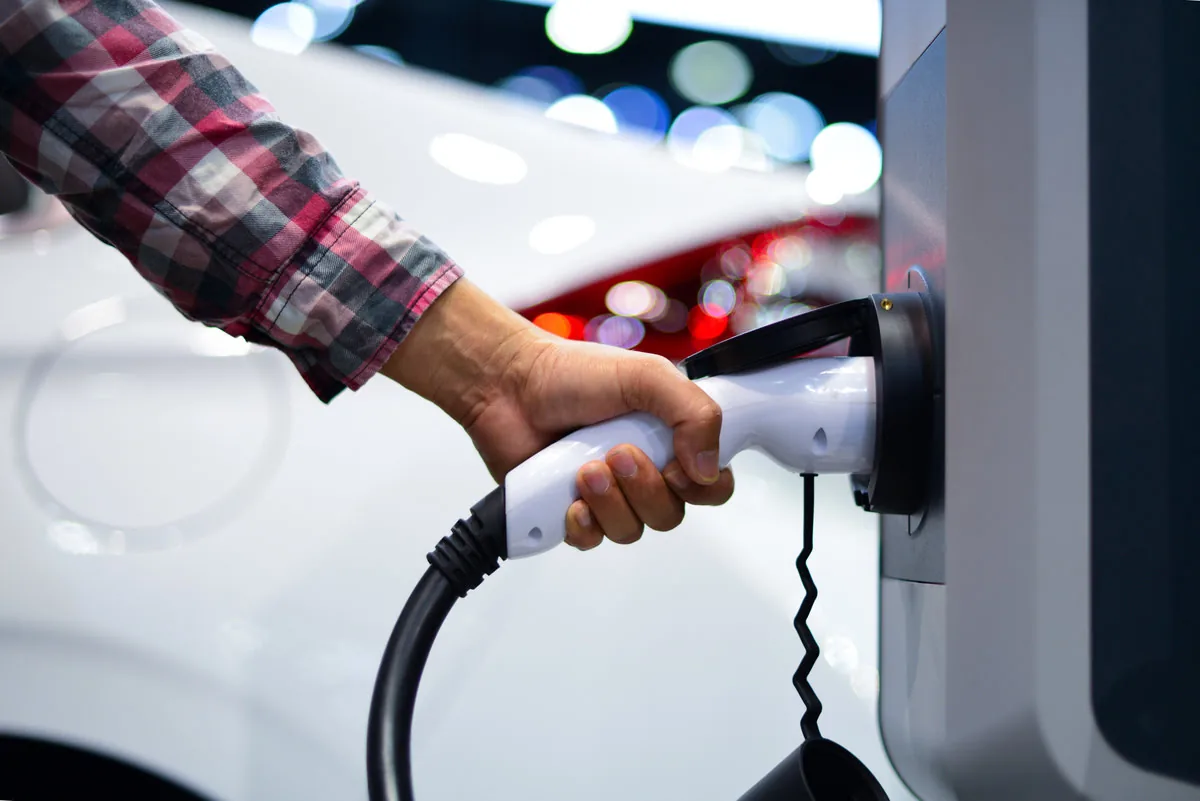
It’s not that Italians don’t want electric cars. It’s that they don’t want to buy them. Or rather: they don’t want to be the ones to pay the price of an uncertainty that is no longer technological, but existential. The second Yoyomove Observatory tells a simple and somewhat humiliating truth for those who continue to think in slogans: resistance to electric vehicles is not ideological, nor is it particularly emotional. It’s financial. It’s the very concrete fear of signing something that will later turn out to be wrong.
The numbers, as often happens when one stops asking for opinions and starts measuring behaviors, overturn some commonplaces. The propensity for electric vehicles is higher in small towns (62%) than in large cities (42%). Those who travel more kilometers per year are more willing to go full electric than those who travel few kilometers. SUV drivers – a category presumed to be devoted to ostentatious consumption – are the most open to electrified motorization. And range, that infamous range that should be the Achilles’ heel of electric vehicles, reveals itself for what it is: a declared obsession (67% would like at least 450 kilometers) which, however, when the moment of choice approaches, almost completely disappears from real conversations. It is not a usage limit. It is a reassurance limit.
The wisdom of Italians
There is, in these data, a form of involuntary wisdom. Italians do not reject electric cars because they “don’t believe in them.” They reject them because they don’t trust what happens after the purchase. After signing. The purchase price, depreciation, the fate of the battery in five or six years, the concrete possibility of recharging without having to organize one’s life around a charging station. These are all variables that, put together, transform the electric car from a technological object into an economic gamble. And Italians, from this point of view, are a people prudent to the point of obstinacy. They prefer hybrids not because they particularly love them, but because it resembles a compromise: keeping one foot in the old world and trying to put one in the new without burning their fingers completely.
The problems, or rather the fears, arise later
The most interesting data, however, does not concern the car itself as much as the way Italians buy it. 77% believe that long-term rental can facilitate the transition to electric. It’s an answer that says much more than it seems. It means that the problem is not electric vehicles themselves, but the moment they become property. They become “mine.” With all that this word entails in a country where the car is still, for many, an investment, a durable good, something that needs to be taken care of and that, if possible, should not depreciate too quickly.
Read more Towards Budapest: Ferrari with several cards to play, but watch out for degradation
There is a subtle but decisive difference between “trying electric” and “buying electric.” The first operation is an experiment. The second is an act of faith in the future: in residual value, in infrastructure, in one’s ability to adapt. And faith, in Italy, is a rare commodity when it comes to money. This is why long-term rental – with its fixed fee, included maintenance, the possibility of returning the car without drama – appears not as a technical solution, but as a form of psychological protection. It allows one to enter the transition without marrying it forever. To taste it without signing a marriage.
A key difference
The paradox, then, is this: the electric car advances not so much thanks to those who enthusiastically desire it, but thanks to those who manage to reduce its risk. A revolution made with rental contracts. A choice of field? No, a choice of prudence. And perhaps it is precisely for this reason that, in the end, it might even work. Because Italians have never needed to believe in the future. It has always been enough for them not to lose too much, in case the future turned out, as often happens, to be a little different from what they had been told.
Read more Acosta’s ‘barrage’: here’s how he defined Marquez, Rossi, Bezzecchi and himself