


McLaren confirms the huge overall step
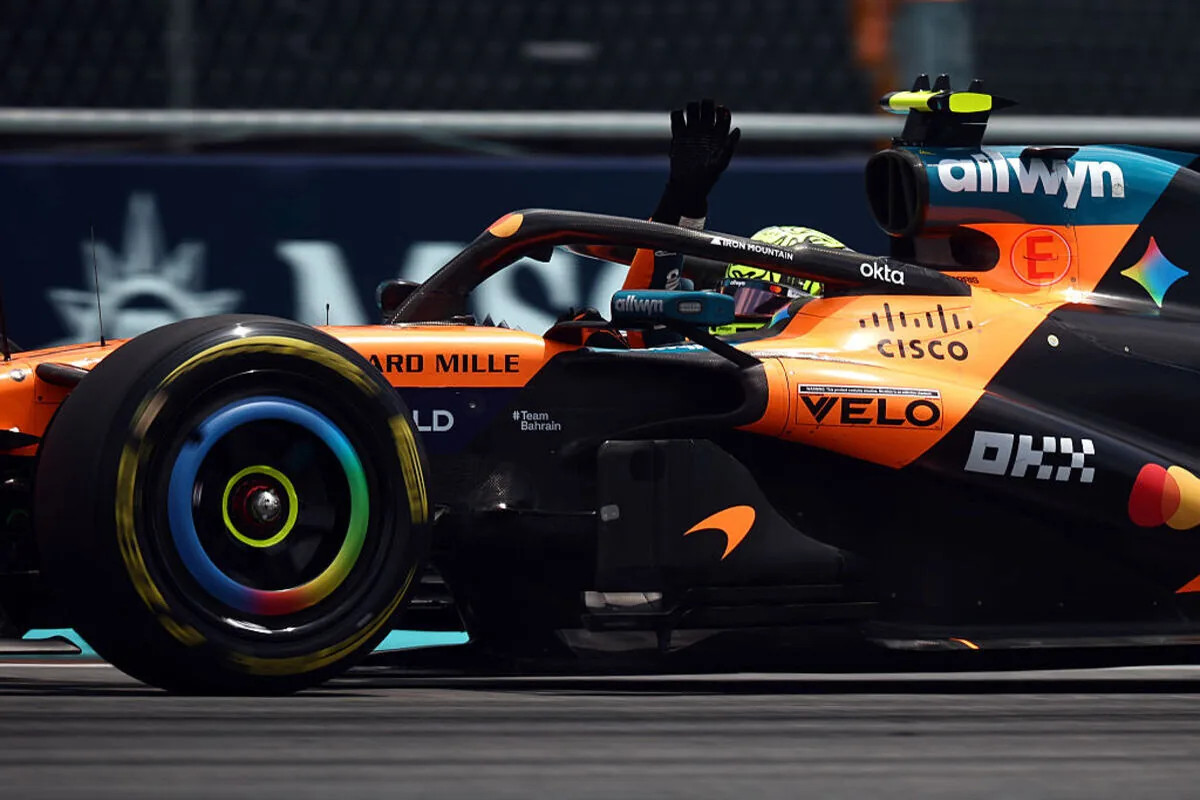
Lando Norris dominates the Miami Sprint Race, but driving a Formula 1 car that now seems to have good premises to be interesting. McLaren makes a one-two and does so undoubtedly thanks to merit: the updated car is excellent, it has much more downforce than before, it has great performance in the fast sections and is very fast also in the slow ones, for now it seems to give up something in top speed, but to transfer all the power of the Mercedes engine to the asphalt in traction. Basically, the weak points are few and with the heat and these more complicated conditions from the tire management point of view, Norris’s best natural characteristic emerges, who – if he has to keep pace and meanwhile keep everything in the ideal window – becomes difficult to beat for anyone.
But the group is tighter than ever
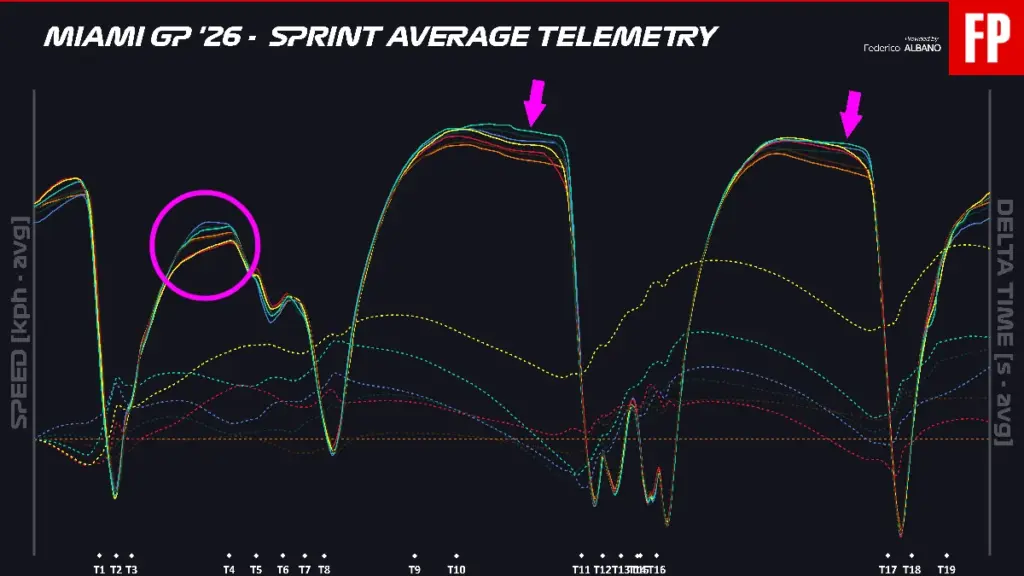
However, the group is as tight as we have never seen this year. Mercedes had a good pace but is to be considered at best on par with the leaders, certainly not better. The bad start by Antonelli took away any hope for the Italian driver and the Brackley team in general, to recover since there was not much more to squeeze from the car. Antonelli’s frustrating mistake with the track limit at the end of the race was bad, giving points for free to Russell and the rest of the competition, which also for the title no longer seems limited to just the internal team component. The second force on track was actually Ferrari (with Leclerc better than Hamilton, although the Englishman had a good race start). The updated SF-26 continues to show excellent performance in fast and slow sections, a good front end (also exiting turn 16 where the reds have historically suffered in recent years). The main deficiency continues to be power and generally the Power Unit. We saw live, and it is clearly visible from the average telemetry graph of the race, how Leclerc and Hamilton were forced into a very marked energy harvesting phase in the first sector, towards turn 4. It is evident that the need derived from the fact that otherwise the reds would not have had enough energy for the next two straights, but due to this important time loss (2-3 tenths per lap) Leclerc kept accumulating gap from Piastri, also losing the chance to attack him at overtaking points. Leclerc’s frustration is clear from his gestures in the car, as on more than one occasion he raised at least one hand from the steering wheel in the first sector, even resting it on its center, giving the impression of not being able to really push at that moment and having to watch the opponent move away ahead. The feelings about the updates continue to be positive with good tire management, even in hot conditions, a high level of downforce and a good mechanical setup. We will see if, between the next qualifying and possibly the wet race, some interesting opportunities will open up for the Maranello team.
Max like in ’22, and new rules ok, with the help of the track
Coming to Red Bull we cannot fail to notice a nice step forward from Verstappen (and a step back from Hadjar compared to his teammate). The impression is that the Milton Keynes car has much less downforce than the competition, but now has a good overall balance and this greatly helps its Dutch champion: Verstappen is indeed able to keep the car at the performance limit squeezing the maximum from the tires even driving cars with less downforce, somewhat like he did with great skill in the first part of the 2022 season.
Read more EU auto tariffs, Trump announces increase to 25%
Finally, the new rules applied by Miami seem to work well, with a decidedly more straightforward race and a qualifying that was absolutely enjoyable. The impression is that there is an important component of help that also comes from the track layout, with straights interrupted by big braking zones that allow recovering a huge amount of energy already in those phases, but the possibility to attack on braking and to drive closer to the limit is visible and is definitely a positive evolution. The closeness of values on track, then, can really ignite the season. We will see from the next qualifying what feedback we will have, because making predictions has suddenly become very difficult.