





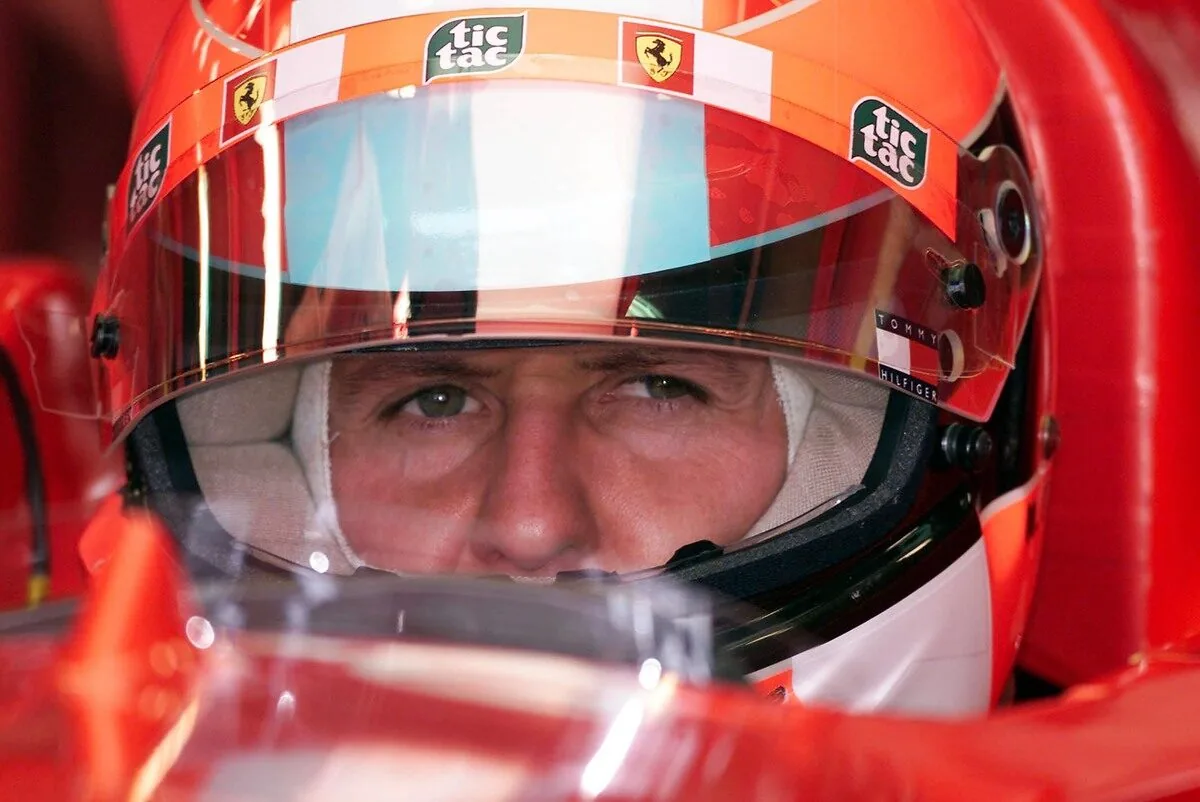
Michael and his still visible traces in F1
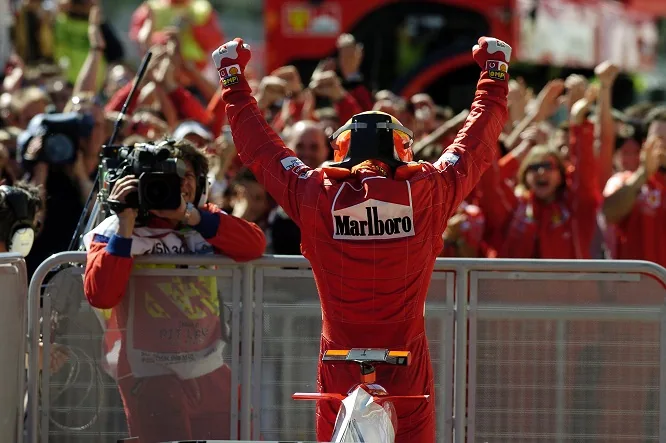
There are drivers who leave victories to Ferrari, and then there are drivers who also leave a winning method. Michael Schumacher belongs to the second category. The seven world titles, the 72 wins with Ferrari, the five consecutive championships and the unrepeatable epic of the early 2000s are the most visible part of his story in Maranello. Thirty years after his first win in red at Monza, Ferrari chose to celebrate above all another legacy: the less photographed and less told one, made of work, attention, preparation, relationship with people and the ability to transform a team into something that went beyond the sum of its individual components.
Read more Seat at risk: it could disappear by 2029
To celebrate this legacy, the Maranello team did much more than prepare a celebratory livery for the SF26 and the drivers’ suits. In fact, it organized a media session in the Monza paddock entrusted to the memories of three men who knew Schumacher from the inside: Diego Ioverno, today sporting director of the Scuderia; Luigi Fraboni, engine engineer; and Pietro Timpini, a historic member of the team and head of the truck drivers who transported the material to the track.
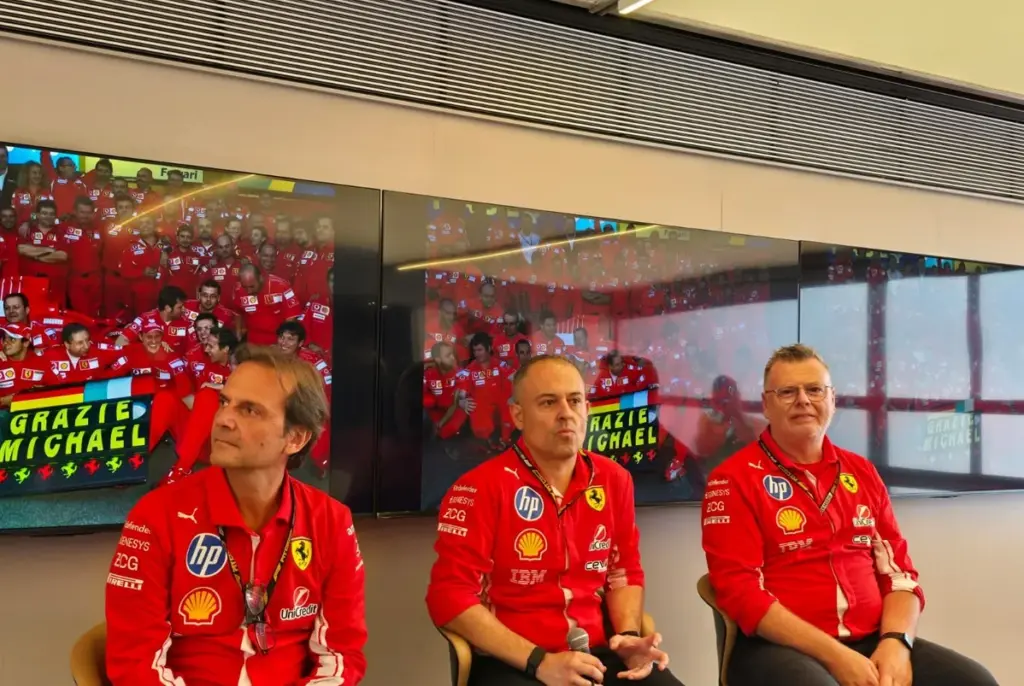
The change of method as a prelude to repeated successes
Diego Ioverno arrived at Ferrari in 2000 and began attending the track in 2002. At the time, he says, he did not yet have the tools to understand how far ahead Schumacher was compared to his era. He would only understand it later, observing how his way of working would progressively become the norm in Formula 1.
“Michael was somewhat the forerunner of what modern drivers are today,” says Ioverno. “He was the first to bring together all the characteristics: obsessive attention to physical preparation, car preparation, data analysis, interaction with the team.”
The point is important. Schumacher was not simply an extremely fast driver who used well the tools he had at his disposal. He was a man who seemed to intuit how those tools would become.
“I learned Michael’s value in those years, but I understood it even more in the years to come, seeing how the legacy of his experience at Ferrari had become an increasingly widespread way throughout Formula 1.”
In other words, the paradox of Schumacher is that to truly understand how modern he was, you have to look at him with present-day eyes. At the beginning of the 2000s, some of his obsessions might have seemed simply eccentricities of a champion. Over time they became the standard.
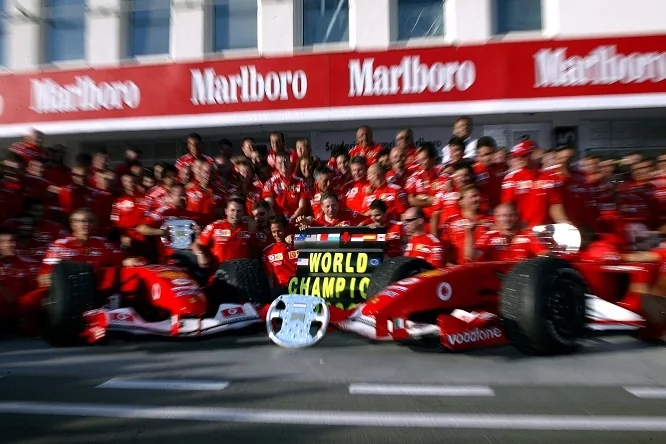
The football match was another race to win with method
There is a very Schumacher way to tell the relationship with the team: through a football match. In the golden years, especially in 2004, the Thursday evening of the Ferrari group often had a fixed appointment, the inevitable football match. But there was a detail: Schumacher did not just play for fun but to win with method here too.
“He went to play football to win,” says Diego Ioverno. “He chose teammates to always have the strongest team. I admit I was one of those who played with him.”
Behind what might seem a simple anecdote, there was actually a precise part of Schumacher’s philosophy, creating team spirit through sports competition in every form.
Pietro Timpini recalls an even more significant trip. A skiing day organized almost entirely by Michael, with a program that today would seem almost surreal: three slopes in the same day, departure at the early hours of the morning, no real breaks and, at the end, the inevitable five-a-side football match organized by Schumacher himself.
“We didn’t have the gear to play football and had to go buy it in a local sports store. He organized everything. We arrived in the evening exhausted from the effort.”
But Timpini’s memory is not of the fatigue. It is of the enthusiasm.
“For us it was really a pleasure to have all these moments with him, because we really felt him as a great friend. He gave you a boost precisely because he felt part of the team and knew it was fundamental for the results. We gave everything for Ferrari and he gave you a boost that was indescribable.”
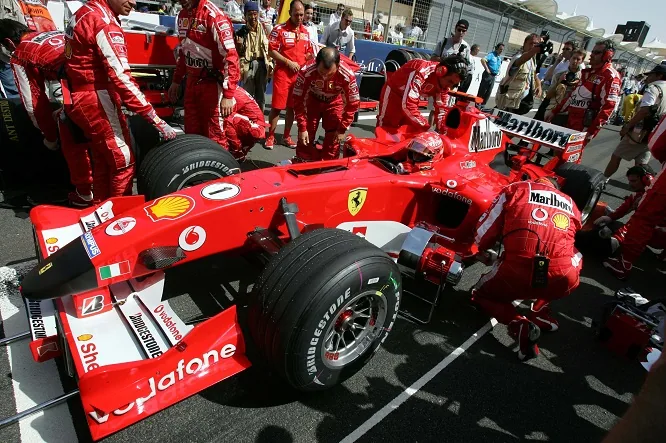
Living the team always and completely
If there is an episode capable of explaining better than any theory Schumacher’s relationship with the team, it is the one told by Timpini. It is the year 2000. Ferrari wins the Constructors’ Championship in Malaysia after already winning the drivers’ title at Suzuka. After the race, a party is organized, the famous one with the red wigs, near the hospitality but Michael notices that part of the team is missing: the truck drivers and mechanics are still busy dismantling and shipping the material.
“He went down to the pit lane, stopped the party and until everyone was free the party did not start. For him the team was made up of all the members of the team, no one excluded. And when we saw Michael happy, you thought it was a great thing for everyone on the team. Because seeing Michael happy meant having results.”
Another very intense memory is offered again by Diego Ioverno. It is 2002 and they are in a few days of testing at Fiorano. At the time, testing was allowed and in fact was one of the keys to Ferrari’s success in the Schumacher era. The team is on the fourth day on track and has faced three consecutive night shifts. The work is exhausting. In the morning Schumacher arrives in the garage. He looks at the men working and observes their faces. Michael’s question to his team is simple: “Did you sleep?” The answer, naturally, is the one given when working for Ferrari and Schumacher: “Yes, I slept a little.”
A few minutes later the communication arrives: no running that day. Michael had understood that the team had given all it could give.
“He took the initiative not to run and let us rest for a day,” says Ioverno. “He made it clear to those responsible who then understood that Michael was right.”
Read more Verstappen, stays in the boat for 2026: “We are already thinking about next year”
It is an apparently marginal episode, but it tells a lot about the weight Schumacher had within the team. He was not just the driver who asked for more. He was also the one able to understand when nothing more could be asked.
And, above all, he observed people. Fraboni remembers that this attention also extended outside work.
“When I got married, he, knowing I had gotten married, gave me a gift and sent me flowers. He knew everything. But this attention of his was for every single person on the team.”
After him, other drivers organized parties, events, moments of gathering. But at the beginning of the 2000s, for those working in Formula 1, that was not yet the norm. Schumacher had not invented the concept of team. But he had contributed to making it an integral part of the driver’s work.
Never stop at the first answer
“At a technical work level he was a very open person,” says Timpini. “You should never be afraid to learn with him but when there was something he did not agree with, the moment of explanation came and it was tough, because then you had to explain it well. He was always ready to stimulate us, to try new things, to open everyone’s horizons a bit, to think outside the box.”
And, according to Timpini, this also contributed to the team’s growth. Because his obsession was not only to get an answer. It was to understand if that answer was really the best possible. Schumacher’s Formula 1 was very different from today’s. You could run much more, testing was a fundamental part of development and the track was, in fact, the team’s great laboratory.“The real test bench was the track”, explains Ioverno.
There were tests dedicated to tires, development, specific sessions and, in 2005, even a structured setup between race team and test team. But Schumacher’s way of working was already extremely analytical. Fraboni particularly remembers his almost obsessive attention to traction control.
“Michael was a traction control maniac. With his vehicle engineer, whom you know well, Andrea Stella, they spent hours looking at these overlapping lines.”
Back then they were the curves of traction control. Today they can be energy management, the power unit, aerodynamics or other parameters. Technology changes. The method does not.
“The method we use now is very similar to that of then. The product is different, more complex, but Michael was someone who looked at data a lot and worked a lot with his engineers.”
It is probably here that the most concrete part of Schumacher’s legacy is found. Not in a procedure unchanged for thirty years. But in the way of looking at the problem. If there is one characteristic of Schumacher that Ferrari still considers central today, it is the relationship with mistakes.
“Learning from mistakes without blaming and without pointing fingers, but taking them as a growth stimulus was another lesson Michael left us,” says Ioverno. “Attention to detail, learning from mistakes without blaming, teamwork, being aware that every team member is a fundamental contributor to the final result. These are all approaches Ferrari developed in that period, with Michael, for Michael, together with Michael.”
If Michael raced today
The question inevitably arises: what would Schumacher be like in today’s Formula 1? The answer from his former teammates is practically unanimous.
“He would be perfect,” says Ioverno. “As I said, Michael in 2000 was unique for his modernity. Today he would be exactly at ease.”
Indeed, with the tools available today, he would probably have even more opportunities to express that characteristic of his.
“He would have loved it very much,” adds Fraboni “because with these super complex cars there is so much to do. All top-level drivers must have, if not all, many of Michael’s characteristics, otherwise you don’t win.”
Preparation. Obsession with details. Dedication. Ability to work with the group. Awareness that the result belongs to everyone. Today’s Schumacher, in short, probably would not be a man out of time. He would once again be a man within his time, perhaps already looking ahead to the next corner, as when he was winning on track.
Read more Leclerc: “Slipstream Hamilton? If it helps both, yes”