


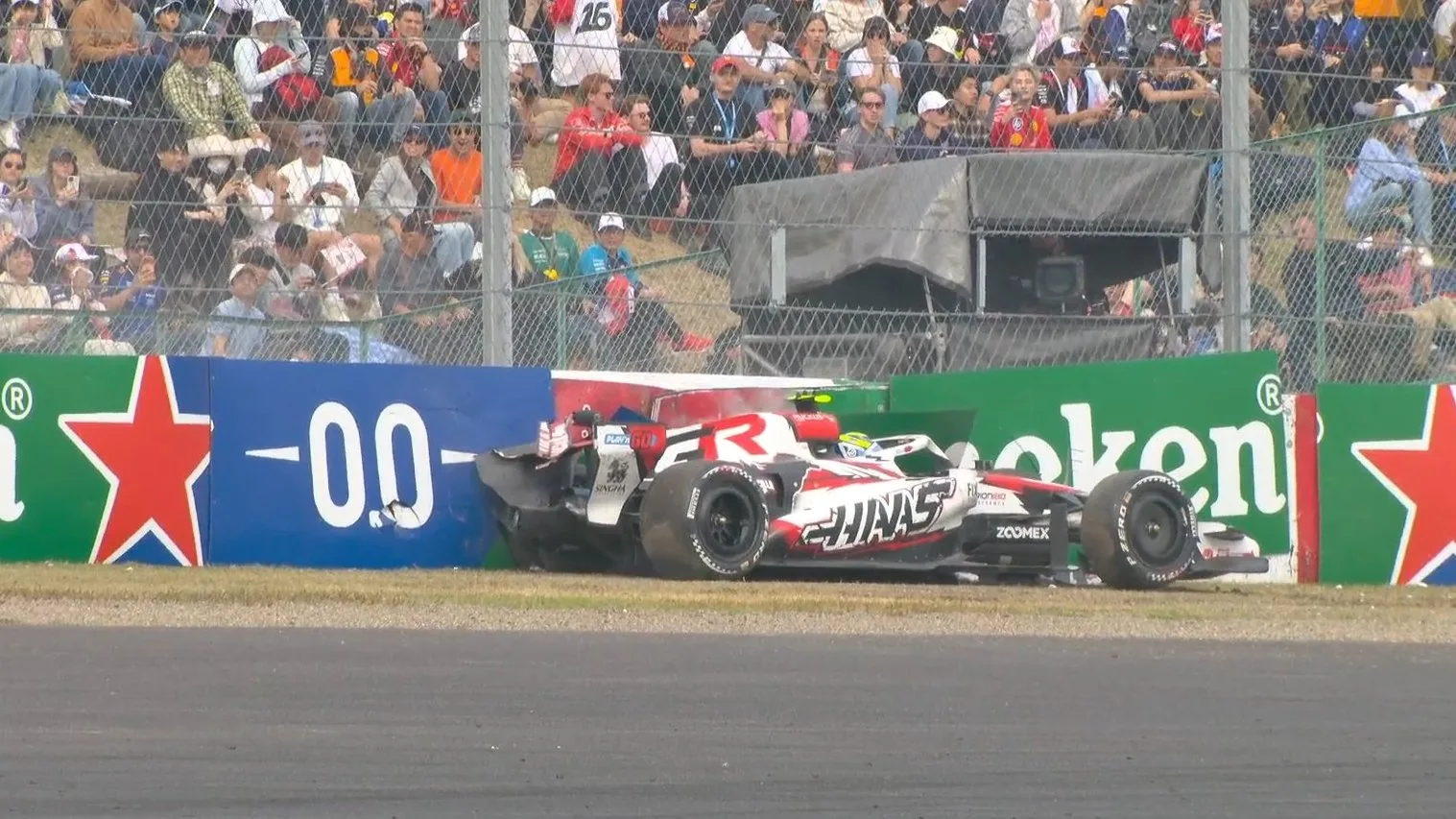
The scare over Oliver Bearman’s accident, who emerged limping after the impact at 308 km/h against the barriers at Spoon in Suzuka (but fortunately without damage and with only a severe bruise to his right knee) has reignited the safety theme linked to the new Formula 1 regulations.
Read more Subito Motori, Fiat Panda remains the most sought-after
At the end of the race, Carlos Sainz was among the harshest on the matter: the Spaniard explained how the drivers have repeatedly warned the FIA and FOM on the subject and how it was “only a matter of time” before having a major accident, hoping for interventions before the next GP in Miami (May 3, editor’s note).
The speed delta between #Bearman and #Colapinto that caused the Haas impact with 50G of deceleration
Credits: @SamF1__#F1 #JapaneseGP pic.twitter.com/jKcx2mJWk7
— Simone Peluso (@PelusoF1) March 29, 2026
The FIA statement
The Federation’s response was not long in coming, as it decided to release an official statement a few hours after the end of the race to explain its position and how it intends to proceed on the matter: “Since their introduction, the 2026 regulations have been the subject of continuous discussions between the FIA, the teams, the power unit manufacturers, the drivers and FOM. By their very nature, these regulations include a series of adjustable parameters, in particular in relation to energy management, which allow for optimization based on real-world data.
All stakeholders have agreed on the need for a structured review after the initial phase of the season, in order to collect and analyze sufficient data. Therefore, several meetings are planned for April to evaluate the functioning of the new regulations and determine if any refinements are necessary.
Read more Official: long lap penalty for Marc Marquez for hitting Di Giannantonio
Any potential modification, in particular those related to energy management, requires careful simulation and detailed analysis. The FIA will continue to work in close and constructive collaboration with all stakeholders to ensure the best possible outcome for the sport and safety will always remain a central element of the FIA’s mission. At this stage, any speculation on the nature of potential changes would be premature. Further updates will be communicated in due course”
Will things really change?
In the statement, the FIA reiterated a position already established after the first two races, namely the willingness to sit around a table during the long forced break in April to evaluate the pros and cons of the new rules, especially regarding electrical power and energy management.
It is equally clear how the Federation wanted to emphasize that it is not solely responsible for these regulations, but the pool that has worked and is still working on them is much larger and extends to teams, engine manufacturers and FOM. It would therefore be a mistake to point the finger only at Tombazis and his staff, also considering what was seen at Suzuka with Bearman. We will see if this episode – and the words of Sainz and Verstappen – will stir the waters between now and Miami…