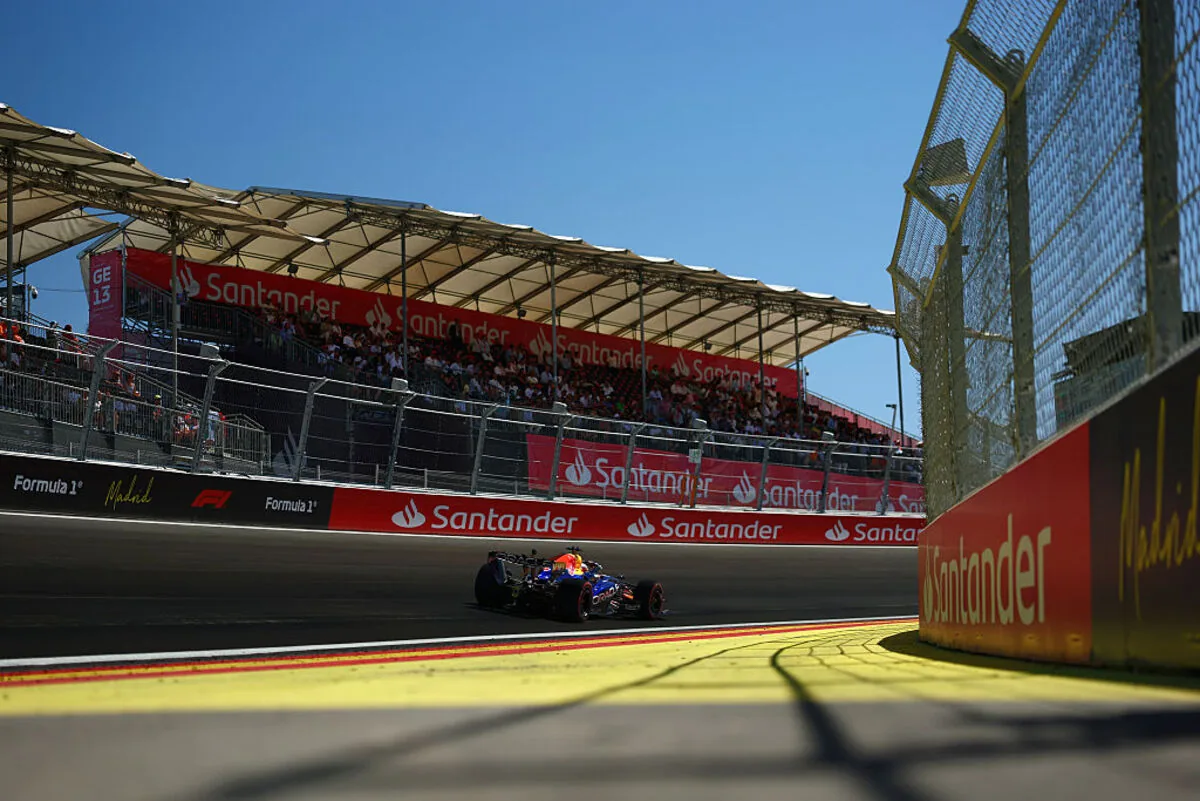
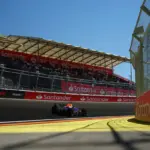
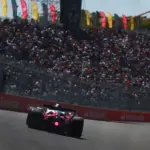


Tyre degradation could liven up the Spanish Grand Prix despite a track not very favorable for overtaking. At Madrid, Pirelli found a double nature degradation, but strategic decisions will also have to take into account some practical factors. Due to the lack of available data, the race remains open to both single and double stops, as explained to FormulaPassion by Simone Berra, Pirelli’s Chief Engineer.
Read more Mercedes-AMG, new model of the Mythos Series
A difficult race to interpret
“There are many differences compared to a more classic situation where we have a large historical data set”, explains Berra. “So far we have collected significant data on Friday, but not all that we wanted, because in FP2 there was a red flag that interrupted the only race simulations of the weekend. The long runs were at most 8 laps and this does not help to have a definitive picture of the situation.”
“Degradation is an important and significant factor. We have seen high degradation on both soft and medium tyres. Obviously, in free practice the teams tried to push more to find the limit, as they usually do. We also know that teams work during the weekend to optimize the setup, improve degradation and try to have a more consistent pace. However, Friday’s degradation was much higher than what we have seen in other free practices this year, with an increase in lap times of 2-3 tenths per lap.”
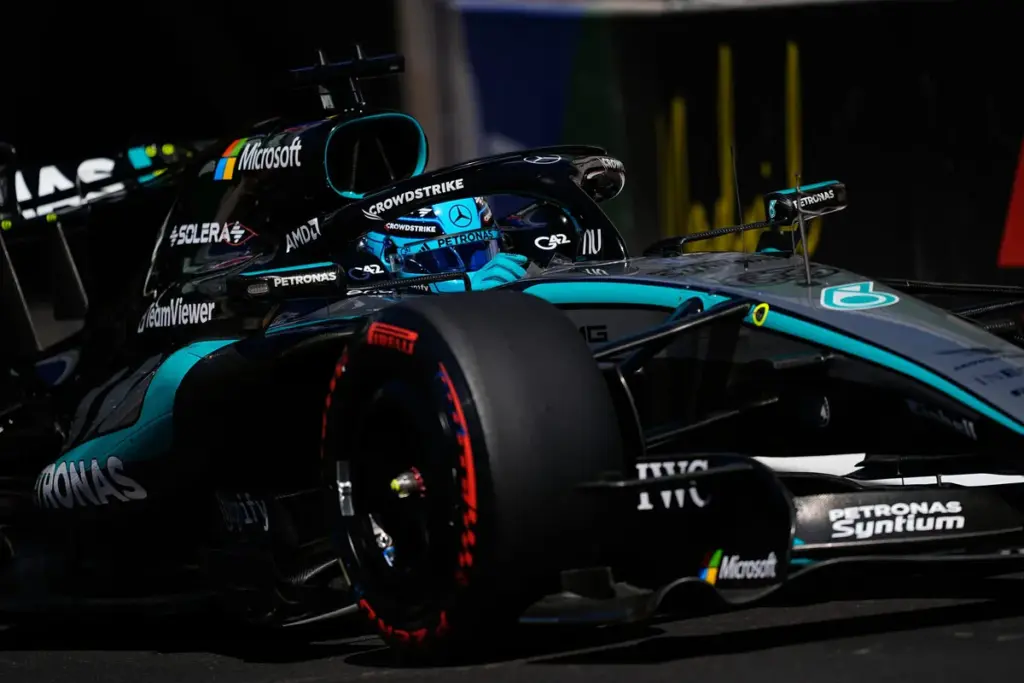
In Madrid, graining also becomes relevant again. Berra continues: “Degradation came from both axles. We had some graining, especially on the front left, which was expected, as the asphalt is particularly smooth and high grip. Also, thermal degradation was seen due to the tyres not breathing well. Madrid is a medium to high severity circuit, with significant lateral forces, not only in the banked corner, and this causes the tyres not to breathe and temperatures to be high. For this reason, there is thermal degradation both front and rear.”
Between one or two stops
When indicating the most effective strategy on paper, Pirelli usually refers to the total race time. In Madrid, however, other practical aspects must also be considered: “Looking at the numbers collected on Friday, one would expect a two-stop race, but two important factors come into play. The first is the time lost in the pit lane, which was estimated around 24-25 seconds, so it is one of the circuits where the most time is lost. This pushes the strategy towards a single stop. The other issue is related to overtaking possibilities. We tried to gather comments from the teams and it seems to be a circuit where overtaking is particularly difficult.”
Read more Marquez without whistles at Misano: “Well, 10 years have passed…”
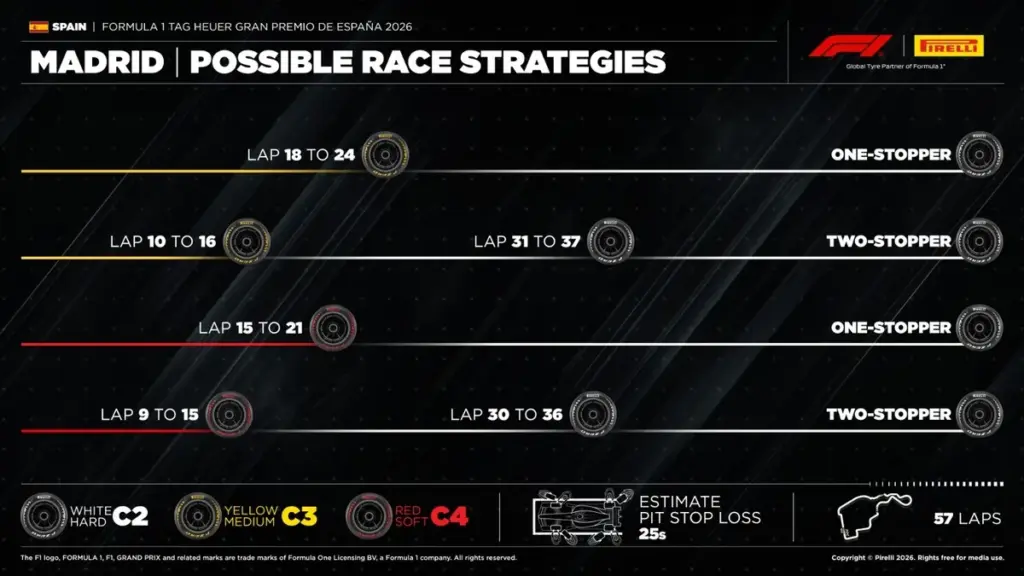
The single stop therefore seems to be the most valid option: “Teams could manage the pace and extend as much as possible. Considering all factors, so not the total race time in clean air, but also traffic and time lost in the pit lane, we see medium-hard as the most plausible option, with a pit stop around lap 24. The hard, although used little, should be a sufficiently consistent tyre. It could still have some graining, but it should be thermally more resistant.”
Pirelli, however, does not exclude the double pit-stop, on paper the fastest option in terms of total race time: “The two-stop strategy is absolutely close. The medium-hard-hard combination could be a winning strategy. It will depend a lot on race situations, keeping in mind the high probability of Safety Car or Virtual Safety Car. In any case, for the double stop medium-hard-hard, the pit stop windows would be between laps 10 and 16 and then between laps 31 and 37.”
Ferrari and Max against the trend
Simone Berra points out a further alternative: “Instead of medium, soft could also be used, which in full fuel load simulations we saw to be absolutely usable. The soft-hard or soft-hard-hard combinations are only 2-3 seconds slower and have pit stop windows practically aligned with the medium strategies.” In the short race simulations on Friday, the impression was that the soft tyre was even more consistent than the medium. Pirelli’s Chief Engineer explains: “The soft, having more grip, could slide less at the start of the race, when the track is less rubbered in, and therefore generate temperatures that do not go outside the operating window. However, I do not expect the soft to have lower degradation than the medium.”
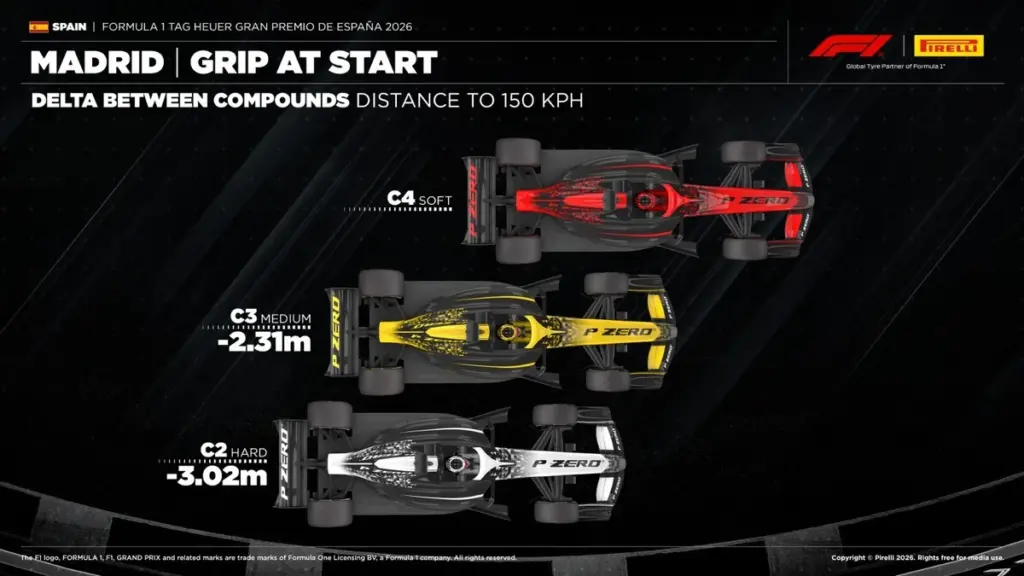
The two Ferraris and Max Verstappen are the only ones among the front runners to have run Q1 on medium tyres, suggesting the intention to start the race on the softer compound: “Some teams, like Ferrari, have kept a set of new softs and might want to start with that. Clearly, it will require a different management in the first stint of the race, but it will still allow attacking at least in the first meters, having more grip than the medium, which could favor recovering some positions.” We just have to wait for the checkered flag to see who was right, in a very difficult race to interpret and one that will require skill to read in real time.