








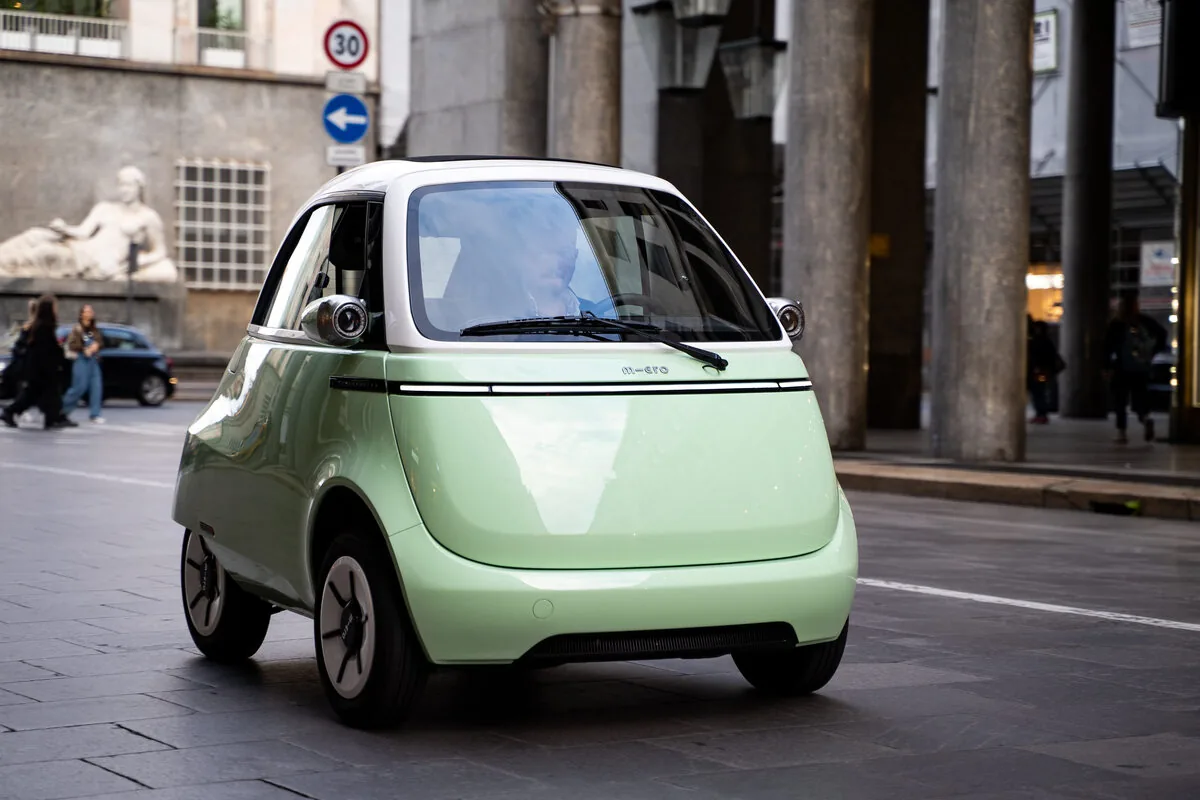
Microlino Italia has expressed deep concern over the direction emerging at the European level regarding the new green credit system, which risks excluding electric microcars belonging to the L7e category. The proposal currently under approval introduces a new M1e class for city cars under 4.20 meters and provides for “super-credits” in the calculation of fleet emissions, showing the intent to reward urban and economical vehicles. Paradoxically, however, it continues to leave out precisely those lighter and more efficient vehicles, namely electric microcars like Microlino, which by design characteristics are specifically intended to meet the needs of sustainable mobility in European cities.
Read more Thailand GP 2026: Practice report
Microlino Italia against the new green credits
The green credit mechanism allows manufacturers with high CO2 emissions to offset part of their performance by purchasing quotas from 100% electric producers. In theory, it is a tool to accelerate the transition towards zero emissions and to reward those who invest exclusively in electric vehicles. However, if the L category remains excluded from the scope of “super-credits” and fleet pooling opportunities, microcar manufacturers will not be able to benefit from either the rewards or the possibility of selling CO2 certificates to groups still heavily exposed to combustion engines. The result would be that precisely those who produce light vehicles, with very low energy consumption and limited use of materials, would be relegated to the margins of the mechanism that claims to want to incentivize clean mobility.
Paradoxical exclusion
The regulatory choice also has important effects on industrial and territorial competitiveness. With the new M1e class, many manufacturers will obtain reward coefficients and direct purchase incentives in various European countries. Manufacturers of L7e quadricycles, many of whom operate in Europe, just like Microlino, would instead remain excluded, creating a structural distortion inconsistent with the goal of environmental sustainability. If the regulatory framework is not updated to include the L category, the industrial sustainability of the project risks being compromised. For these reasons, Microlino hopes that the Commission will review the measure before final approval. And it hopes that Europe will not limit, but rather support, the most rational and efficient solutions for urban mobility.
More consistency is needed
“The L category today represents the most proportionate solution for European urban mobility. Our vehicles are just over 2.5 meters long. They are produced in the EU and require a significantly lower number of components and resources compared to a traditional car. Excluding them from green credits means supporting larger and more energy-intensive models – commented Michelangelo Liguori, General Manager Micro Mobility System – For this reason, we ask for consistency. If the goal is to reduce emissions and value those who produce electric vehicles, it is important not to overlook those who create the most efficient vehicles on the market.”