
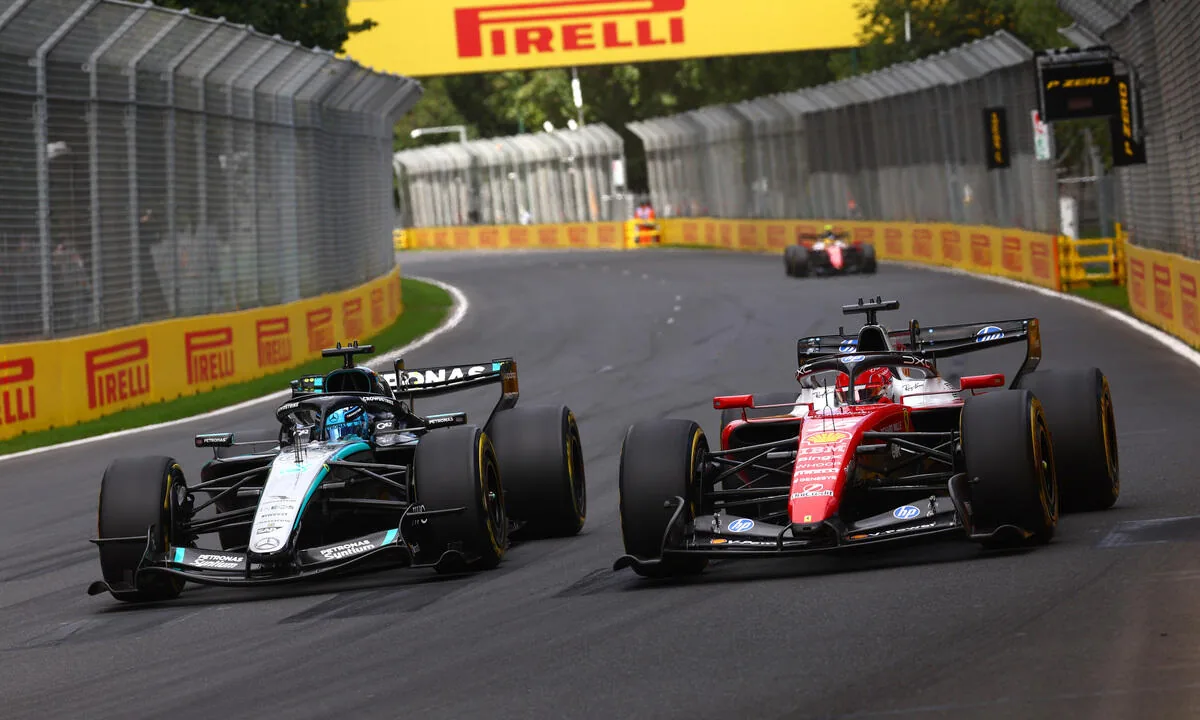
George Russell and Mercedes are the first winners of the new Formula 1, not without some headaches. Strategy helps remedy a difficult start, the main vulnerability of the W17, which the team will be able to work on. Ferrari will also grow, which in the race rediscovers itself less far from its silver rivals, at the dawn of a season in which development will be exponential. The hope is that this will also allow order to be restored to the race dynamics, although the success will depend on the tools the FIA chooses to resort to.
Read more Vasseur praises Hamilton: “Important to have two cars in front”
The race
Ready, set, go and Leclerc takes the lead of the race at turn 1, with both Ferraris making an excellent start from a standstill. The contribution of Maranello’s smaller turbo is felt and will be even more precious on tracks where the initial straight is longer. Improving starts becomes a priority for Mercedes, aware however of some mitigating factors in the Melbourne difficulties. The anomalous accelerated switching off of the lights certainly doesn’t help in reaching the necessary pressure, while the energy recharge on the formation lap will have to be reviewed. Both Russell and Antonelli, in fact, find themselves on the grid with the battery completely drained, therefore without the extra hybrid boost that would normally be available above 50 km/h.
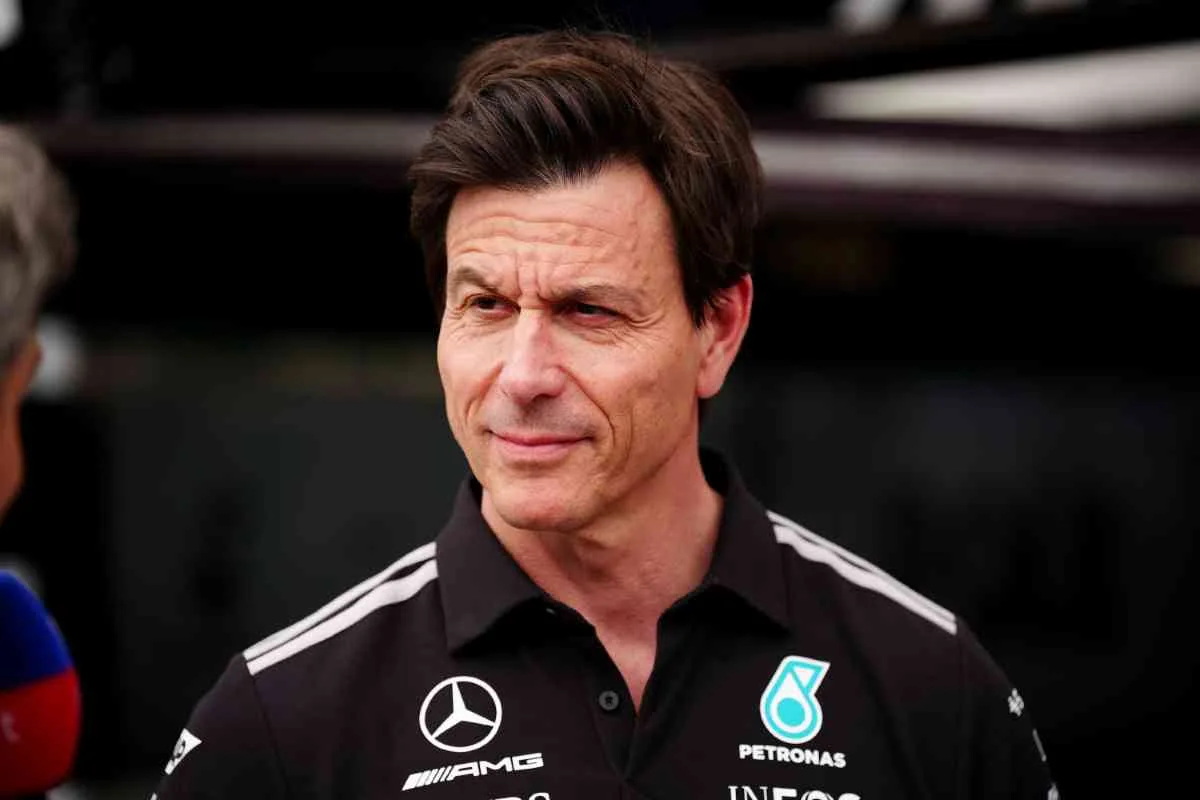
Mercedes must however acknowledge that it doesn’t have enough to overtake and pull away from Ferrari in the first stint, where the SF-26 shows good pace with a full fuel load. Then comes the turning point, the Virtual Safety Car that Toto Wolff’s team decides to exploit for the pit stop, unlike the Prancing Horse, which correctly expects a one-stop race. Unfortunately for Ferrari, however, the prediction turns out to be all too correct, so much so that the Mercedes complete a good 46 laps without obvious repercussions on the tires.
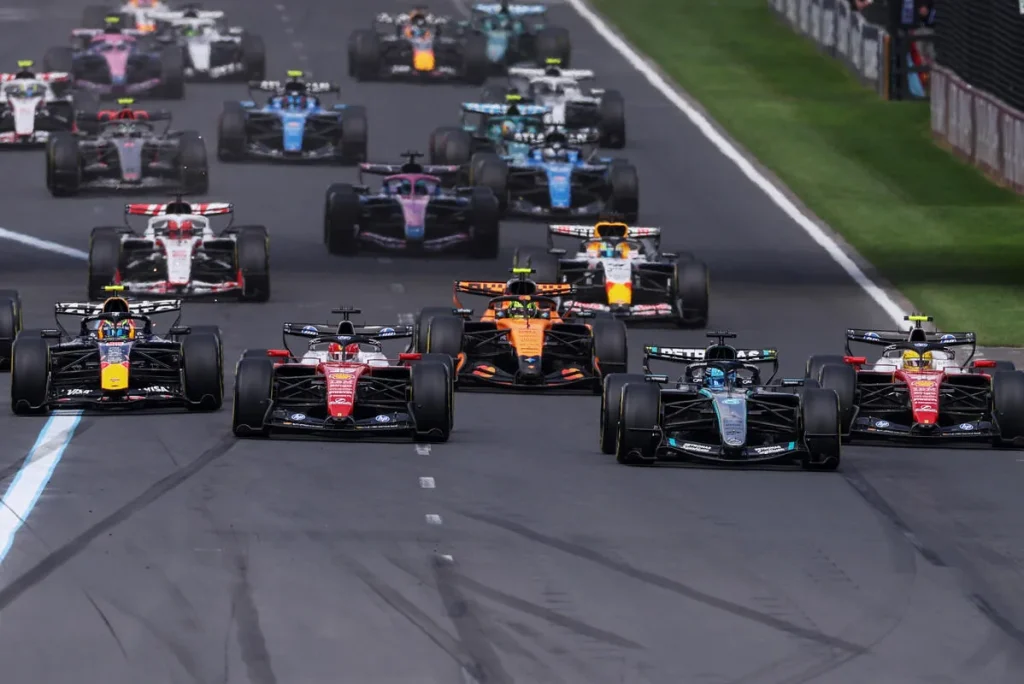
This is not the case for everyone, however, given that McLaren is forced into a second stop with Norris, a difference that highlights the chassis qualities of the Silver Arrows. A little help for Russell also comes from the last Virtual Safety Car, lasting just about thirty seconds, but enough to give life back to his tires in the only slight moment of difficulty. The Mercedes thus keep Leclerc’s Ferrari at bay, despite it having tires 12 laps fresher, achieving a one-two finish that confirms the eve’s predictions.
First verdicts
Net of the margins for improvement at the start, Mercedes is the benchmark for the start of 2026. The advantage is maximum in qualifying, also thanks to the power of the internal combustion engine which translates into an abundance of energy for the battery. The arrival of the new control in June will tell how much this depends on the alleged solution for the compression ratio, which in any case would be unfair to compare to the 2019 flow meter case. At the time, the discussion was about bypassing a real-time measurement by exploiting sensor weaknesses, while the debate now is whether the limit on the compression ratio should apply only when cold or even when hot.
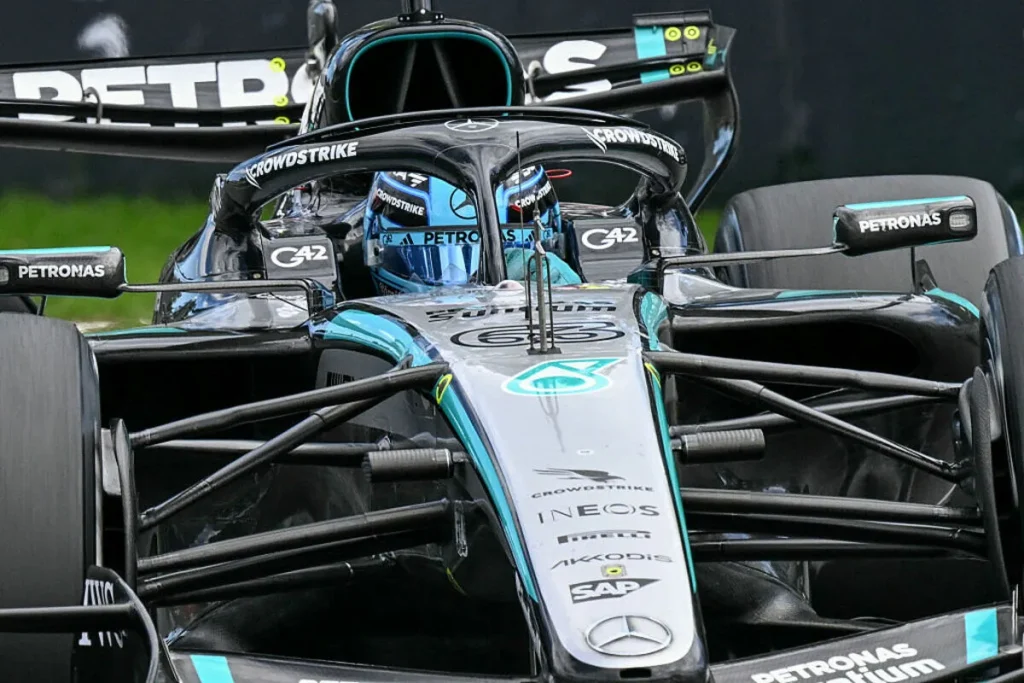
Ferrari breathes a small sigh of relief, in the face of a delay that is still significant in the race, but not as much as on Saturday. Hopes of recovering will depend on the effectiveness of the updates, which this year will have a huge impact. In this, the possible cancellation of the April races due to the tragedy in the Middle East would be a help for the pursuers. Development, moreover, will not only be aerodynamic, but especially at the beginning there will be rapid learning on energy management, narrowing the differences.
Read more Hamilton: “We need to find out if the Mercedes advantage comes from power or the battery”
The drivers will also have to do their part. Russell is now increasingly complete and consistent, but he will have to watch out for Antonelli, who was very fast even without the right setup after Saturday’s accident. Leclerc hopes to find more confidence on other tracks, after a weekend in which he almost groped his way with the setup, facilitating Hamilton’s approach. The great English champion, however, appears in much better form than in 2025, thanks to a Ferrari, in his words, with its own DNA, but above all to the abandonment of ground-effect Formula 1, so distasteful to Sir Lewis.
The pursuers
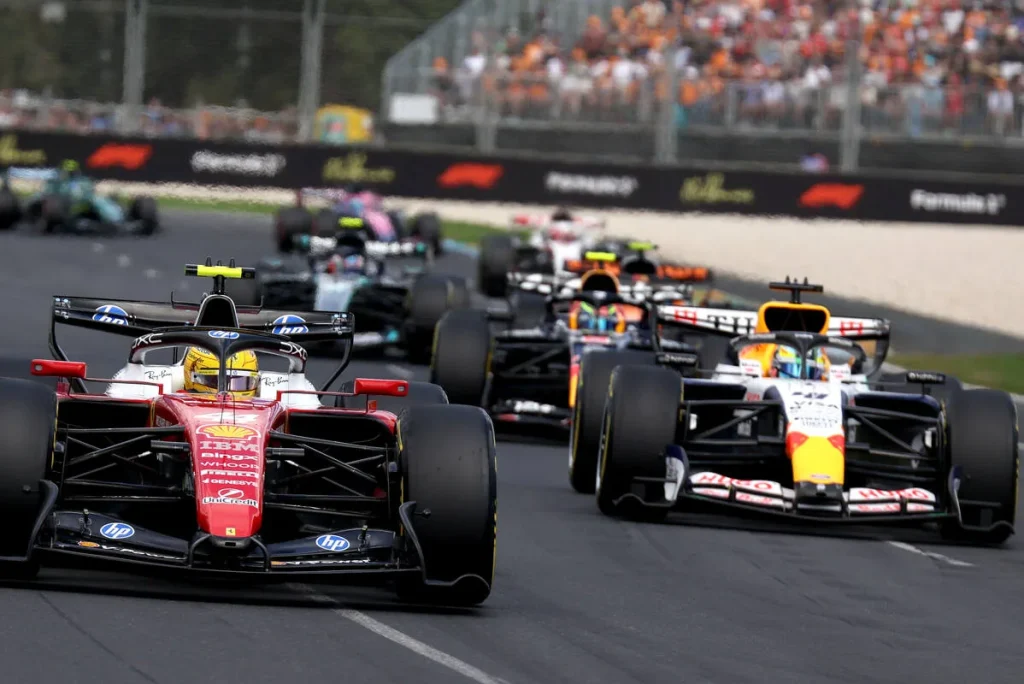
Lackluster debut for the world champions McLaren, with local idol Oscar Piastri in the wall on the reconnaissance lap, while in Norris’s hands the MCL40 suffers from graining on the front tires. It is a recurring trait in the Woking cars and one that transcends regulations, highlighting the importance of the work carried out by Pirelli last year to reduce graining on the 2025 tires. To date, the papaya lineup is forced to chase, with Andrea Stella attributing part of the gap from Mercedes, with which it shares the power unit, to energy management. McLaren will have the opportunity to work on it, without however neglecting the aerodynamic development of the MCL40, which is also lacking in the technical sections. In this, the choice not to introduce updates from the presentation to today weighs heavily, with the possibility therefore of making a significant leap when the first developments arrive.
The failure of the power unit forces Hadjar into a premature retirement, but Verstappen’s comeback to sixth position can still be considered a positive debut for Red Bull in the role of engine manufacturer. Proof of this is the excellent eighth place of Racing Bulls with the surprising Arvid Lindblad, a protagonist in a midfield that confirms itself as hard-fought. Bearman’s seventh place follows up on the good things shown by Haas in testing, a further sign of the competitiveness of the Ferrari power unit, but Bortoleto’s ninth position is no less impressive. Audi starts its climb towards the front rows of the grid well, a goal that Binotto set some time ago for 2030.
The new Formula 1
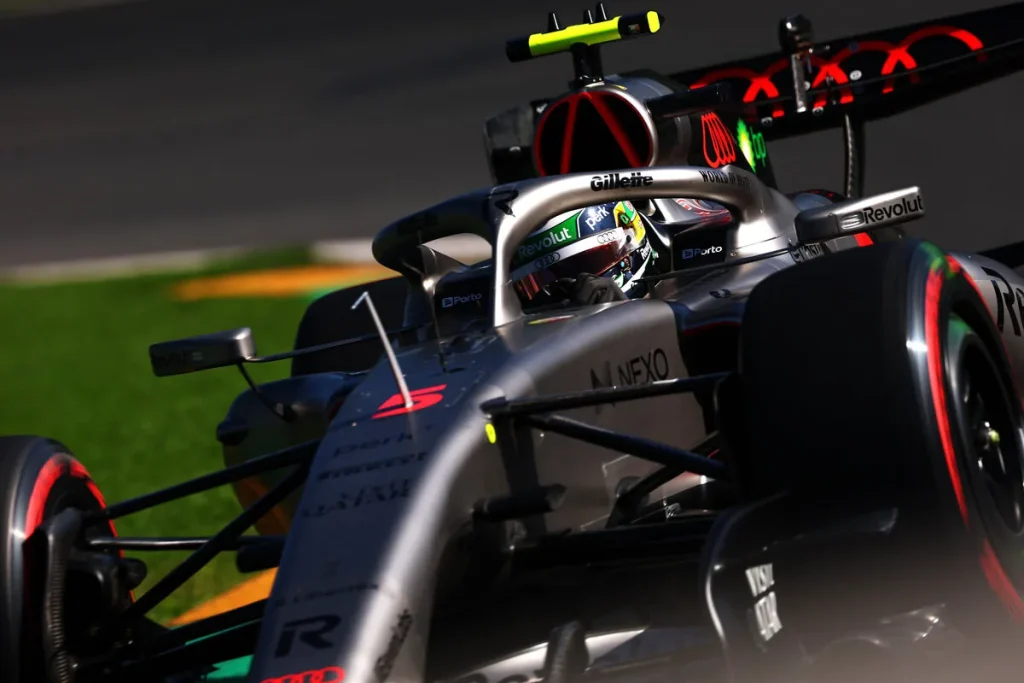
The most awaited verdict, however, was that on the new Formula 1. With six cars on the lead lap, the gaps are much wider than those we had become accustomed to in recent years, as was inevitable at the dawn of a regulatory cycle. If anything, what causes people to turn up their noses are the dynamics in qualifying and at the start of the race, with several position exchanges which, however lively, appear too conditioned by the battery charge, far from the classic concept of duels. Fortunately, as the standings stabilize as the laps go by, energy management strategies tend to become uniform and overtaking becomes more difficult, witnessing in some cases braking with locked wheels and banging wheels at the apex.
It’s not the Formula 1 we were used to, but the hope is that the situation can improve over time. We will go racing on tracks that are decidedly less critical for energy, while the teams will converge in energy management strategies, making maneuvers less and less atypical. Certainly, the FIA will have to make its assessments on how to intervene. It’s not just a matter of deciding if and when to write a new regulation for the next decade, but also of choosing what to tweak in the short term. Better regulating charging strategies is a possibility, even if the original sin remains the 50-50 ratio between electric and thermal power. Reducing the hybrid by a few kilowatts and giving some horsepower back to the gasoline engine would help quite a bit in view of 2027, decisions however that should be taken as soon as possible to give engine manufacturers time to adapt.
Read more High fuel prices, Government evaluates mobile excise duties