


From Zandvoort
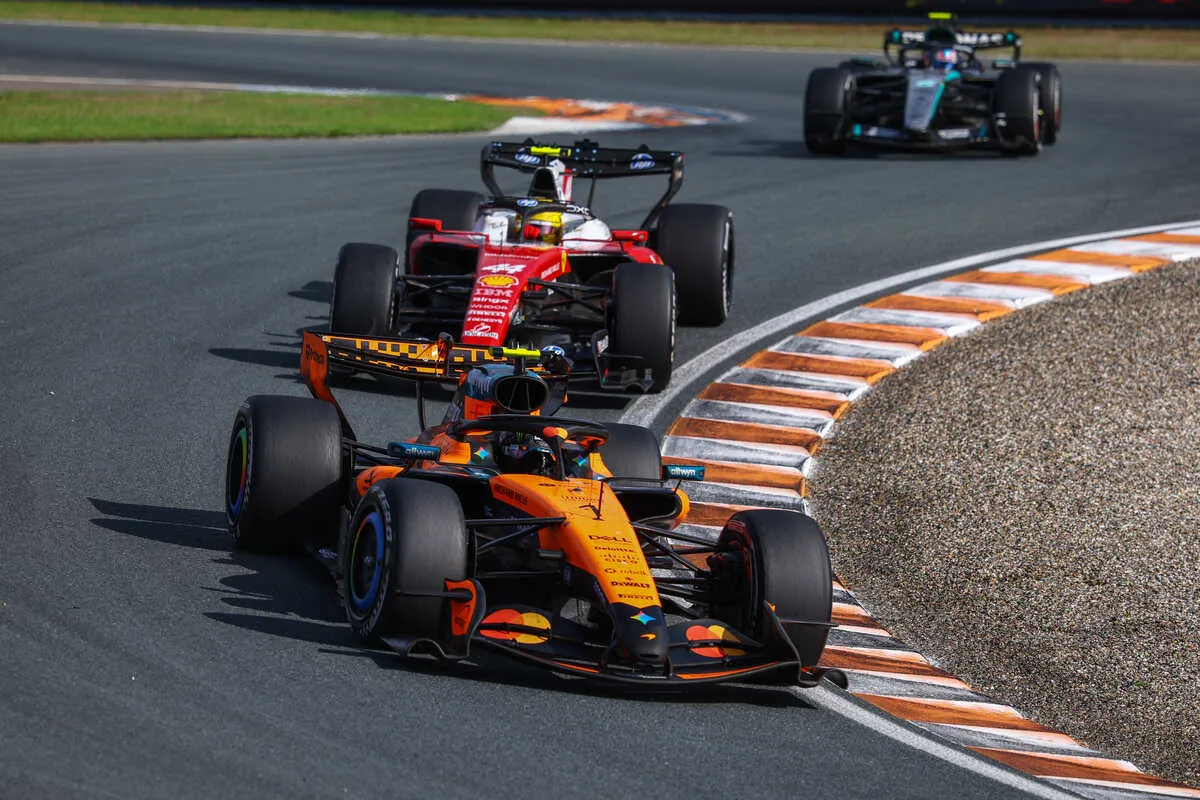
The last dance of Zandvoort ends with the second consecutive victory of the world champions, reflecting the growth of both McLaren and Lando Norris. The British driver deserves credit for being able to exploit the hard tires which, instead, caused problems for several protagonists, including Antonelli. The papaya team thus thwarted Ferrari’s gamble, which with an SF-26 always fast on Sundays tried to make a big move.
Read more Ferrari: the car is there, the discipline is missing
McLaren’s turning point
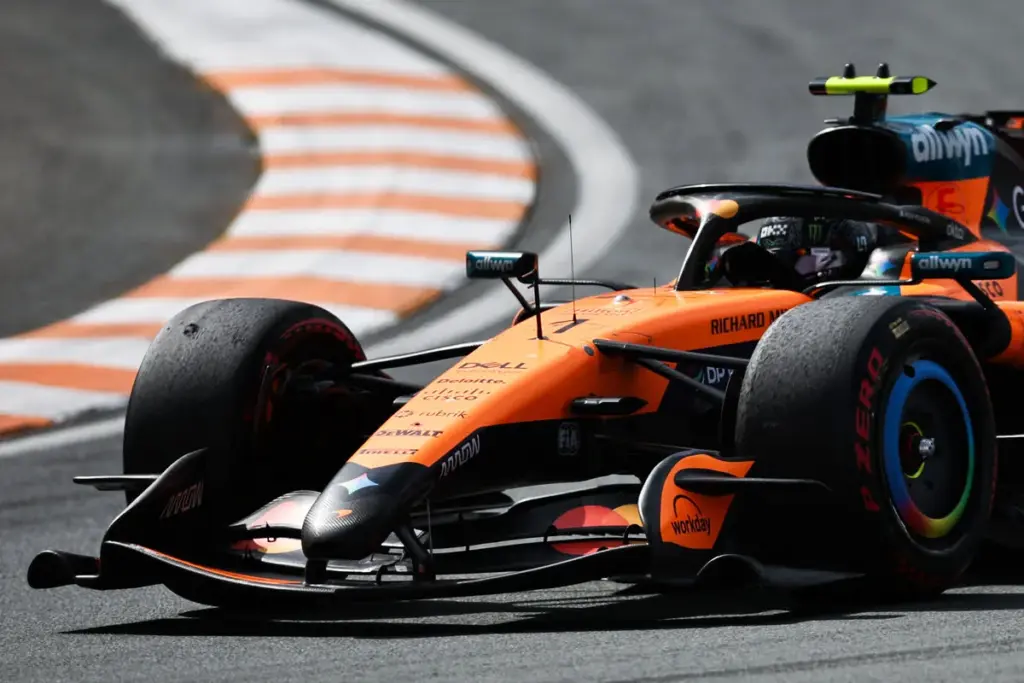
The second race of the weekend opened in Antonelli’s favor, incisive in both starts until taking the lead of the race. From there, the Italian appeared in control throughout the first stint with the softer compounds, but once the hards were fitted he couldn’t shake off Norris’s McLaren. This was the first real surprise, since in the Sprint the MCL40 had instead struggled with rear tire degradation. The papaya team worked well on setup and driving styles to improve the situation, but according to Andrea Stella, the main difference was the hard tire, which only Red Bull had tried on Friday. Not everyone understood how to heat it up and make it work at its best, while Norris instinctively adapted, extracting the maximum from the hard tire.
Antonelli, on the other hand, struggled in the third stint, the second on hards, so much so that he couldn’t implement the driving advice received via radio. Lando thus closed in on the Italian, forcing him to pit to avoid the undercut, then extending by another six laps to build a tire advantage. At that point Ferrari sensed the opportunity and tried the big move, attempting to finish with Hamilton on a one-stop strategy, wanting to exploit Antonelli’s difficulties to stay ahead. The impression is that defending against the Mercedes was not impossible, but when Kimi tried to attack Lewis, he inadvertently opened the door to Norris, who did not miss the chance. McLaren’s pace at that point was irresistible for Ferrari, which, finding itself in Lando’s dirty air, soon had to surrender even to Antonelli.
Fast Ferrari, but not enough
Mercedes, however, did not give up and tried to exploit the Virtual Safety Car triggered by Ocon to fit a fresh set of tires on Kimi, a strategy the Italian called risky. In fact, not only did the Italian risk ending up behind Leclerc if the latter had not pitted as well, but the team also had to order Russell to let him pass, losing precious seconds that could have cost the Englishman the podium.
George’s direct rivals were the Ferraris. Both SF-26s showed better pace than his Mercedes, but failed to exploit it due to another poor execution. In the second start, for example, Piastri on hard tires surprised both Ferraris on softs, costing them precious time in the first stint. This time, moreover, the Prancing Horse lost a few too many seconds in the pit stops, which ultimately proved decisive.
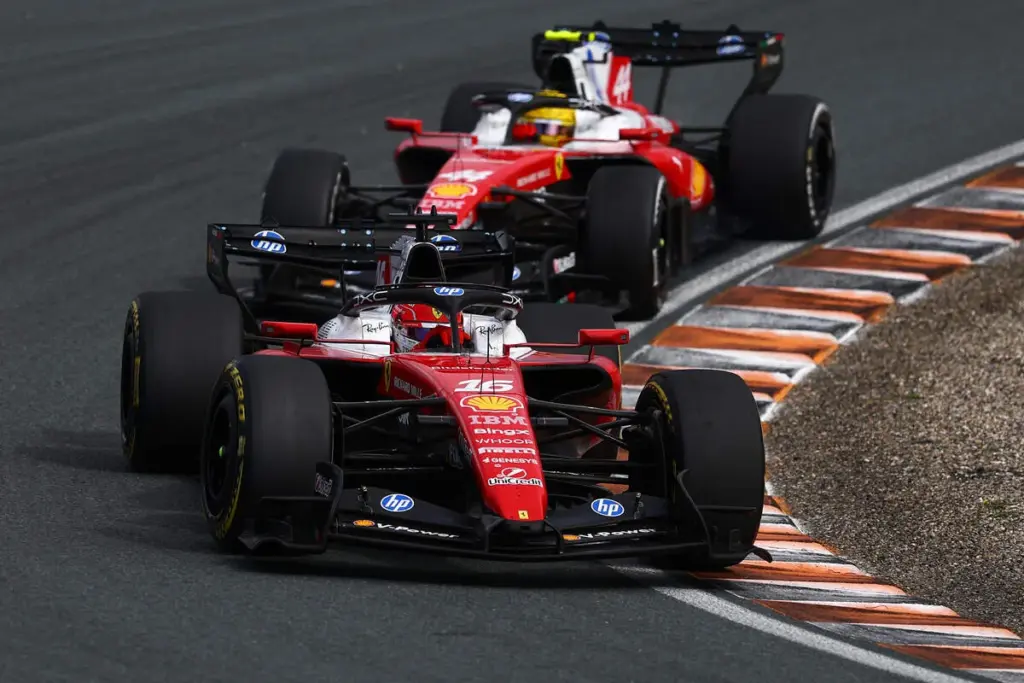
On the strategic front, the choices to delay Leclerc’s stops each time to build a tire advantage were correct. For this reason, the Monegasque’s last pit stop under the Virtual Safety Car seemed avoidable, having by then already half a second advantage in pace over Russell’s Mercedes. Hamilton, instead, complains about the time lost during the two laps behind Leclerc, but the initial plan was for Charles to pit immediately, which the strategy department then preferred to postpone by a lap. Despite everything, both Ferraris managed to get close to Russell at the end, saved at the last moment by a fortuitous Virtual Safety Car at the Englishman’s most vulnerable moment.
McLaren hungry for confirmations
After the two consecutive wins in Budapest and Zandvoort, the question naturally arises whether McLaren can be the benchmark in the second half of the season. The reality is that every track could tell a different story and the last two were very similar to each other. To date, the MCL40 excels on high downforce and twisty tracks, exploiting pace and the short gear ratios, also standing out in fast corners. On the other hand, the papaya car still struggles in slow corners, which is why circuits like Baku and Singapore could be quite challenging. At Monza, speed on the straight and braking sharpness will count a lot, not exactly strengths of the Woking car. Certainly, McLaren has grown a lot with the upgrades introduced in Hungary and the Netherlands, now eager to find confirmations elsewhere as well.
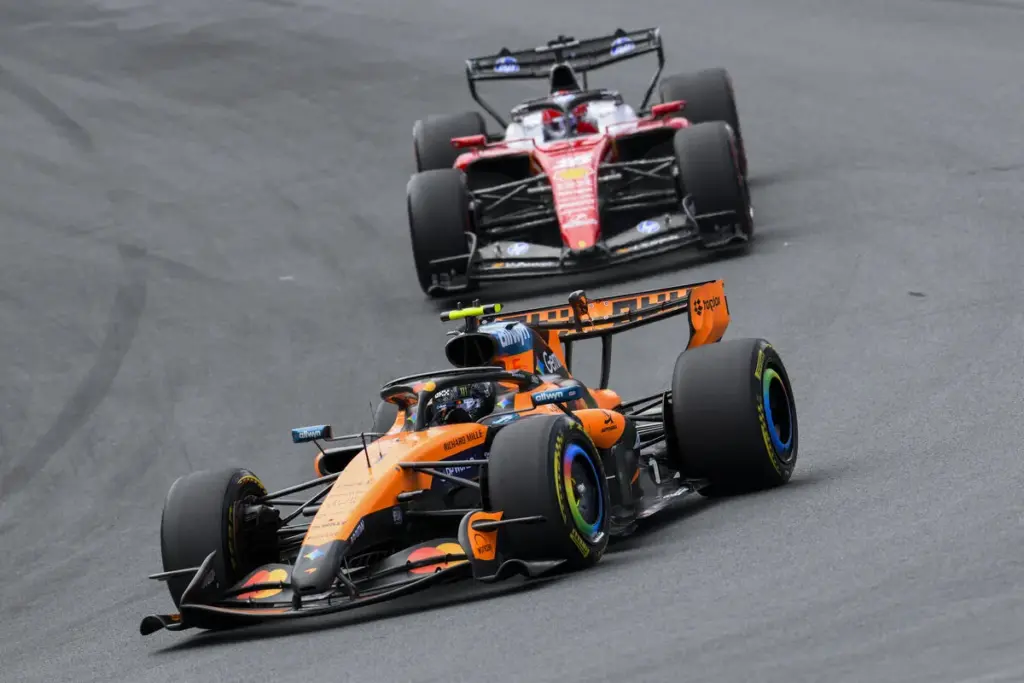
The growth of Andrea Stella’s team goes hand in hand with that of Lando Norris. In the Netherlands, the reigning champion made the difference not only thanks to qualities that already distinguished him, such as tire reading and race pace, but also progress in areas where he struggled most. Until last year, qualifying and decisiveness in overtakes were not really in Lando’s repertoire, while in the Netherlands he scored another pole position and a double overtake on Antonelli and Hamilton in less than a lap. Andrea Stella talks about a click in Norris’s working method since early 2025, whose benefits continue to show on track.
Mercedes awaits developments, Ferrari results
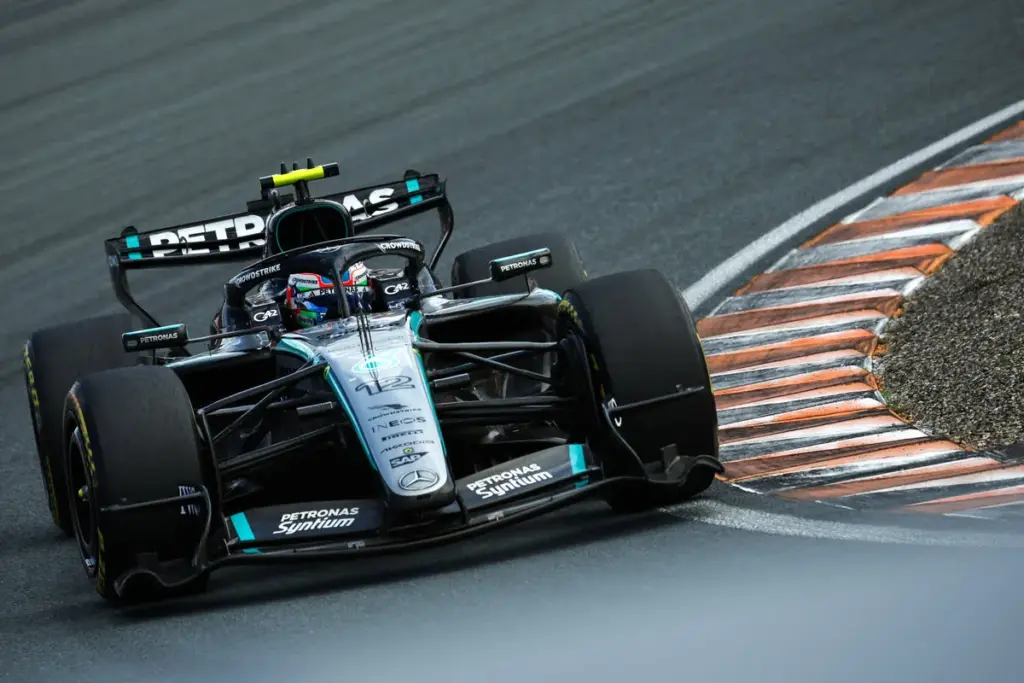
McLaren’s chances of collecting more successes will also depend on the moves of the competition. September will be the month of the debut of the long-awaited Mercedes upgrades, which could put the W17 ahead of everyone. In this, the Brackley team is benefiting from the 2027 technical regulation changes, after which the FIA granted an additional three million dollars on the budget cap, unlocking further resources for development. Even without novelties, however, the Silver Arrows have defended well so far, even gaining points on Ferrari between Budapest and Zandvoort, where the SF-26 could and should have collected more. Antonelli can thus continue to believe in the world championship dream, confirming himself faster than Russell also in the Netherlands, where the Englishman performed well until Saturday, only to fade on the most important day.
The balance is different for Ferrari, whose main problem is certainly not pace, but the ability to capitalize on it, starting from qualifying. In the Netherlands, the Scuderia was lacking in preparing new tires for the flying lap, while in the race, between starts, tire changes, and strategic decisions, it again collected less than possible. The imperative remains to work on execution, in a Formula 1 that has become “brutal” again, as Andrea Stella defines it, with three teams packed within a few tenths and the risk of ending up sixth if everything is not put together. The SF-26 also desperately needs straight-line speed, which would also make attack and defense maneuvers in the race easier. Great hopes are placed on the updated engine expected to debut at Monza, where, besides Mercedes, Ferrari will have to deal with a McLaren back to winning ways.
Read more Verstappen: “I saw a dry patch and tried to use it to gain speed”