Between market and Liberty
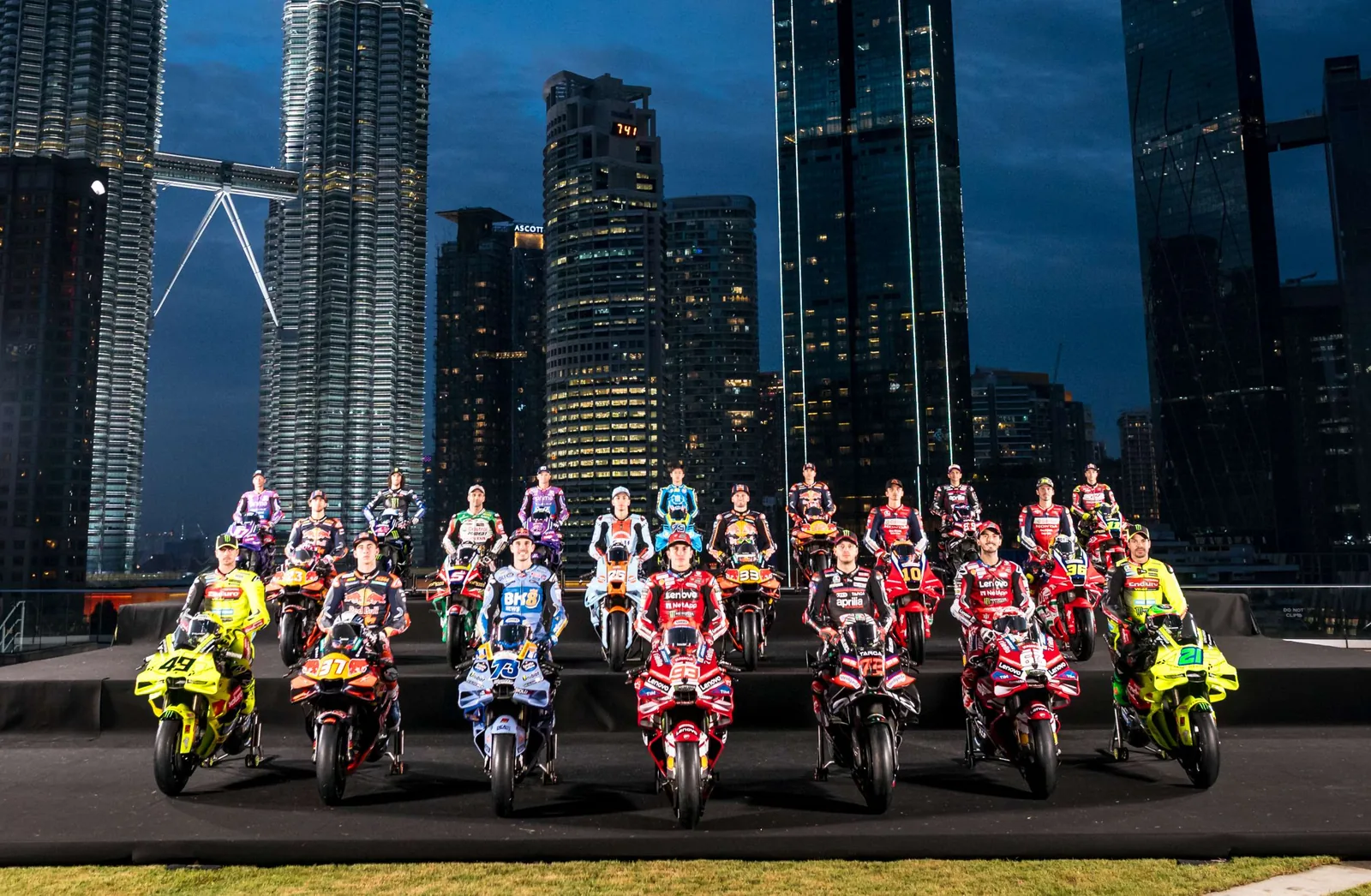
Team changes decided even before putting a wheel on the track but not yet announced due to the very complicated negotiations on what will be the ‘Concordia Pact’ between Manufacturers and MotoGP; very wealthy sponsors ready to compete for the best bikes with millions and to change the balance of the championship; Liberty Media in the background ready to revolutionize the Moto World Championship. In these first four and a half months of 2026 in the MotoGP world, there has been almost more talk about what has happened and is still happening off the track than about the battles on the asphalt ribbon.
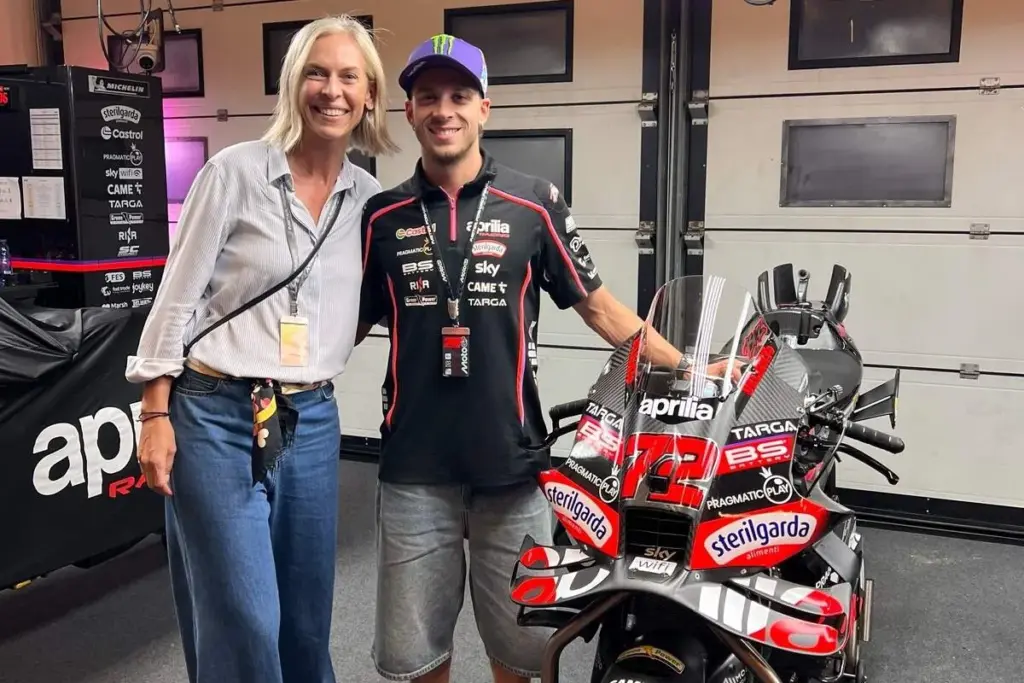
To try to bring some order to this confusion, FormulaPassion.it exclusively interviewed Silvia Schweiger, Commercial Director of RTR Sports Marketing. Together with her, we tried to deepen the impact that this crazy rider market is having on MotoGP from a commercial and sponsorship perspective, also addressing the elephant in the room: the impact that Liberty Media will have (or is already having?) on the premier two-wheel championship.
Hello Silvia, and thank you for accepting this interview. It was known that the 2026 rider market would be explosive but the first rumors about alleged agreements already finalized for team changes arrived even before the February tests began. How do you manage such a particular situation from a sponsorship point of view?
Sponsorships work better in stable conditions. A rider with an uncertain future, a team at the center of market rumors, an agreement presumed already made but not yet official: all this creates a context in which it is difficult to build a coherent narrative around the brand. There was a time when it was said that any visibility was still visibility — good or bad, the important thing was that people talked about it. Today it no longer works that way. Placement and positioning matter much more than simple exposure: a sponsor does not just want to be seen, they want to be seen in the right place, at the right time, with the right message. The background noise generated by months of rumors does not help any of these goals.
The problem of an early silly season is not new, but this year it has reached a level difficult to ignore: hearing about agreements already finalized before teams even went on track for the February tests means that the real sporting season has already taken a back seat to the market. For those managing sponsorships, this is a distortion. The attention of the media, fans, and stakeholders is fragmented in a thousand directions, and keeping the focus on the value of a brand associated with a rider or a team becomes a much more complicated exercise than necessary.
For those who do your job, connecting sponsors and teams, is a carousel of riders like the one emerging a problem or an opportunity to exploit?
In motorsport, you never sponsor just a rider or just a team: you sponsor the combination of the two. It is that specific balance — the rider with their personality and fans, the team with its values and identity — that creates the context in which a brand can truly work. Finding that balance is not simple, and when it is continuously questioned by the market, the work of those connecting sponsors and sports properties becomes structurally more difficult.
There is a fact I often cite that should make anyone approaching the world of sponsorships think: a partnership reaches its full potential after about three years. Three years in which brand, rider, and team build together a recognizable narrative, in which the public stably associates those values, in which assets multiply because there is continuity. A carousel of team changes compresses or cancels this process. It can be spectacular for the media and engaging for fans, but from a sponsorship business point of view, fragmentation is not an opportunity — it is a cost. A real opportunity is built on stability, not instability.
Do you think it would be appropriate to regulate market sessions allowing transfers to be made official only in certain months (for example July-August) as happens in other sports? Could it also be a way to increase brand visibility in a specific period, rather than diluting it throughout the entire season?
The idea has its logic, but motorsport has always shown that it moves on its own vectors, hardly assimilable to those of other sports. The rules and dynamics of football or basketball apply poorly to a world that has radically different times, structures, and cultures. And there is a fundamental difference that is often underestimated: in MotoGP there are 22 riders for 22 seats. Not one more. In football, we talk about hundreds of players moving among thousands of clubs worldwide — the market has a completely different liquidity. Here every move is by definition a zero-sum game, which makes every negotiation more delicate and every rumor more explosive.
On the topic of sponsor brand visibility in certain periods of the year, today there are much more effective tools than a regulated market window. It is one of the few valuable legacies left by the pandemic: the need to find alternative ways to generate content and presence during the off-season accelerated the adoption of digital formats, social activations, and brand storytelling initiatives that work independently of the race calendar.
And then there is the issue of overlaps, which for sponsors is often more a problem than an opportunity. A simple but illuminating example: what happens when a Red Bull rider is paired with a team sponsored by Monster, or vice versa? It is a situation we have already seen, and it puts sponsors in front of positioning conflicts that no regulated market window would solve.
In the case of riders who have become the symbol of a Manufacturer and who seem destined to change teams – I think of the case of Quartararo or Acosta – can this have negative impacts on the companies supporting the team?
Yes, the impacts exist, and they are not negligible. The starting point is always the same: in motorsport you sponsor the combination, not the individual parts. And when that combination lasts over time and produces results, the bonds created are not only contractual — they are emotional and cognitive together. It is exactly those bonds that make sponsorship such a powerful tool, and they are also what make a separation complicated.
It is difficult today to think of Quartararo without thinking of Yamaha, or Acosta without thinking of KTM. It is not impossible to unlink these associations — it was done with Marquez, whose combination with Honda was among the strongest in recent World Championship history — but it requires time, continuity, and precise narrative work. For sponsors who have built their presence around that specific pair, a team change means partly starting over, accepting a transition period in which the public will still associate the rider with the previous context. It will take a long time before most fans stop linking Fabio to the house of the three tuning forks and Monster. For a sponsor of the new team, this is a reality to reckon with.
Read more Herbert calls Verstappen’s ‘bluff’: “He actually doesn’t want to leave F1”
Besides the rider market, there are numerous rumors about significant moves of some title sponsors like Red Bull and Monster who could move from one Manufacturer to another to follow certain riders. Have riders now ‘set the rules’ of the market more than the Manufacturers?
Sport is first and foremost a game of women and men, and it always has been. The machines, the bikes, the manufacturers are the context — but it is the protagonists who create the emotional bond with the public, and it is those bonds that generate real commercial value. That big sponsors want to follow riders more than Manufacturers is a natural consequence of this dynamic, not an anomaly.
Modern sport is increasingly star-driven, and the weight of individual protagonists on the market grows accordingly. An athlete with a global fanbase, a recognizable story, and a strong media presence carries with them a capital of attention that no manufacturer, however prestigious, can replicate with the same emotional intensity. It is rational, on the part of a company, to want to be associated first with the hero and then with their bike.
Yet this is not an inevitable path, and teams would do well not to resign themselves to it. The right direction is the opposite: to build such a solid identity, such a recognizable heritage, as to make the team brand bigger than the rider who leads it. In Formula 1 we are almost there, in MotoGP the path is still long, but some have already understood where it leads. I give an example: when we went to Ducati for the first time, the museum did not exist. Then enlightened management realized its value and built it — and with it a narrative capable of surviving any saddle change. Other teams are moving in the same direction.
Communicating your story, enhancing your heritage, building an identity that transcends the rider: it is the only way to free yourself from dependence — and sometimes from the real slavery — of whoever sits on the bike.
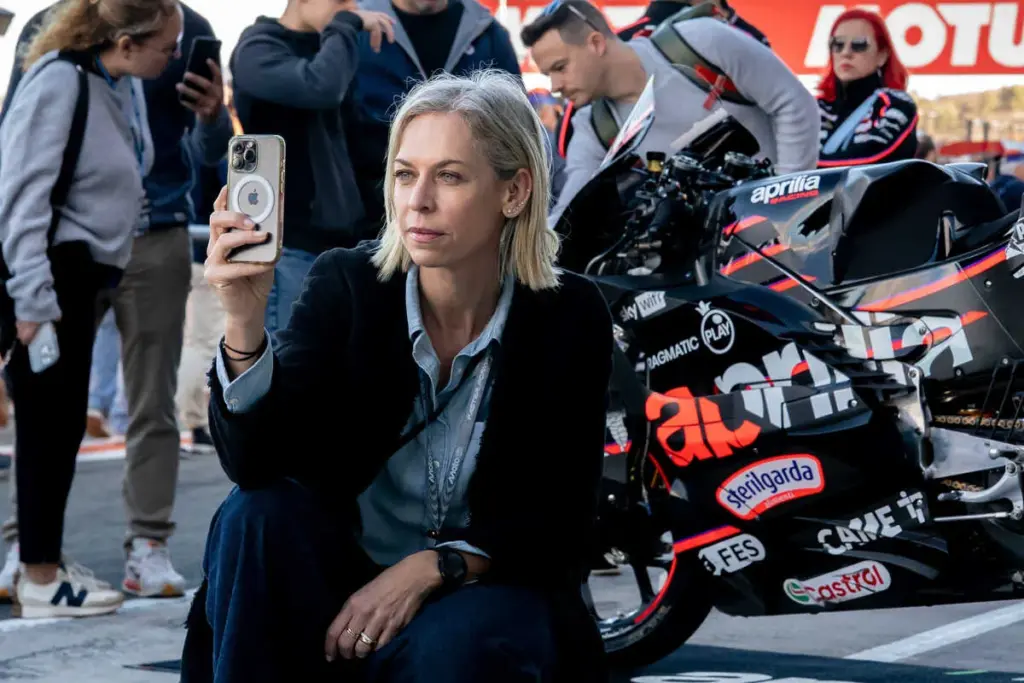
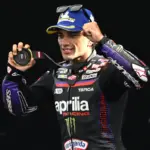
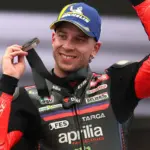
How important is internal stability within a team for a sponsor? I think for example of Bezzecchi, recently renewed with Aprilia and apparently very well integrated with the identity of the Noale brand.
Internal stability within a team is fundamental, and the Bezzecchi-Aprilia case illustrates it well. When a rider genuinely integrates with a manufacturer’s identity — not only in terms of performance, but also values, communication, public presence — they create a context in which sponsors can work with continuity and coherence. It is exactly the kind of environment in which a partnership performs at its best.
The perfect counterpoint is what happened with Martin last year: at the start of the season, with the championship still to be contested, statements about the desire to leave Aprilia generated confusion that did not do anyone any good. Neither the rider, nor the manufacturer, and certainly not the sponsors who had built their presence around that project. Uncertainty is the worst enemy of sponsorship: it forces decisions to be suspended, freezes investments, complicates any medium-term planning. Bezzecchi, with the renewal, sends the opposite signal — and for those considering entering or confirming in that program, it is a signal that counts.
Leaving aside the rider-team discussion: there is great anticipation for the concrete arrival of Liberty Media in MotoGP. Do you think it could generate a growth of the sport similar to what we are seeing in F1?
It is a question that would deserve fifteen pages, and on which a considerable amount of inaccuracies circulate. The first is that Liberty Media is still “arriving”: Liberty has already arrived, and very concretely. Those who work in the paddock know it well — there are already new interlocutors, new logics, new trajectories. Perhaps from the outside this perception is still muted, but a famous quote reminds us that revolutions seem impossible until the moment they become inevitable.
The second misunderstanding is to think that Liberty wants — or can — replicate in MotoGP what it has done in Formula 1. It is not so, and Liberty knows it better than anyone else. The difference between the two worlds is endemic: the motorcycle market and the car market are profoundly different in size, culture, and economic influence. It is not a minor sport that must become a major sport — it is two universes with their own dynamics. Expecting a race in downtown Las Vegas or Miami is an exercise in fantasy, not a realistic prospect.
What Liberty is doing, and has already done, is working on image and perception — exactly as it did with Formula 1. Logo, visual identity, communication campaigns, payoff: the MotoGP product has already changed in appearance and positioning. The goal is to raise the perception of the sport, and some of the levers that worked in F1 are applied intelligently, while others are consciously avoided. On the much-discussed separation of the paddock between MotoGP, Moto2, and Moto3, at the moment we are more in the realm of rumors than concrete facts. It is worth waiting before building definitive narratives on it.
What is certain is that MotoGP is growing, and the numbers confirm it: attendance at the track, TV audience, digital relevance are all rising. It is the result of well-done work — by Dorna before, by Liberty now — and of an upward trajectory that concerns motorsport as a whole. The context helps, but the merit is there.
Read more Hill, social attack on former FIA boss Max Mosley: «He was at the service of hatred and division»