








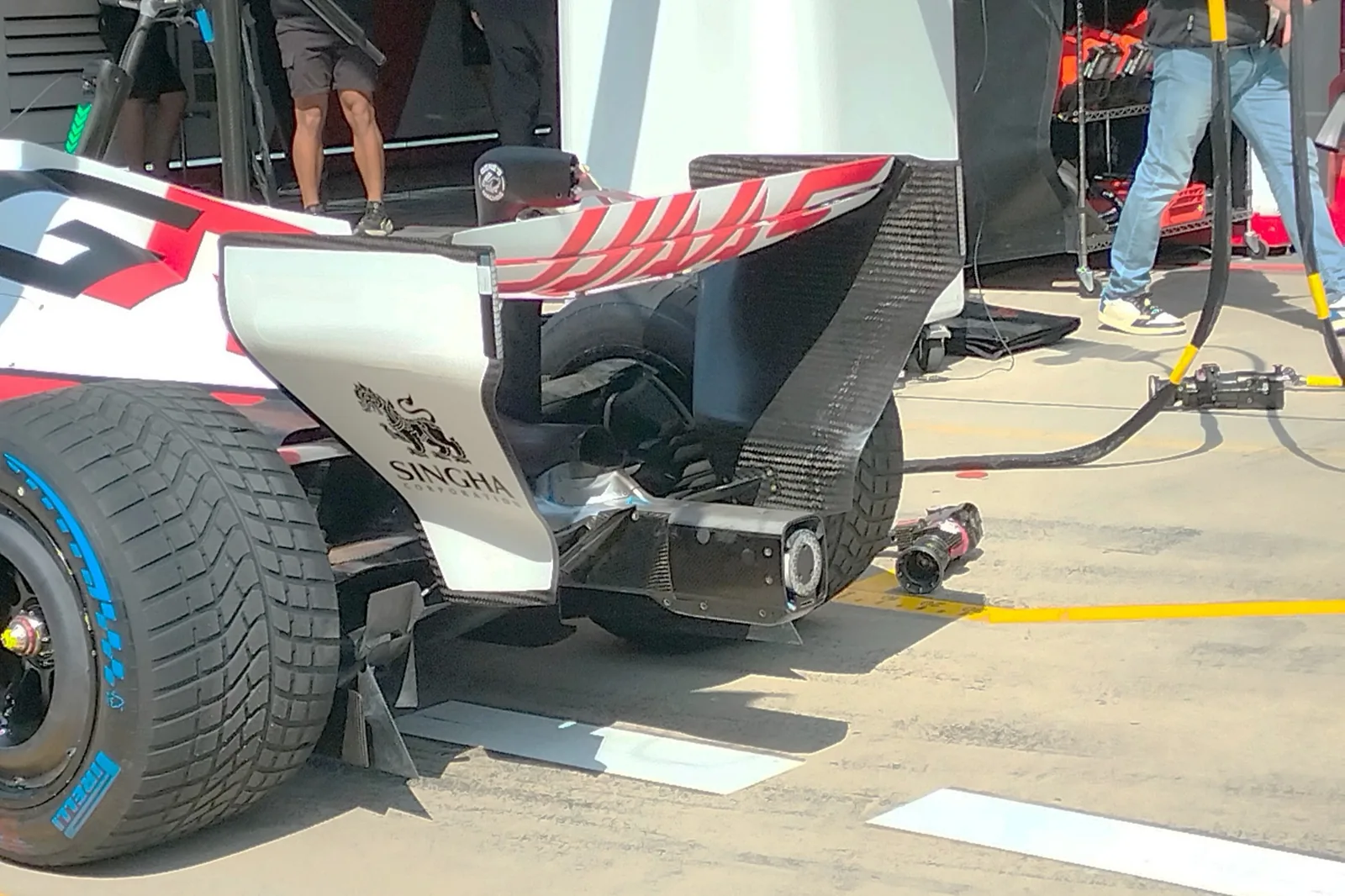
It didn’t take long before the flap at the exhaust exit designed by Ferrari set a trend. In Shanghai, a similar solution makes its appearance on the Haas, equipped with the same transmission as the Scuderia Maranello, unlike the competition. For this very reason, the idea might not spread further across the grid, while the situation is different for the Macarena wing.
Read more F1 Chinese GP 2026, Shanghai: FP1 report
The FTM on the VF-26
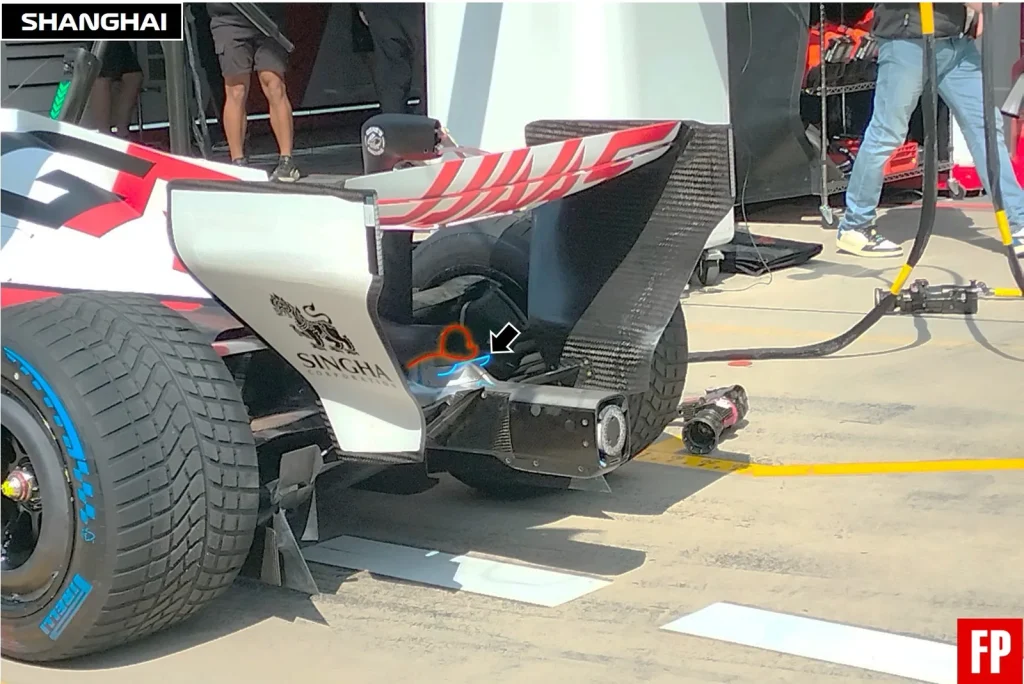
Haas is the first team to reproduce the flap behind Ferrari’s exhaust tailpipe, but it could also be the last. The team led by Ayo Komatsu, in fact, uses the same rear end as the Scuderia Maranello, designed to allow the installation of aerodynamic profiles above the rear impact structure while respecting the 60 mm limit distance from the differential. The technical department coordinated by Andrea De Zordo chose to seize this opportunity, evidently finding benefits in the solution.
However, Haas avoided faithfully replicating Ferrari’s FTM, reinterpreting it in its own way. The flap is not in continuity with the diffuser, thus not representing a virtual extension of its exit section. On the VF-26, the aerodynamic element is mounted in a slightly more rearward position, immediately behind the exhaust tailpipe, which in turn shows a difference compared to the Ferrari. Haas has redesigned its exit section, adding a sort of cup in the lower part that helps direct the hot gases upwards.
Read more 2026 Chinese GP – FP1 Classification: Mercedes on another planet, Ferrari behind the McLarens
The Macarena is copyable
While further versions of the flap behind the exhaust are unlikely to be seen on the grid, the same cannot be said for the inverted mobile wing. Since there are no particular regulatory constraints, Ferrari is aware that the competition could soon develop its own version. In the meantime, the priority is to evaluate its effectiveness in China, although Shanghai is not a particularly severe track for energy management.