


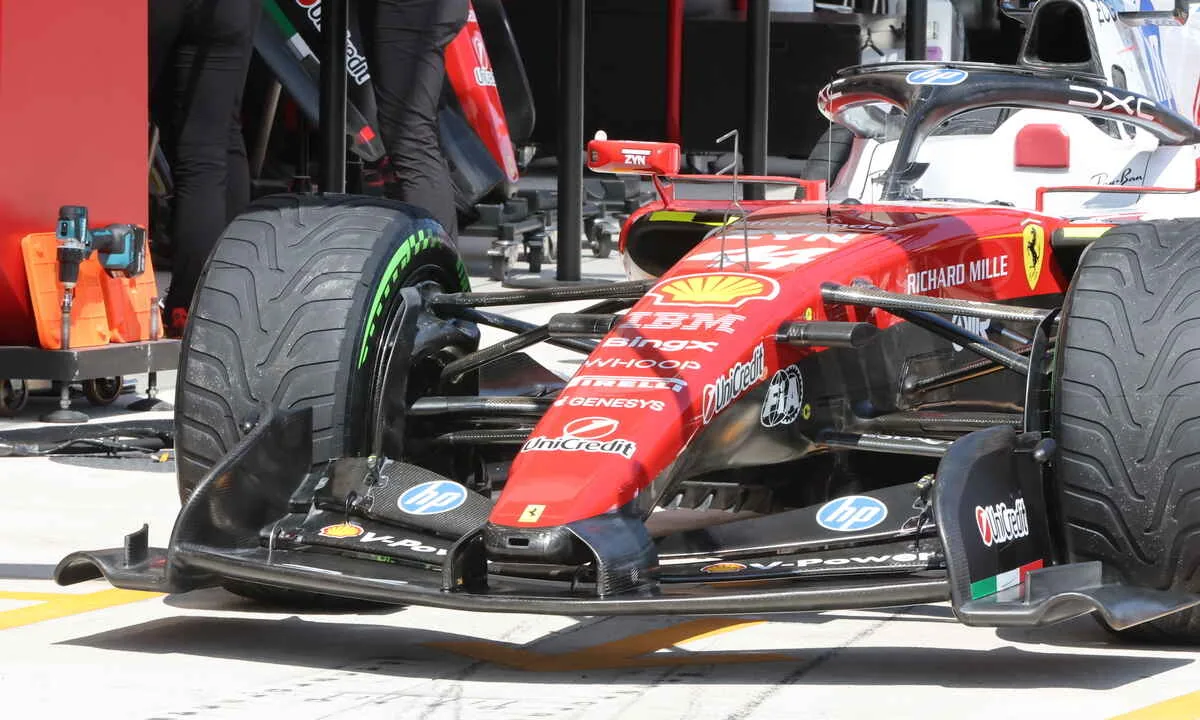
Ferrari arrives in Miami with a package of updates as rich as it is interesting. The Maranello Scuderia has worked intensively, anticipating some of the novelties planned for Canada to integrate them with those initially planned for Bahrain. The result is a deeply evolved SF-26 from front to rear, with great attention to detail that tells the desire to develop the project as a whole and not in isolated compartments.
Read more FP1 Miami: Ferrari strengthens, McLaren arrives, Mercedes to rediscover
The front
The novelties begin at the front axle, with Ferrari having corrected the flow structure around the car along its entire length. The front wing features a modification to the sidewalk, the external structure to the vertical partition of the endplate. A flow deflector appears above the side channel, also renewed, with the aim of increasing the outwash effect, diverting flows outside the front wheels.
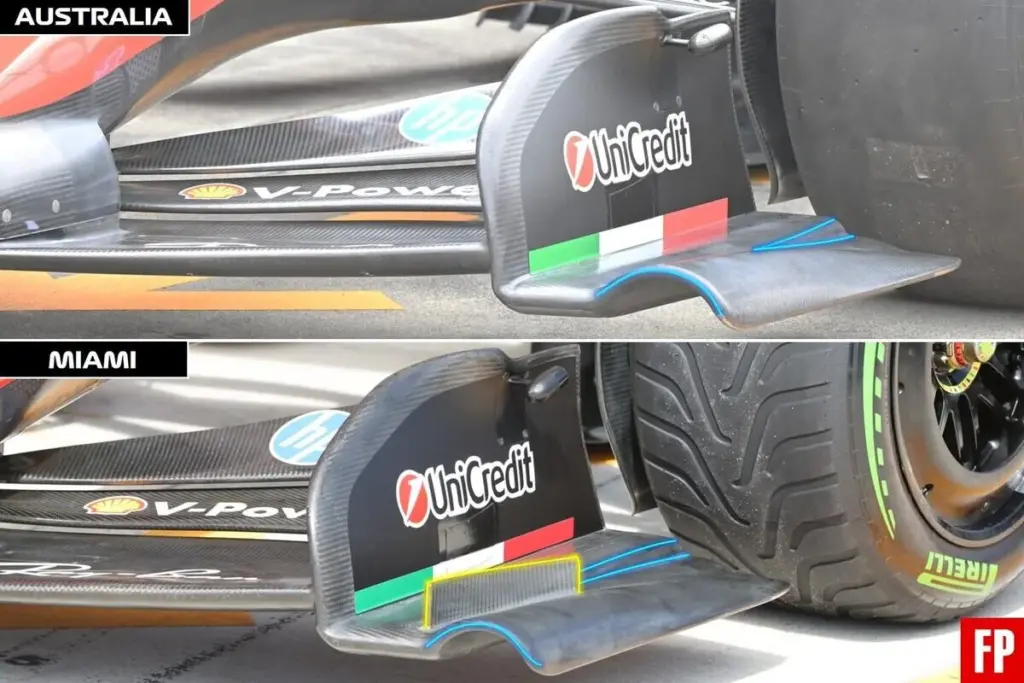
The wheel groups themselves have some modifications to the aerodynamic elements, while in the same area the team has also worked on the suspension arm fairings. Regarding this, note how the team continues not to use the configuration tested in Bahrain, when a different inclination of the rear arm of the upper triangle was evaluated. Overall, however, Ferrari has intervened in several areas of the front axle, aiming both to mitigate the turbulence of the front wheels and to better channel the flows towards the rear.
The floor
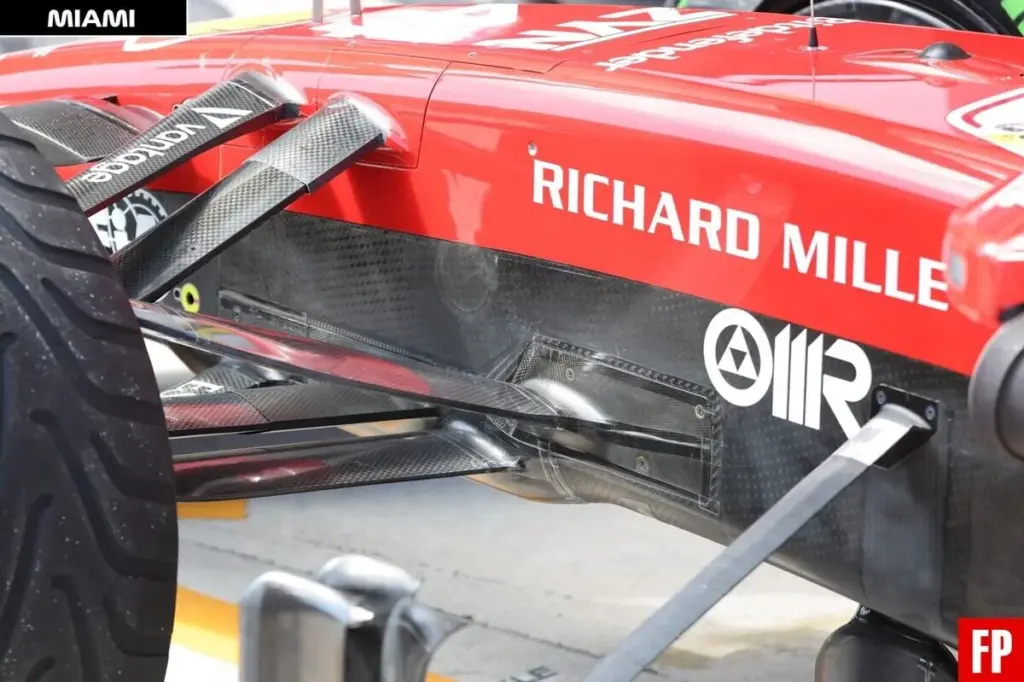
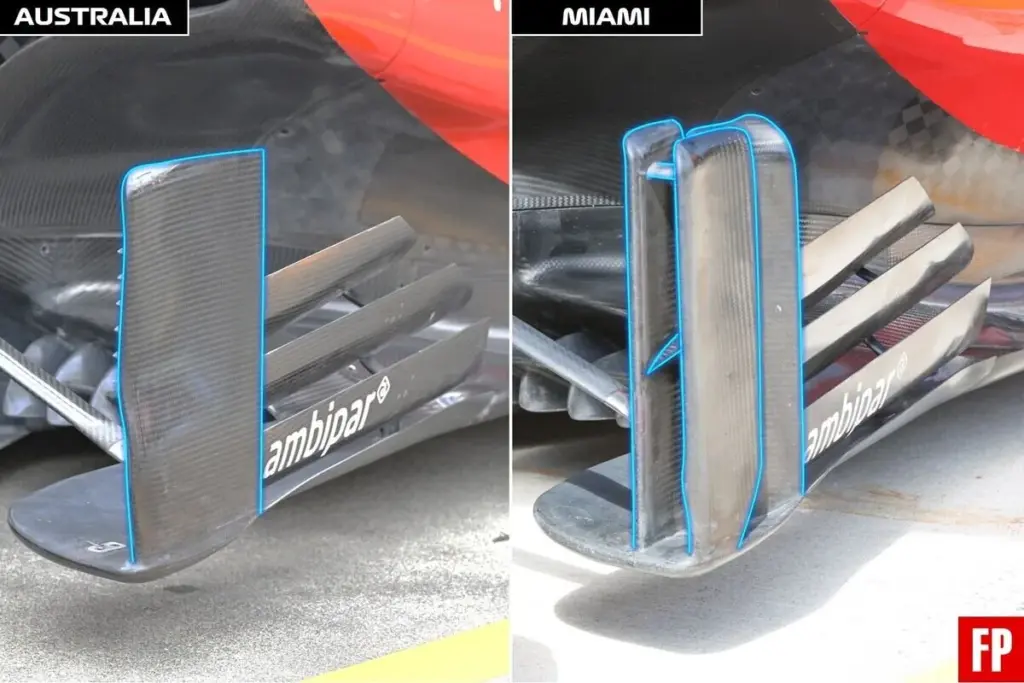
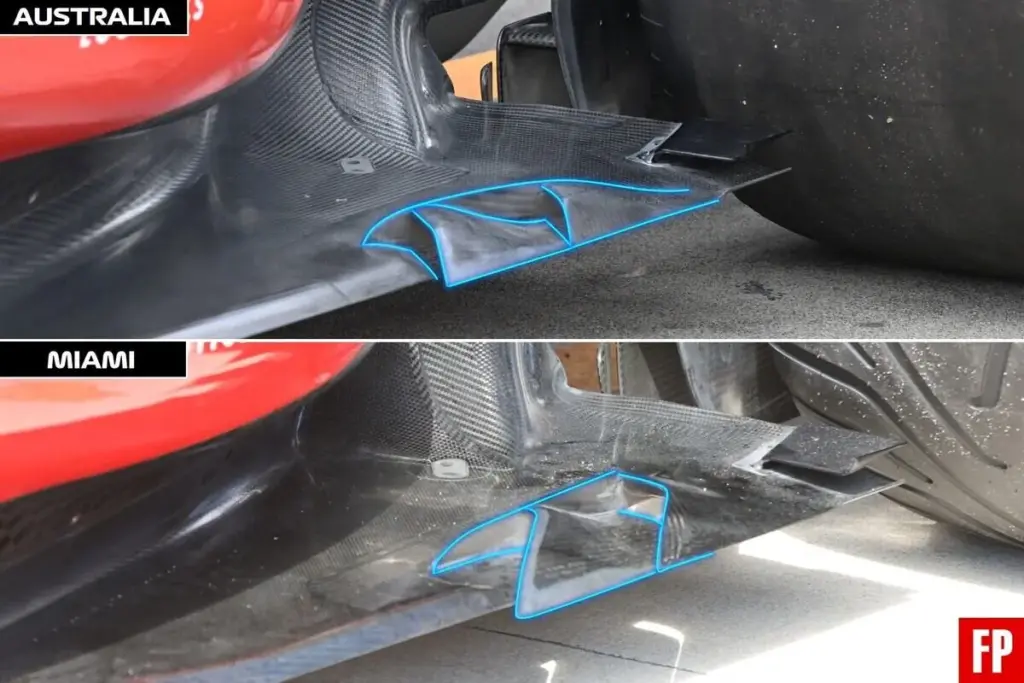
Other significant updates concern the floor, evolved 360° and in symbiosis with the changes to the front. The central keel under the chassis is longer, probably to better control the flows channeled under the car. The entry section of the floor has also changed, including the vertical elements with which teams have already started to experiment. The most noticeable novelties concern the outer bargeboard, divided into three vertical partitions that help shield the floor from the turbulence of the front wheels.
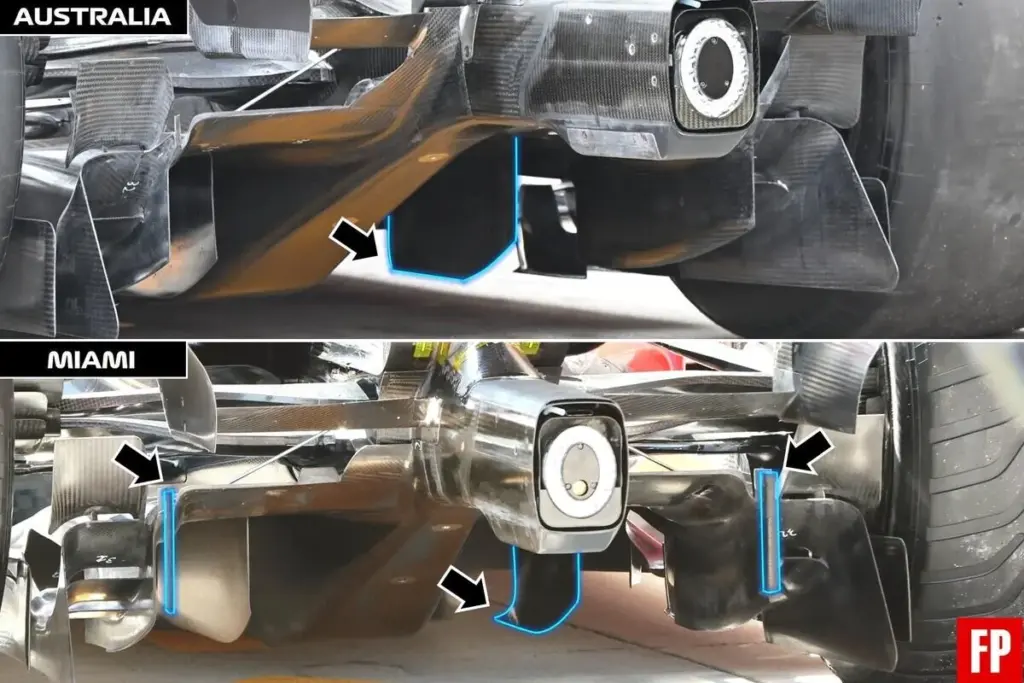
Looking at the rearmost part of the floor, there is an elaboration, as well as a widening, of the side slots, trying to inject more energy under the car, as well as to control the vortices generated by the rear wheels. The updates also affect the diffuser, particularly important on the current generation of cars. Ferrari has worked on the volumes of the ramp, but even more visible is the work on the vertical fins, now curled at the bottom. In addition, two small outer partitions appear, which effectively widen the diffuser’s exit section, intensifying the extraction of flows to the benefit of the downforce generated by the floor.
Read more A «horrible» spin. Leclerc’s fury after the last attempt in SQ3
The evolved Macarena and FTM
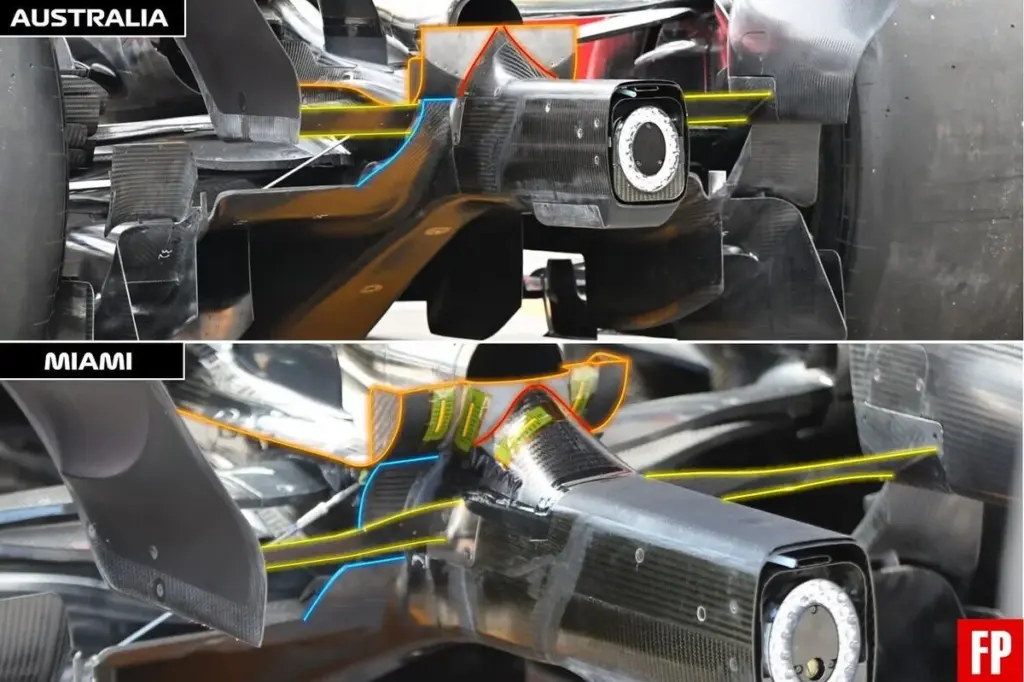
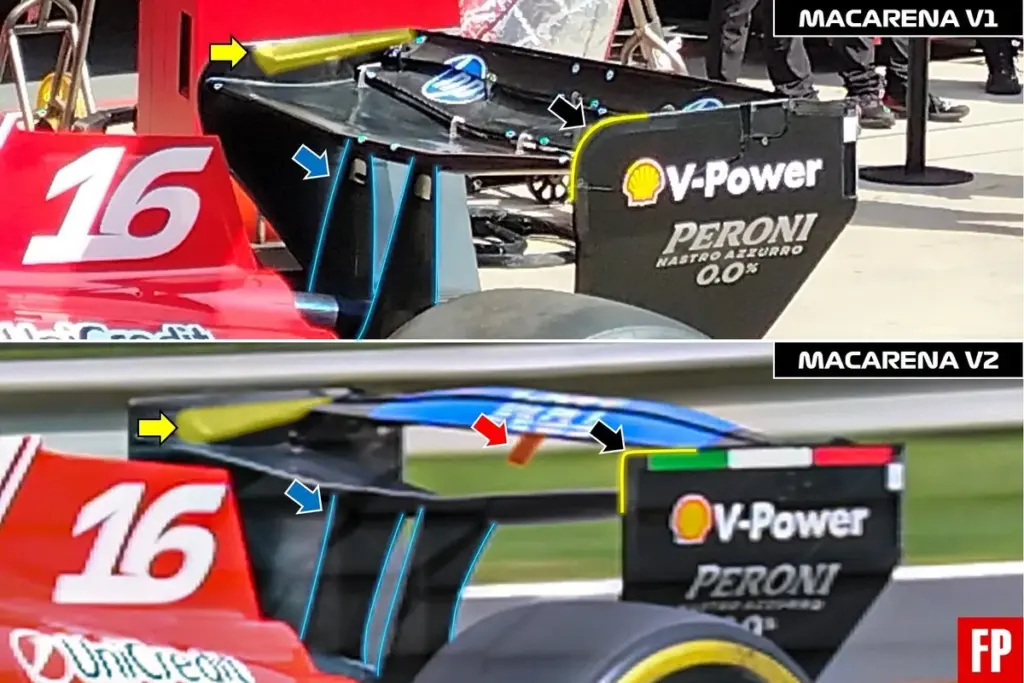
Ferrari has dedicated great attention to the rear end, tweaking the fairings of the rear suspension arms. However, what stands out is the complexity reached by the aerodynamic structure surrounding the transmission. The beam wing (in yellow) is different, effectively dividing in two the extensions at the top of the diffuser (in blue), with a curvature inversion for the upper element. The FTM, the flap at the exhaust outlet (in orange), is also completely new, now becoming a real cage. The competition has started to replicate Ferrari’s solution, which meanwhile has continued to develop the solution that uses hot gases for aerodynamic purposes, reaching a remarkable level of sophistication.
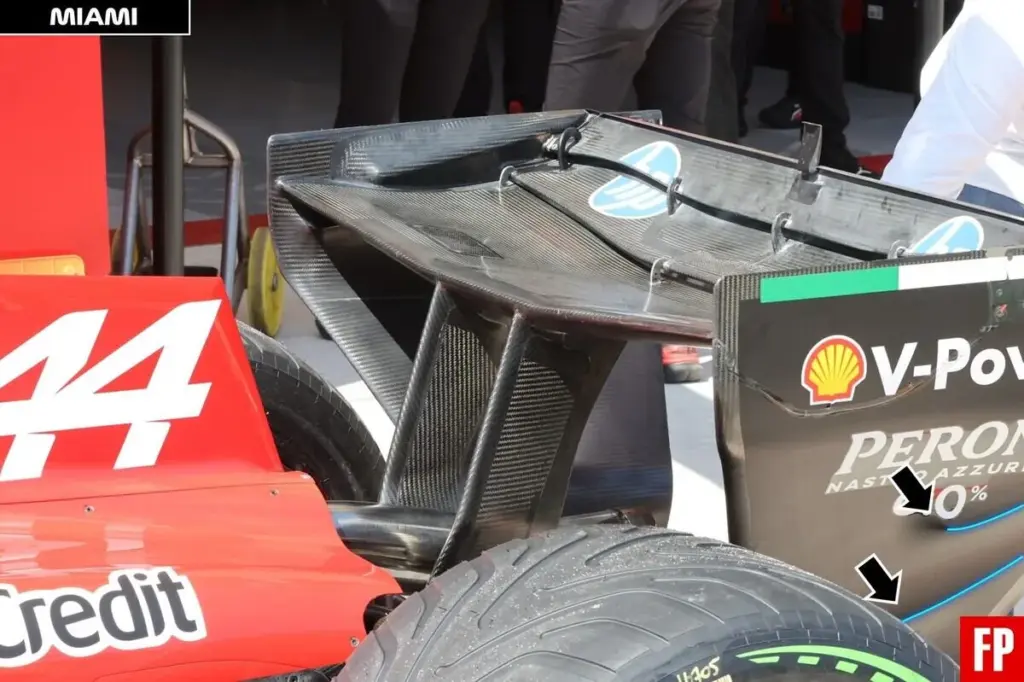
Finally, the new Macarena debuts, the inverted movable wing, already seen in action during the Monza filming day. Compared to the initial version, Maranello has modified the actuator embedded inside the endplate, also reinforcing the central pylons and adding a small element at the top of the movable flaps, whose function is not yet clear. In Miami, a novelty that escaped during the test in Italy is now appreciated. These are the veins carved on the outside of the endplates, curved upwards following the style of what was usually done with ground effect cars.
Overall, due to the abundance and care of the proposed modifications, the Miami package represents the most interesting update package Ferrari has produced in recent years. This observation, however, is no guarantee of success on track, especially in light of the competition’s developments. In any case, seeing some of the SF-26’s solutions appear on rival cars is a small satisfaction for the Maranello Scuderia.
Read more Williams hires Claire Simpson, head of aerodynamic development