

Madrid: a new chapter
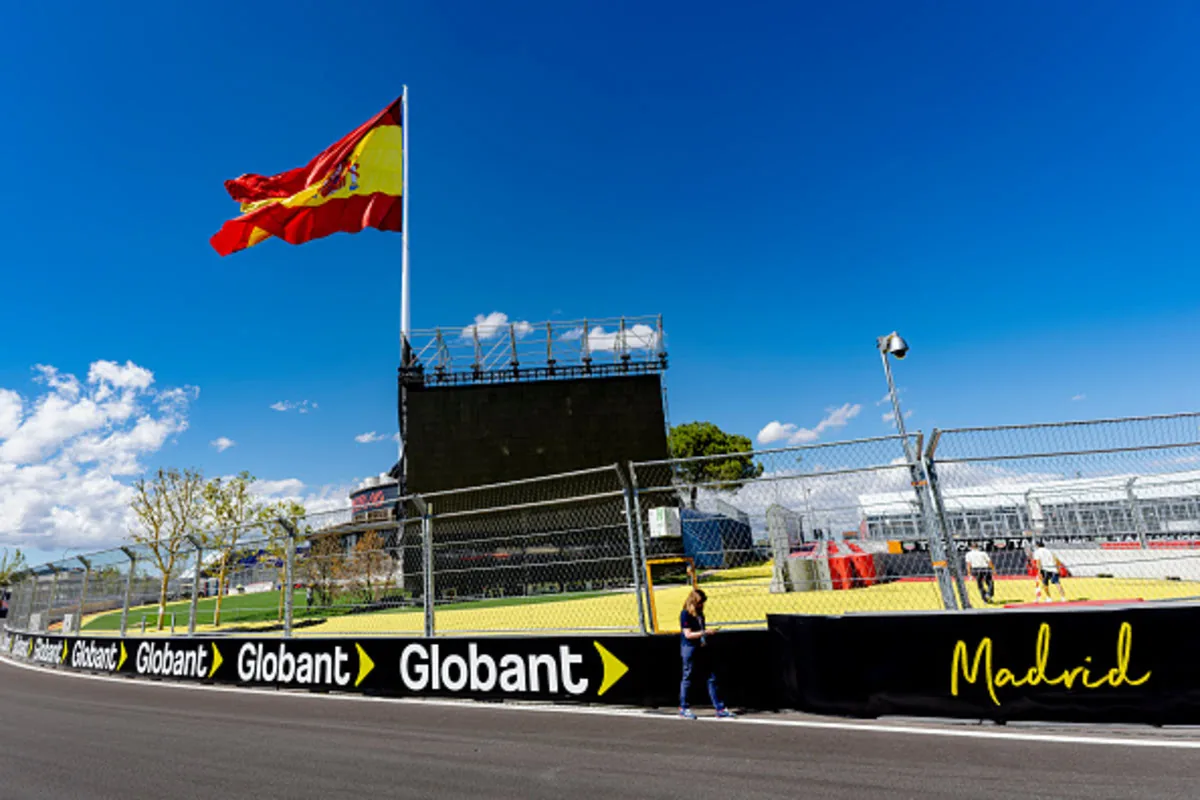
For the first time since 1991, the Spanish Grand Prix will not be held on the Barcelona track. In the history of this nation in F1, the Catalan circuit has been the one that hosted the Circus the most times, with as many as 35 editions, but the new chapter of Iberian history will open this year with a recently inaugurated track amid a mix of curiosity and controversy: it is the Madring, which as the name suggests is located in the capital, built around the IFEMA exhibition center. This will therefore be the sixth track to host F1 as the new official venue of the Spanish GP, but what were the others in the past?
Read more Maserati, the Trident dominates at the Turin Motor Show
Barcelona and Madrid: the ‘greats’ also in F1
The first GP was held in 1951, one year after the first F1 World Championship. The event took place on the Catalan circuit of Pedralbes, located a few km from Barcelona. Its history, however, was very short: after the race in 1952, the track was closed following the very serious accident that occurred during the 1955 24 Hours of Le Mans.
After the second and last GP, F1 did not return to Spain, at least until 1968: it was precisely that year that the permanent circuit of Jarama, on the outskirts of Madrid, became the new venue. From that event, F1 remained in the country continuously until 1981, mainly on this track. Only in four cases did Jarama alternate with another track: Montjuic Park.
Built in the homonymous park of the city of Barcelona, and better remembered in the world of motorcycling, it hosted the GPs of 1969, 1971, 1973, and 1975. Jarama therefore remained in F1 until 1981, but Spain was excluded from the world of F1 for only four years.
Jerez and Barcelona: in Spain and beyond
In 1986, the country re-entered the Circus permanently with the circuit of Jerez de la Frontera. Located in Andalusia, the track hosted five consecutive editions before returning in the mid-’90s, but as the European GP.
The last race, dating back to 1997, also went down in history for the contact between Michael Schumacher and Jacques Villeneuve, with the Canadian winning his first and only world title (the last for Williams) and the German being disqualified for the maneuver against him. A season that, meanwhile, had already known the circuit of Barcelona for a few years.
Read more The photo gallery of the Madrid circuit
Officially entered in the 1991 calendar and still used by teams for winter testing, the track has remained steadily on the calendar until this championship. However, from 2027 to 2032, it will alternate with Spa-Francorchamps, with the GP being called ‘Barcelona-Catalonia GP’, as happened this year.
The European ‘record’ shared with France
Barcelona will therefore have to be recognized by another name, just as it was for Jerez and for another track that was officially the venue of the European GP: Valencia. The five races held from 2008 to 2012, albeit under another flag, still allow Spain to boast a particular record, namely having hosted Formula 1 on the most different tracks in Europe: 7.
A record shared with France, which is however formally alone at the top of this ranking for the highest number of home GPs, and valid exclusively for the French GPs (Le Castellet, Magny-Cours, Reims, Rouen-les-Essarts, Dijon, Clermont-Ferrand, and Le Mans). Including the upcoming race in Madrid, the Spanish GPs will therefore take place on six different circuits, one less than France. Only the European GP has reached the same number as Spain, but in the Old Continent. A special mention goes to the United States.
Analyzing only the GP of the States, it is also in second place of all time, but including all the races held on American soil and valid for other GPs, the absolute record belongs to this nation, with weekends held on as many as 11 different circuits: Caesars Palace, Dallas, Detroit, Indianapolis, Miami, Watkins Glen, Austin, Phoenix, Riverside, Sebring, and Long Beach.
Read more Montoya: “Antonelli will win the title, but with equal tires Russell would have beaten him at Monza”