








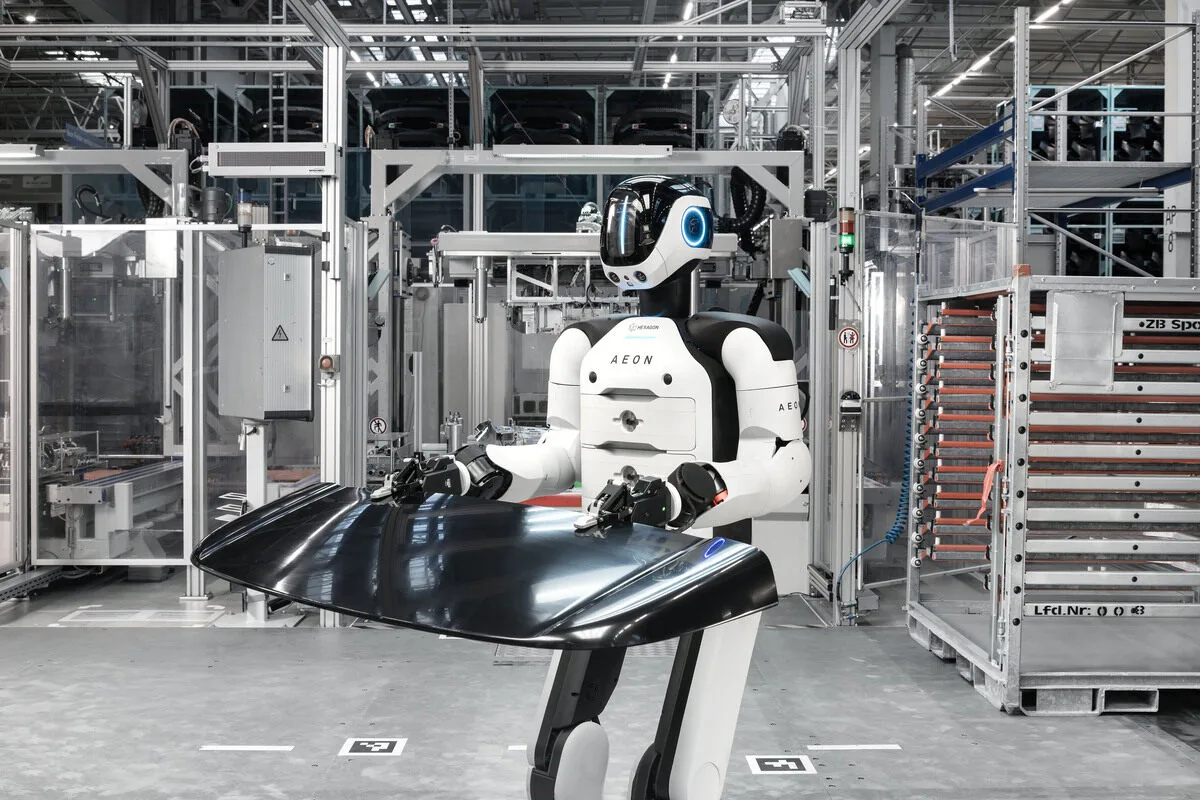
The BMW Group is accelerating the digitalization of production processes by focusing on Physical AI, a strategy that combines digital artificial intelligence and real machines to bring intelligent systems directly into production lines. At the center of this approach are autonomous decision-making agents and robots, including humanoid robots, which integrated with the company’s unified data platform can learn and perform increasingly complex tasks in real industrial environments.
Read more Skoda expands battery production
BMW focuses on humanoid robots in production
The goal is to strengthen production competitiveness through the synergy between traditional engineering skills and AI capabilities, as highlighted by Milan Nedeljković: digitalization opens up entirely new possibilities for production in Europe and worldwide. For the first time on the Old Continent, the BMW Group has launched a pilot project with humanoid robots in Leipzig, continuing the experience gained in the Spartanburg pilot project. The goal is to integrate humanoid robotics into current series production and explore its applications in the production of batteries and components.
First application in Germany
After a phase of theoretical evaluation and laboratory tests, the first trial use began in December 2025, with further tests scheduled for April 2026 and the start of the summer pilot phase of 2026. One of the key levers that makes Physical AI possible is the unified IT and data model on which the BMW production system is based. By transforming information silos into an integrated data platform, the German group has made consistent and standardized information available that allows digital agents to learn and operate autonomously.
Read more Tardozzi: “We took four slaps from Aprilia. Austin, Qatar and Jerez will define the pecking order”
Experience from the USA
This infrastructure facilitates the integration of robots into the BMW Smart Robotics ecosystem through a series of standardized interfaces and allows for structured testing and evaluation of technology partners. All thanks to the support of the new “Center of Competence for Physical AI in Production” to consolidate and share internal expertise. The experience accumulated in Spartanburg has provided essential practical insights: humanoid robots can perform repetitive and physically demanding tasks with precision and safety, lightening the load on employees and improving operating conditions.
Read more Acosta: “My leadership did not last a day as Marc Marquez said”