



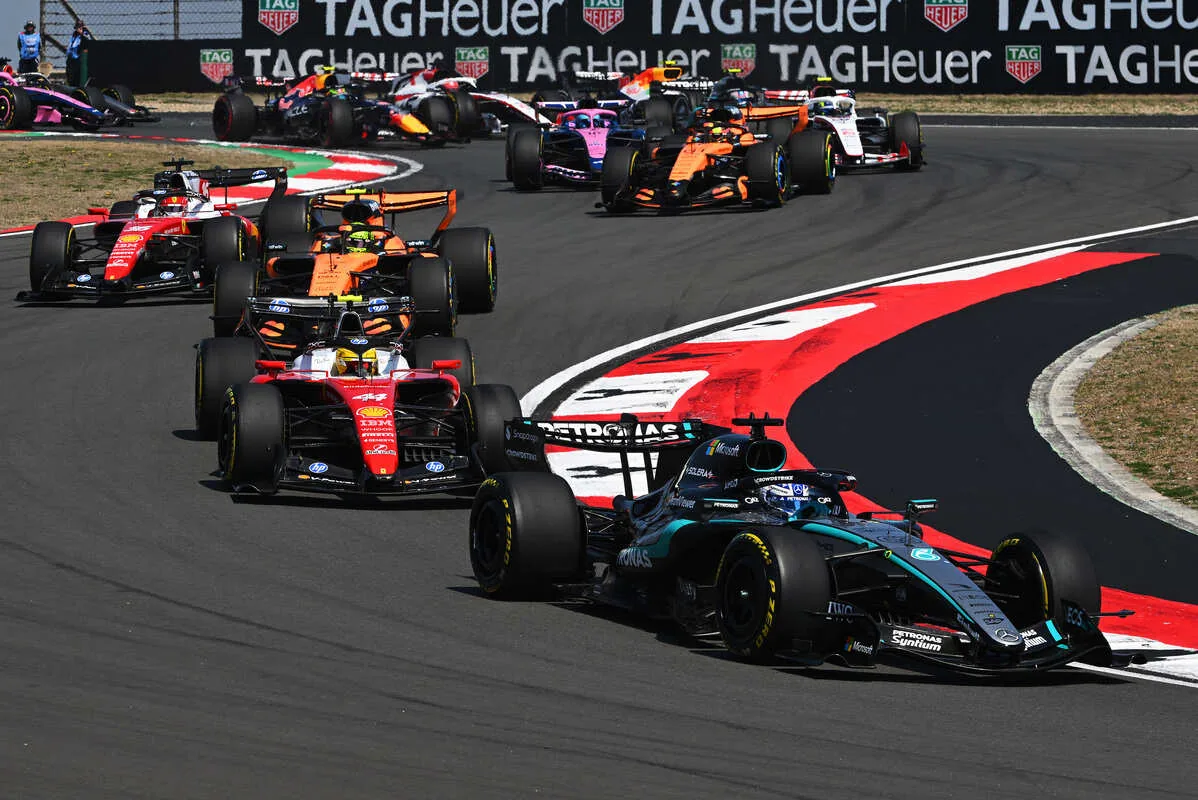
A decidedly interesting Chinese Grand Prix is expected, with Antonelli hunting for his first victory and the Ferraris ready to exploit the advantage of starting from the second row. The race, however, will not be decided on the first lap, with graining playing a major role, as seen in the Sprint. Mario Isola takes stock with FormulaPassion on the possible strategies, explaining Pirelli’s predictions.
Read more Stellantis, simulator and track driving for people with disabilities
Possible strategies
On paper, the fastest strategy is the medium-hard one-stop between the 17th and 23rd lap, very similar in total race time to the soft-hard combination, with the pit stop in this case to be made in the window between the 15th and 21st lap. Isola explains the reason for the closeness between the two strategies, despite the soft’s greater sensitivity to graining: “The soft tire gave a performance advantage that is slightly wider than what we thought. We had estimated about 4 tenths, but in reality, it’s probably 6-7 and the difference in grip was visible.”
“In terms of graining, we clearly have more information on the medium, which ran a Sprint and gave us confirmation of what we saw on Friday. The soft tire was used a bit after the Safety Car, but not for many laps. The idea is that the graining of the soft is slightly higher than that of the medium, but it’s not dramatic. If one wanted to adopt a more aggressive strategy at the start, they could fit the soft and keep it for a few laps less than the mediums, then go until the end of the race with the hards.”
Read more Power unit developments and usage: McLaren’s weapons to close the gap with Mercedes and Ferrari
The two-stop option
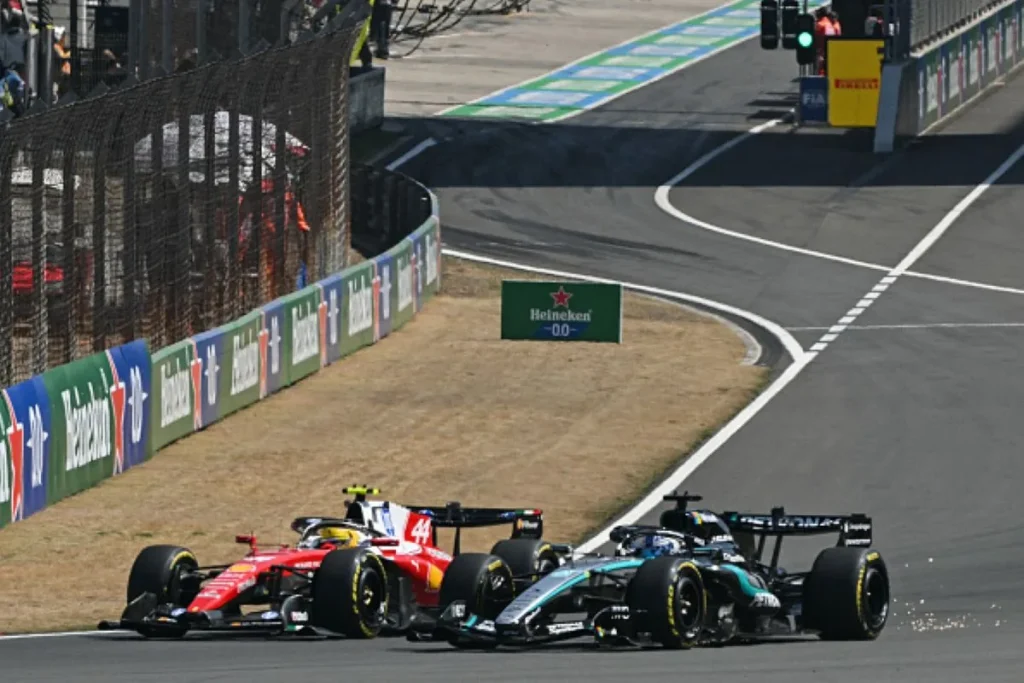
Pirelli, however, does not rule out that someone at the back might start on hard tires. Isola continues: “The hard performed well during the Sprint. We saw that it suffers from a significantly lower level of graining. It is more conservative, more consistent, and is certainly manageable for a longer stint.” Starting on hards would also guarantee more flexibility to adapt the strategy in case of a neutralization. The chances of a Safety Car are not particularly high in Shanghai, but the new cars are still exposed to technical teething problems that could force a stop on track: “If there were a Safety Car and we went for a two-stop, at this point the fastest strategy would be soft-hard-hard. The medium-hard-hard combination is quite close, we’re talking about less than a second difference in total race time, while soft-hard-medium is just slightly slower.”
Strategic choices will be primarily based on the state of the tires. For the drivers, it will be important to manage the tires in the long loaded right-hand corners, including the initial corkscrew and turn 12. “Those are the corners that can start graining on the front left”, explains Isola. “Consequently, attention to tire management in those corners, especially in the early stages of the race, could extend their life.” So, be careful not to get carried away in the first laps, in a Formula 1 in which, besides energy, tires must still be managed.
Read more Wolff: “We started well, but we are not dominating. Maybe Ferrari wins tomorrow…”