






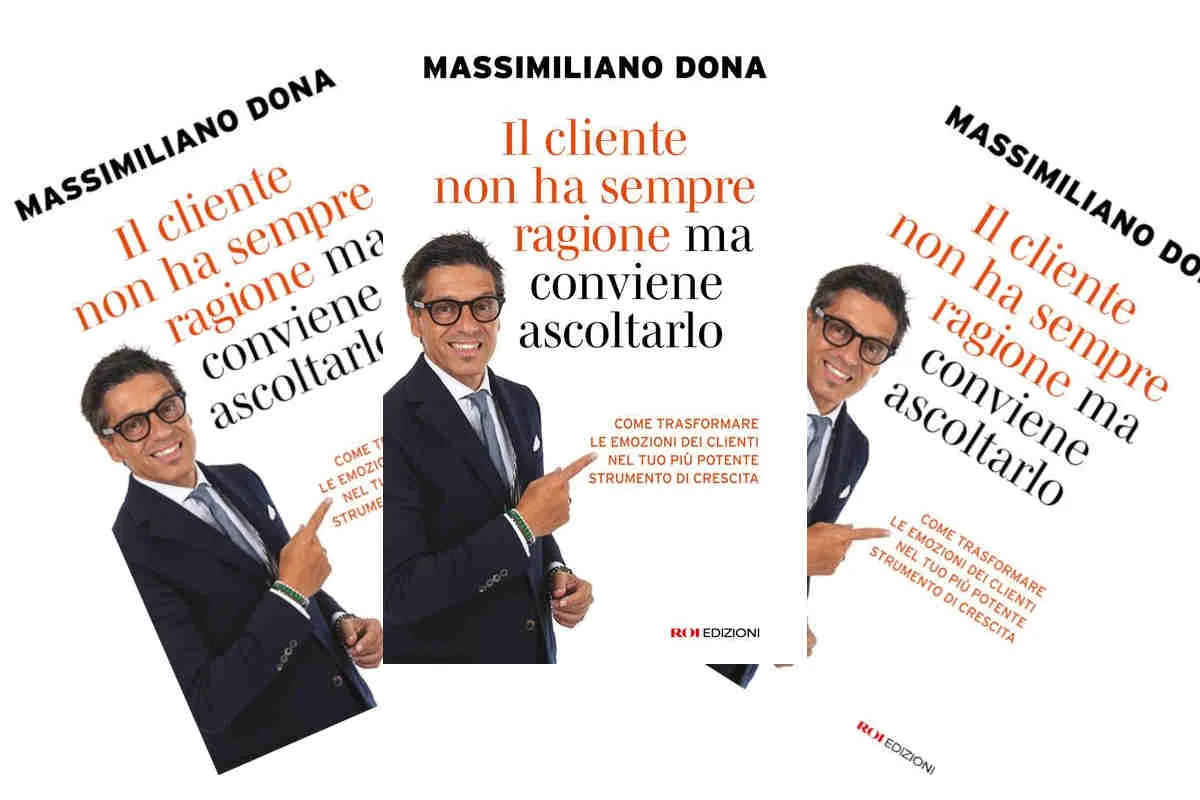
Massimiliano Dona – president of the National Consumers Union – says it without mincing words right from the title of his latest book: The customer is not always right but it’s worth listening to them. And it’s a perfect concept for the automotive world because it’s essentially a kind of declaration of war on corporate complacency and, at the same time, an invitation to transform every complaint, every silent abandonment, and every friction into a real competitive advantage.
Read more Russell attacks the Budapest circuit: “The track is falling apart, they did a terrible job”
Published by ROI Edizioni (282 pages, 22 euros), the book stems from a concrete experience: the author built his method by listening to a million consumers on social media. Not to agree with them regardless, but to understand what they were really saying. Because, explains Dona, the customer can be wrong, demand the impossible, complain unjustly. What they feel, however — frustration, disappointment, curiosity, enthusiasm — is always an authentic signal. And that signal, if you know how to read it, is worth more than any market research.
The strategy
Saying “you’re right” is easy, cheap, and… useless. Listening is another thing: it’s uncomfortable, requires courage, and forces you to question what you think you’re already doing perfectly. Businesses, writes Dona, think they listen through surveys, focus groups, NPS, and colorful dashboards. Meanwhile, they miss the only thing that matters: what customers truly feel and what they will never say in a questionnaire.
How to understand consumers
One of the most lucid passages concerns how people respond. They respond to make a good impression, to confirm a consistent story to themselves (“I am a careful consumer,” “I won’t be fooled”). Or simply to get rid of the question quickly. The result? Polite, reasonable, clean words. The real friction, however, arises elsewhere: in the gut. And the gut is not questioned with a “from 1 to 10, how much do you recommend us?”. It is intercepted when someone speaks without feeling judged, without having to be brilliant.
Read more Vasseur: “We are not aiming for the best Friday but for the best Sunday”
Dona talks about messages that arrive on his social channels and often begin with hesitation: “I don’t know if what I’m about to tell you makes sense, but…”. That phrase, he argues, is a door opening. It’s not yet a complaint. It’s a doubt. It’s a crack in the personal narrative. And it is precisely there that the possibility of understanding the customer more deeply lies.
The meaning of the book
The book thus becomes a kind of operational method to transform every friction into a growth lever. And to demonstrate this, Dona recalls a classic case: New Coke in 1985. Coca-Cola had conducted two hundred thousand taste tests. The numbers were comforting. The new flavor was preferred over the old formula and Pepsi. Then came the emotional, identity-based, cultural revolt. Thousands of phone calls a day, protest letters, a movement for “Grandpa’s Coca-Cola.” The company had listened to consumers in the lab. It had not listened to what those consumers felt.
So what? Instead of having thoughts constantly interrupted by notifications and micro-decisions, asking “what do you think?” often produces superficial answers. Biases do the rest. Dona proposes listening to behaviors, not just words. To intercept weak signals before they become complaints. To read emotions as the most powerful growth tool available to a business. The hope, in the end, is that many marketing departments of car manufacturers will read this book. In the automotive world, there is a real need for a change of perspective: to stop treating the customer like a laboratory and start treating them like a person who, even when wrong, is saying something true.
Read more Ferrari at the top, Russell worried: “What we feared is happening”