


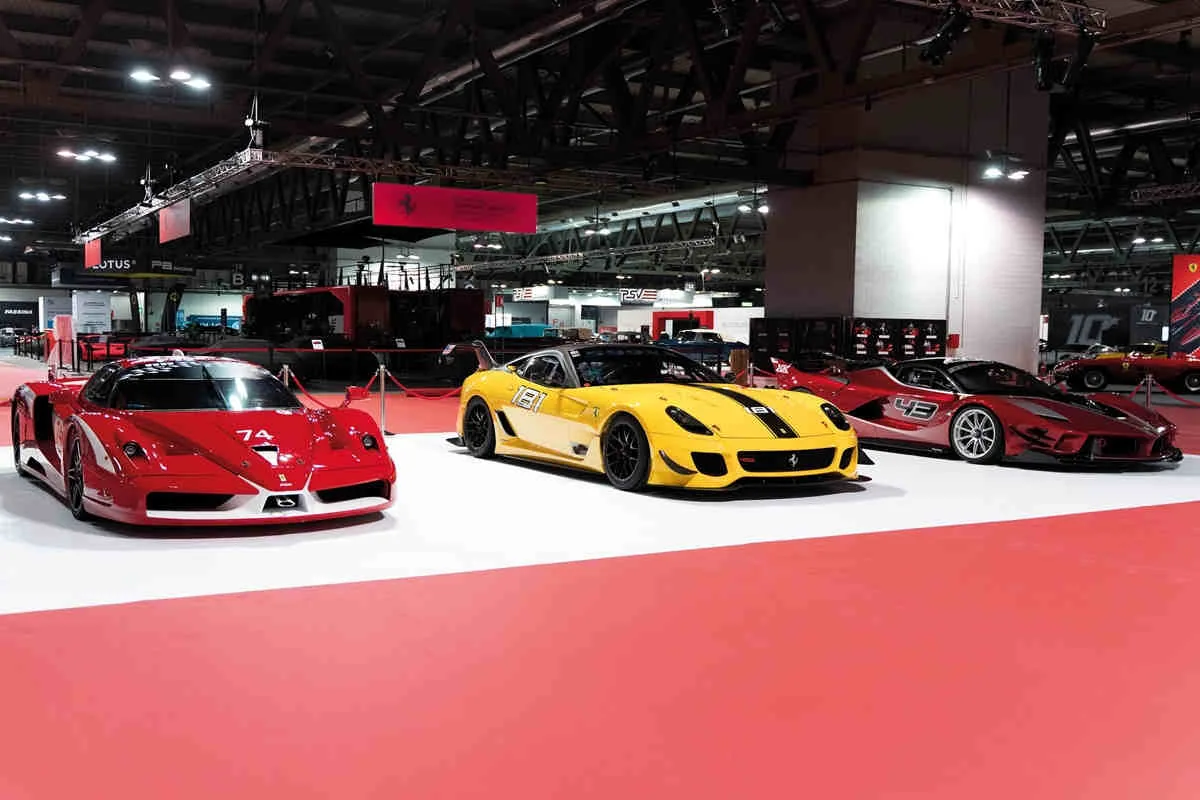
There is a moment, in classic car shows, when the noise of visitors overlaps with the silence of the machines. It is the moment when car bodies stop being objects and return to being promises. Milano AutoClassica, in its sixteenth edition, has decided to steal a day from that moment. For the first time, it will open on Thursday, with a preview reserved for collectors and operators, before the weekend transforms the Rho pavilions into a large popular salon.
Read more The paradox of the electric car
It’s a small, calculated shift in perspective. Those arriving on Thursday, November 19, will be able to walk among the cars without having to share their view with the crowd, they can stop in front of a bodywork without hearing the comments of passers-by behind them. It will be a paid privilege, of course, but also an act of respect towards those who consider these cars not a purchase, but a form of private memory. And then, in the evening, there will be the collateral event, an invitation-only gathering where mechanics meet conviviality. This year, Carlo Cracco was called upon to curate the gastronomic part. Vintage cars, which already speak of meticulous care and invisible details, will thus find themselves dialoguing with another form of precision: that of a chef who knows how much silence matters between one dish and another.
The strategy of contamination
One might smile at this contamination. A historical car show that relies on a Michelin-starred chef to ennoble its Club House has something inevitably contemporary about it. Yet, within that choice there is also a deeper truth: the passion for classic cars has always been, also, a form of good taste, attention to gesture, a rejection of haste. Cracco, in essence, merely brings to the level of cuisine what certain collectors have always sought in their cars: the feeling that nothing is left to chance.
From Friday onwards, the show will return to its previous state: open, noisy, full of people touching, photographing, discussing. There will be the usual islands dedicated to automobilia, models, vintage spare parts, and historical boating. And there will be, as every year, a space designed for younger people. A pedagogical whim? More or less. Certainly, the recognition that passion, if it is to last, must be passed on. The young people who today stop enchanted in front of a 250 GT do not do so out of nostalgia — they cannot, they were born too late — but out of a kind of silent rebellion against the idea that everything must be new, connected, updated.
Milano AutoClassica, in short, tries to distinguish between different levels. There is the market level, of business, of private negotiations. And there is the older, more fragile level: that of those who still believe that a car can be, in addition to a means of transport, a test of style and intelligence. The Thursday reserved for the few is perhaps just a way to protect, for a few hours, that second level. Before Saturday arrives and everything, rightly, becomes everyone’s.
Read more Towards Budapest: Ferrari with several cards to play, but watch out for degradation