





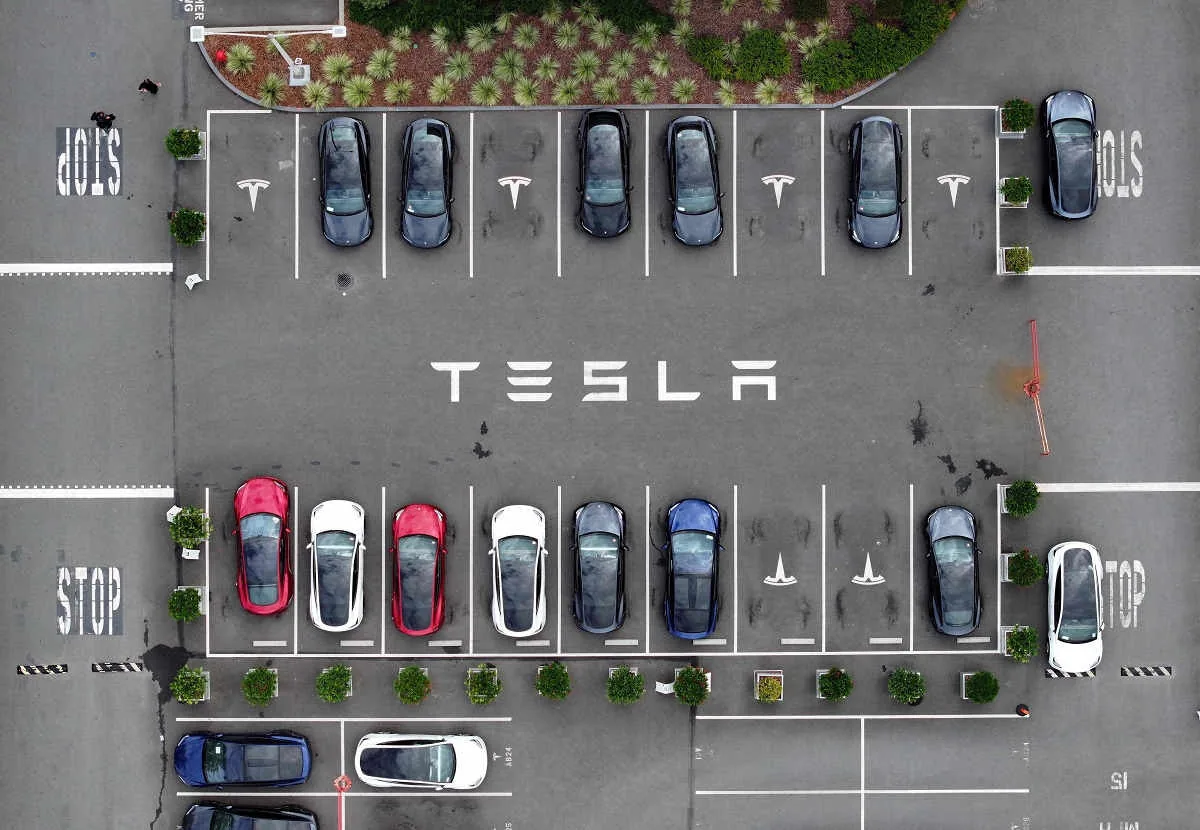
It seems that Tesla is looking for semiconductor engineers to hire in Taiwan for the Terafab project, a complex destined for the production of artificial intelligence chips. This was reported by Reuters, citing the company’s official website. The choice of Taiwan is not accidental: the island is home to the world’s leading contract chip manufacturer, TSMC, and can count on a workforce with consolidated skills in the most advanced semiconductor production processes.
Read more Auer’s blunder in qualifying, Verstappen’s crew penalized by 3 positions: will start 9th
Tesla seeks workforce for the Terafab project
Tesla has reportedly posted nine open positions to work on the Terafab program, requiring candidates with over five years of experience in advanced chip manufacturing processes. In the role descriptions, Terafab is defined as a vertically integrated semiconductor factory where, in the same plant, different phases of the supply chain would be managed: production of logic circuits and memories, packaging and testing, as well as steps such as lithographic masks. Several requested figures would also have experience on advanced production nodes below 7 nanometers and on 2-nanometer class reference technologies, areas in which the Taiwanese industrial ecosystem is particularly strong.
Read more Bulega: “Positive start, but it makes no sense to look at the numbers in the third round”
Different chip families
The Terafab project, recently presented by CEO Elon Musk, aims to integrate various key front-end production phases, including lithography, etching, thin-film management, and chemical-mechanical planarization, as well as yield engineering and process integration. The job offers also indicate the intention to support different chip families, including processors for edge-inference, components designed for extreme conditions in space, and high-bandwidth memories, with further indications on advanced packaging flows such as CoWoS and SoIC (developed by TSMC). In response to industry interest, TSMC reportedly stated that it does not underestimate the competition, while reminding that building a new production plant generally takes between two and three years.
Read more Assen 2026, Superpole: Bulega at the top also in the Netherlands