



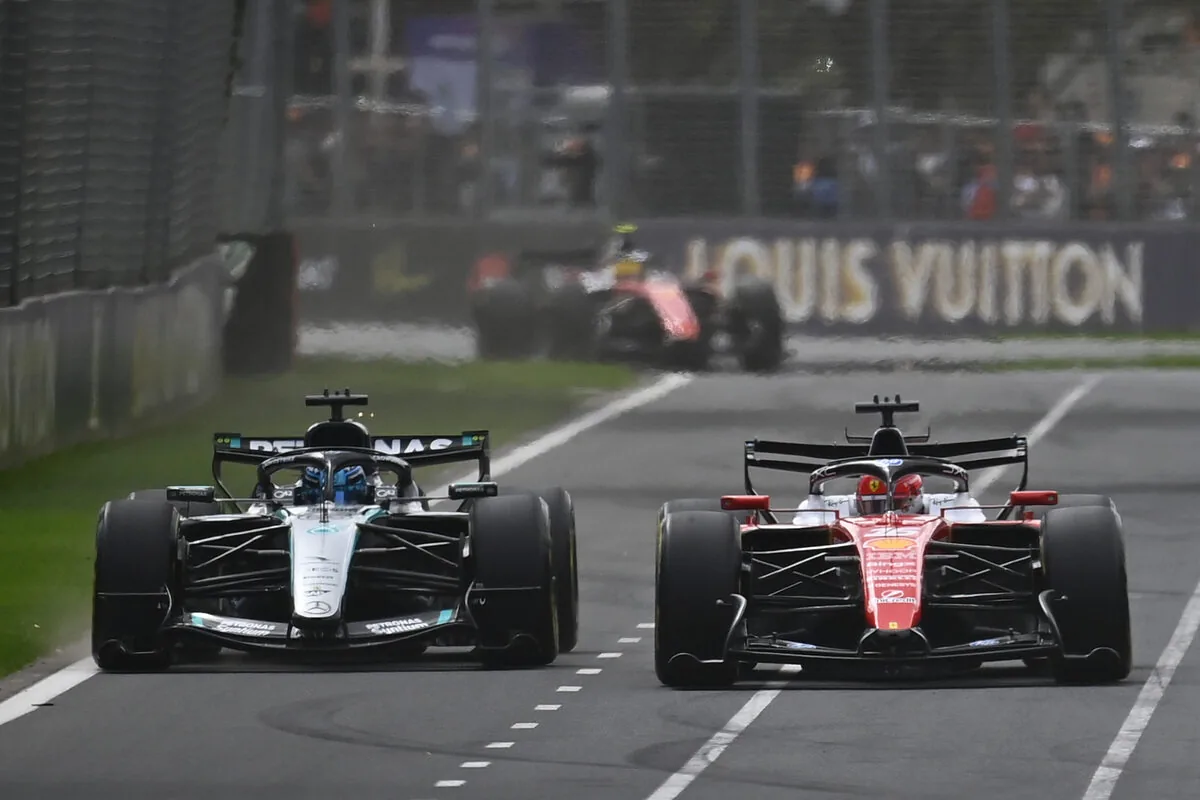
The Suzuka race highlighted all the problems and risks of superclipping, the slowdown at the end of the straight that can exceed 50 km/h. In addition to offering a questionable spectacle in qualifying, the phenomenon confirmed safety fears, causing wide speed differences between cars that can lead to an accident. The FIA and the teams are now evaluating possible solutions, but the problem is unlikely to be completely resolved, unless drastic actions are taken.
Read more Ralf Schumacher is certain: “Ferrari team orders for Hamilton? They are forbidden by contract”
Acting on the internal combustion engine is not enough
Clipping is a dual problem, concerning both the discharge and recharge phases of the battery. To power the electrical part for as long as possible, it is necessary to recharge the battery while driving, even outside of braking zones. This involves using the internal combustion engine as a generator, using part of its power to generate electricity, which inevitably causes a loss of drive to the wheels and speed, corresponding precisely to clipping.
Among the hypotheses put forward is increasing the maximum power for recharging the battery on the straight from 250 to 350 kW. However, this would reduce the driving force even more, worsening the clipping phases, albeit shortening them. Another proposal is to change some parameters of the internal combustion engine to increase its horsepower, so as to feel the loss of power less during the recharging phases. However, this is not a viable path before next year and, moreover, it would not change the fact that a power reduction would still be felt on the straight.
The third option would be to reduce the energy recoverable each lap, as was already timidly done at Suzuka. The idea in this case is to limit battery recharging on the straight, but, as the Japanese Grand Prix demonstrated, even this is not enough. Even if, in extreme cases, recharging outside of braking were completely prohibited, clipping would still persist. This is because the other problem would always remain, that of premature battery discharge, which would require a revision of the 50:50 ratio between the internal combustion engine and the electric motor.
Electric power: an 80% cut would be needed
One of the options on the table involves cutting electric power by 50, 100, or more kW, but, on closer inspection, even this would not be enough to eliminate superclipping. According to the regulations, the battery has a capacity limited to 4 MJ, roughly in the order of magnitude of the energy that can be recovered each lap during braking, a number that varies depending on the track. Imagining using the electric motor at the maximum of the 350 kW currently allowed, the battery would discharge in 11 seconds. If the power were reduced to 300 kW, the energy would run out in 13 seconds, while at 250 kW it would run out after 16 s. At Suzuka, these would have been enough to cover the 130R straight without clipping, but then finding oneself without energy for the rest of the circuit.
On average across the various tracks, cars travel with the throttle wide open for over 50 seconds per lap. To avoid clipping in the race, electric power would have to be cut by 80%, limiting it to 80 kW. This is a value even lower than the 120 kW of the previous regulation, which says a lot about how deleterious the abolition of the MGU-H, the generator that recovered energy from exhaust gases, has been.
Read more Meloni: “Extension of excise duty cut a necessary measure”
In qualifying the problem is less serious
Paradoxically, the problem is easier to manage in qualifying, when starting with a full battery and then progressively recharging it during the lap. Imagining again wanting to limit recharging to braking only, 8 MJ of energy would be available on a single lap. To use it all without clipping along the 50 seconds in which cars are on average at full throttle, the electric power would have to be limited to 160 kW, a 55% cut compared to the current value.
| HYPOTHESIS OF BATTERY RECHARGING ONLY DURING BRAKING | ||
| ELECTRIC POWER | DISCHARGE TIME IN QUALIFYING [8 MJ] | DISCHARGE TIME IN RACE [4 MJ] |
| 350 kW | 22 s | 11 s |
| 300 kW | 26 s | 13 s |
| 250 kW | 32 s | 16 s |
| 200 kW | 40 s | 20 s |
| 150 kW | 52 s | 26 s |
| 100 kW | 80 s | 40 s |
It would be a drastic decision, one that the FIA and the teams do not seem willing to take. Thus, we return to the starting point: no matter how much one tries to improve the charging and discharging phases, power cuts and clipping would always be there. A realistic goal is to act on the energy recoverable each lap, on the electric power and, from next year, on the performance of the internal combustion engine to dampen the slowdowns at the end of the straight, possibly by adjusting the various parameters based on the tracks.
Accidents: the problem is the freedom on the software
A different matter is the risk of accidents due to wide speed differences. When two cars go into clipping at the same time, the problem does not arise, as they continue at a similar pace. Conversely, when one car is in the recharging phase and the other is using the electric motor, the speed difference increases, even more so if the attacker is using the Boost button, as happened during Bearman’s accident. Not only does this result in artificial or involuntary overtakes, defined by Alonso as “avoidance maneuvers”, but they can also catch the attacker off guard, leading to a rear-end collision.
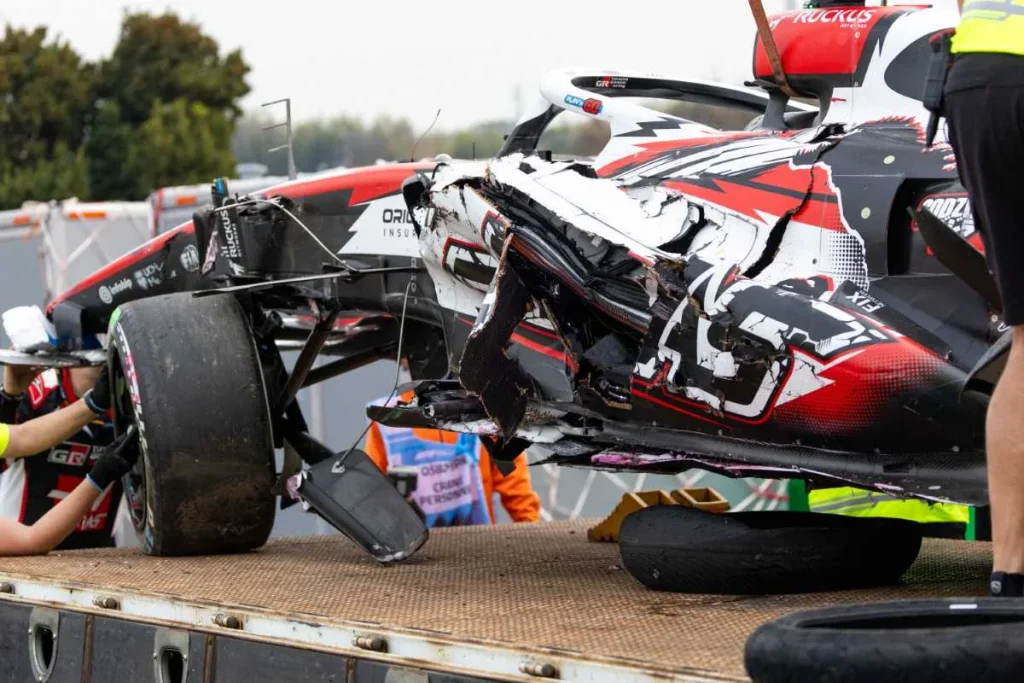
It all stems from the different battery usage strategies, as Antonelli observed in Japan: “With Leclerc, I was using much more battery in places where he wasn’t using it at all, and in these cases, you find yourself with a significant speed difference.” The problem arises from excessive freedom in energy management. “I don’t think it’s something that easy to fix,” Kimi observes. “Each team decides how and where to use the battery.”
These words invite reflection on the need to place constraints on energy management logic, trying to standardize the various strategies. **Nothing would prevent defining points where the electric motor can be used**, along the lines of the old DRS activation zones. These would also reduce battery usage times compared to the current average of 50 seconds, which would dampen clipping. The only certainty is that drastic measures are needed and that none would be free of contraindications, but at this point, the only possibility is to choose the lesser of two evils.
Read more Cigarini: “We saw an F1 in beta version. The 50:50 engines? An optimistic plan”