







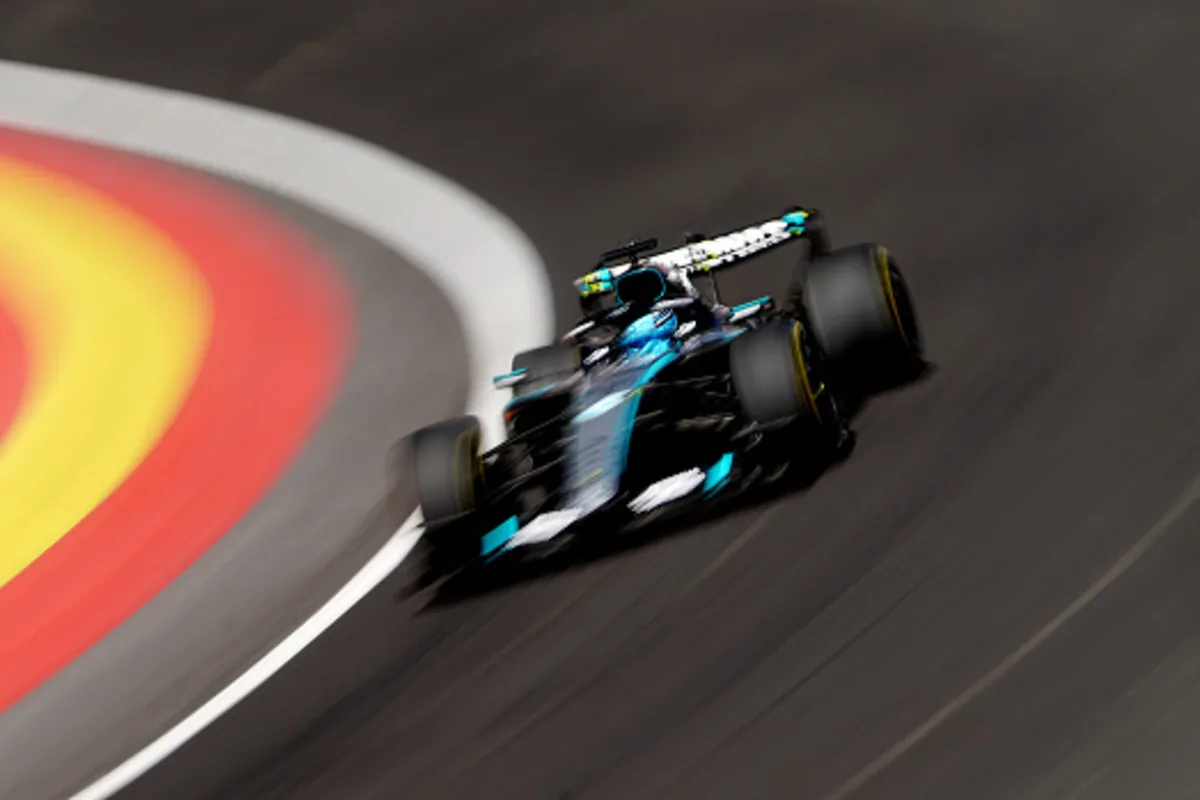
The new Madring has positively impressed for the variety of curves and driving challenges, features that at the same time have raised some issues. In several points, in fact, drivers have to modulate the accelerator, which, with this generation of power units, risks causing energy imbalances, paradoxically penalizing those who dare more. After the first day of testing the FIA has therefore decided to correct the regulations for the use of the electric part, trying to improve the situation.
Read more Lewis Hamilton comes under fire from colleagues for impeding in practice: “Unsportsmanlike driving”
The problem
The current power units have a big problem. Every time the speed exceeds 210 km/h and the driver fully presses the accelerator pedal, the regulations require the electric motor to work at at least 200 kW of power (100 kW in race) for an interval of one second before the control unit can progressively cut its power. As drivers have pointed out on several occasions, this implies that if, while searching for the limit, you have to lift your foot or otherwise play with the accelerator, at the moment of returning to the throttle there is a high battery consumption, disrupting energy management over the lap. The result is that often daring more to gain time in the corner causes an even greater loss on the straight, rewarding driving consistency more than courage.
The new Madring circuit has a layout that amplifies this phenomenon. In several corners, including the impressive Monumental, cars travel on the edge, divided between those who can take them flat out and those who instead require drivers to partially apply the accelerator. The regulations, however, allow the Federation to indicate in the pre-event notes some sections of the track where power units are exempt from respecting the normal hybrid usage rules. This is what the race direction did in Madrid, which after the first day of testing took action, correcting the regulations.
Read more E-Prix London 2026, Race 2: Wehrlein world champion in a crazy finale
The changes
The document published on Friday evening presents several corrections compared to the version drafted on the eve of the Spanish Grand Prix. For example, the points where the control unit can suddenly cut all electric power at the moment of returning to the throttle have increased, without having to wait one second at at least 200 kW as the regulations normally require. Specifically, the Federation included corners 7-8 and 10-11 in the exceptions. The double corner 15-16, instead, was already present in the initial document among the exceptions, while the section 18-19 has been extended to include corner 21.
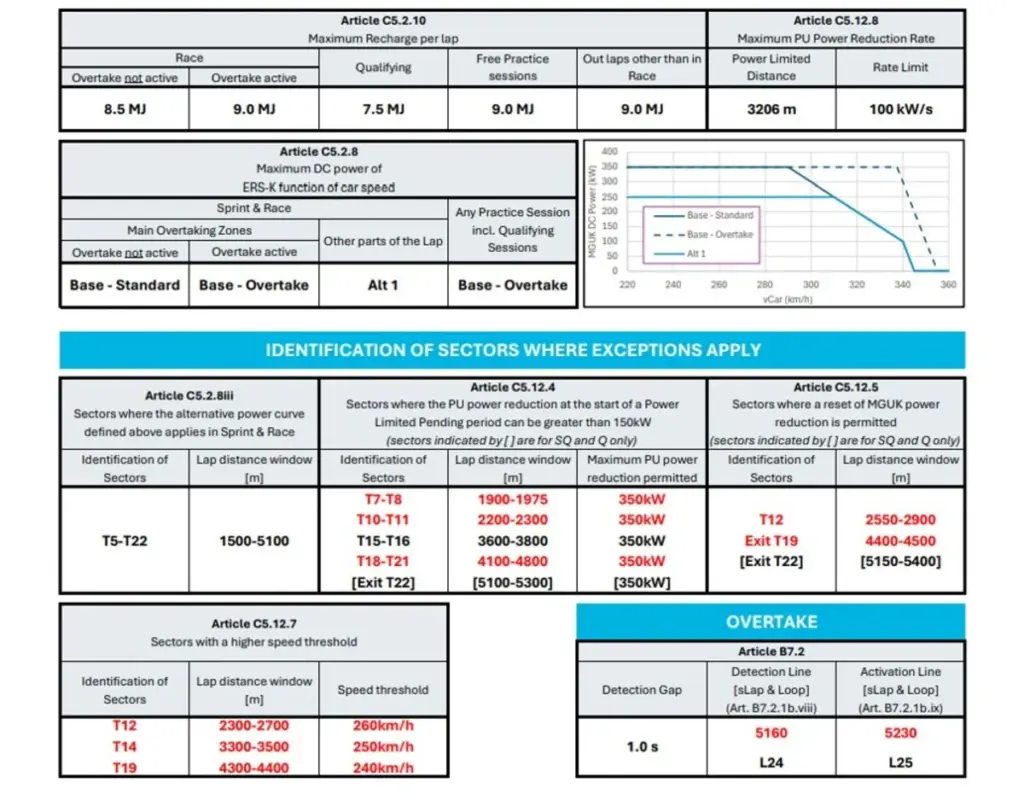
The race direction also indicated the areas where a higher speed threshold than the traditional 210 km/h applies to trigger the obligation to use the electric motor for at least one second. These are corners 12 (the Monumental), 14 and 16, where the minimum threshold has been raised respectively to 260, 250 and 240 km/h. Finally, at corners 12 and 19 it will be possible to reset the power cut by the electric motor, restoring it, if desired, to its maximum value. Overall, the changes relax the constraints for the use of power units in Madrid, hoping that energy management will be freer, avoiding overly hindering drivers from pushing to the limit.
Read more Final standings Drivers, Teams and Constructors of the 2025/2026 championship