






The debate is now unleashed. And it all revolves around the “Freedom Car”. A brief summary of previous episodes, to better understand. Transport Secretary Sean Duffy, in a letter dated July 22, asked Congress to allow the sale of cars without those devices that federal law currently considers essential: wireless connectivity and driver assistance systems, the famous ADAS. No real-time traffic updates, no SOS button to call for help, no automatic emergency braking, no lane keeping. Just you, the steering wheel, and the possibility to make mistakes in peace.
Read more Williams, what a disaster! Albon: “Baku updates will not fix the car. Let’s think about 2027”
It is a proposal that tastes like a comeback. Trump is dismantling piece by piece Biden’s legacy, and this time it’s the Infrastructure Investment and Jobs Act of 2021, which had made those devices mandatory. The Department of Transportation argues that they do not significantly reduce accidents, and in fact promote distraction. An argument that has the merit of clarity: if the car thinks for you, you stop thinking. And if you stop thinking, at some point you get distracted. The logic is impeccable.
The data issue
There is, of course, also the issue of data. Modern cars are walking spies: they know where you go, how long you stay stopped at a traffic light, if you accelerate too much in a curve. And that data sometimes ends up sold to insurance companies. The Freedom Car, offline by definition, would interrupt this flow. An act of digital resistance, if you will. Or, more prosaically, a way to say that the state should not force you to be monitored while you drive.
Read more Ferrari Amalfi Spider, the new 2+ spider is a spectacle
The myth of the American car has been betrayed
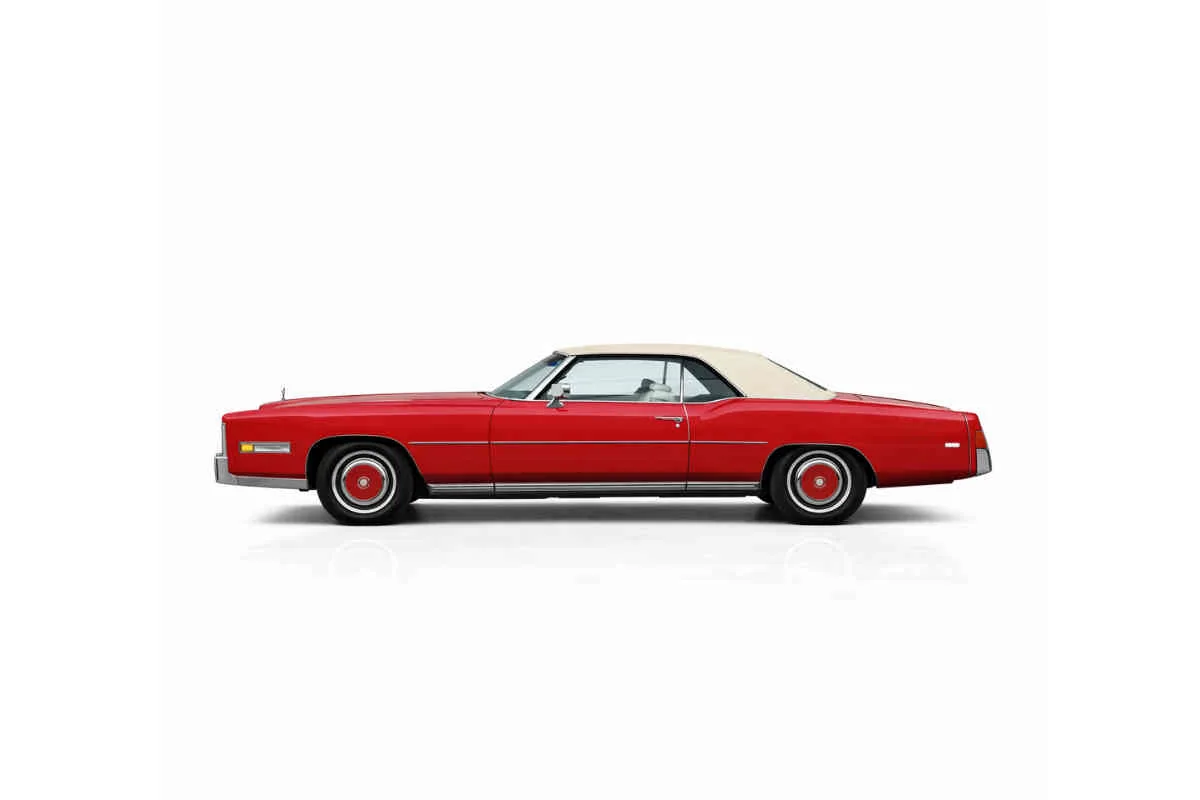
But the point, as always, is not technical. It is anthropological. The American car was born as an extension of individual freedom: the possibility to leave, to take the wrong road, to stop where no one expects you. Look at the photo above of this wonderful and crazy 1970s Cadillac Eldorado. It speaks for itself. Turning it into a device that corrects you, warns you, brakes you, and geolocates you has been, for many, a betrayal. The Freedom Car promises to restore that illusion. A car that doesn’t know where you are, that doesn’t save you if you are about to crash, that doesn’t call for help if you go off-road. A car that leaves you alone with your choices. And with their consequences.
It remains to be seen if manufacturers will follow. Removing already tested systems from the production line costs. Giving up the revenue from data sales costs even more. It is possible that the Freedom Car will remain a niche option, a statement of principle intended for a few manual transmission purists. Or maybe not. Maybe it will become the symbol of an America that prefers to take risks rather than be forcibly protected. After all, freedom has always had a price. This time, apparently, it is the price of being able to have an accident without anyone having prevented it.