
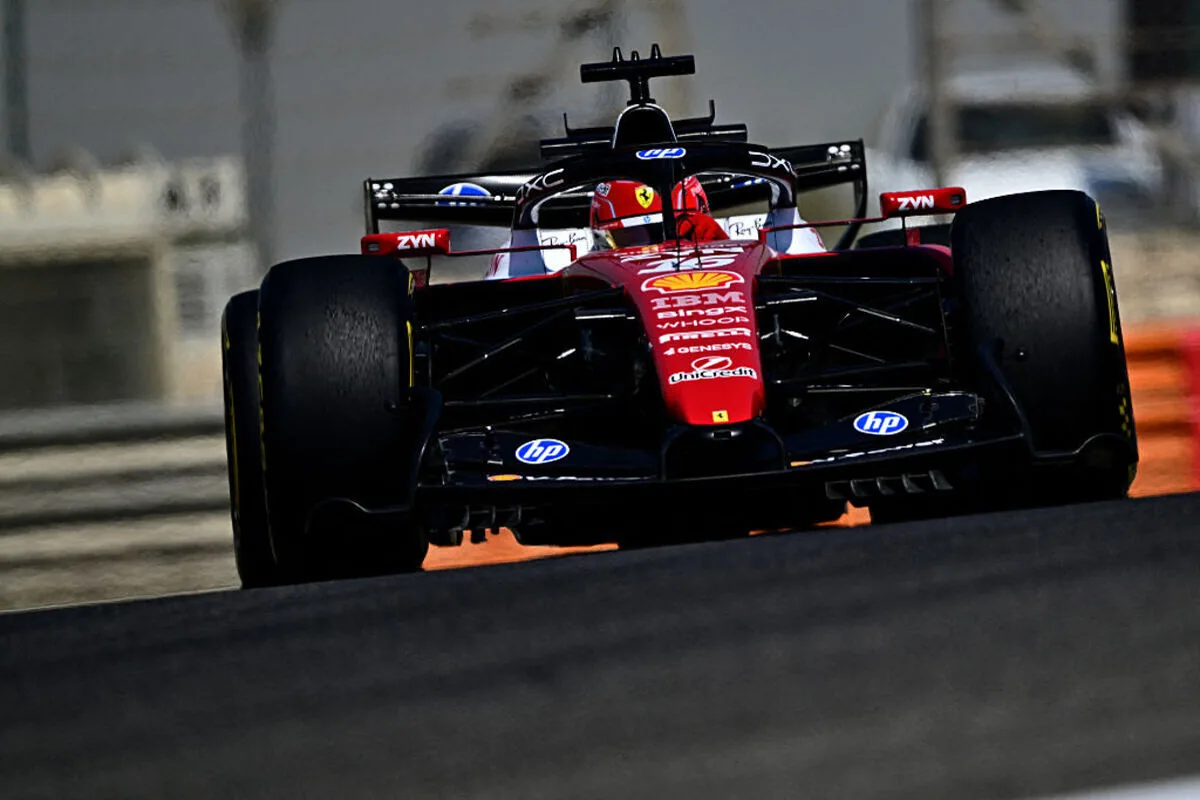
Ferrari F1 winter champion
With his sequence of fast laps at the end of the sixth and final day of testing in Bahrain, Charles Leclerc led the SF-26 to victory of the “winter champion” title in Formula 1. A title that has zero sporting significance, since the season has yet to begin and pre-season testing always has little indicative value, and it is no coincidence that, perhaps rightly so, Ferrari F1 fans are already crossing their fingers. While it is undeniable that starting a new season on the right foot, especially at the beginning of a new regulatory era, is never a bad sign, on the other hand, there is a decidedly unlucky statistic that requires reading the Sakhir results with extreme caution.
Read more Energy alert in Australia: the numbers
The unlucky statistic
From the beginning of the hybrid era to today, in fact, only twice has the fastest driver of the winter then been confirmed as champion at the end of the year. It went a bit better – but ultimately not that much – for the teams: since 2014, on only four occasions has the team that set the fastest time in the Barcelona or Sakhir tests then brought home the Constructors’ title. What is certain is that for Ferrari it has always been a bad omen: with last Friday’s fastest lap in 1:31.992, for the Maranello team it is actually the sixth time as “winter champion” in the last ten years, against a drought of Drivers’ and Constructors’ titles that has been going on since 2007 and 2008 respectively.
The Max Verstappen exception
Even more interesting is the fact that only one driver in the hybrid era has been able to break the spell according to which whoever is fastest in the pre-season collective tests then never wins the championship: and who else but Max Verstappen, who was the fastest in Sakhir in 2021 and then also in 2022, winning the World Championship on both occasions?
The curious fact is that, instead, in the years of the most difficult domains to counter, the title winner has always hidden during testing. From 2014 to 2020, Lewis Hamilton was never “winter champion” and on only two occasions was the fastest his teammate (Nico Rosberg in 2015, Valtteri Bottas in 2020), foreshadowing instead the Constructors’ title victory for Mercedes. Similarly, in 2023, which ended with a record number of race wins (19 out of 24 GPs), the best time in Bahrain was set by teammate Checo Perez.
Read more Hakkinen impressed by Piastri: “A fantastic driver”
Ferrari F1 leader in “winter” victories
| Year | Driver | Team | Time (track) | Drivers’ Title | Team Title |
| 2014 | Felipe Massa | Williams | 1:33.258 (BAH) | Lewis Hamilton | Mercedes |
| 2015 | Nico Rosberg | Mercedes | 1:22.792 (BCN) | Lewis Hamilton | Mercedes |
| 2016 | Kimi Raikkonen | Ferrari | 1:22.765 (BCN) | Nico Rosberg | Mercedes |
| 2017 | Kimi Raikkonen | Ferrari | 1:18.634 (BCN) | Lewis Hamilton | Mercedes |
| 2018 | Sebastian Vettel | Ferrari | 1:17.182 (BCN) | Lewis Hamilton | Mercedes |
| 2019 | Sebastian Vettel | Ferrari | 1:16.221 (BCN) | Lewis Hamilton | Mercedes |
| 2020 | Valtteri Bottas | Mercedes | 1:15.732 (BCN) | Lewis Hamilton | Mercedes |
| 2021 | Max Verstappen | Red Bull | 1:28.960 (BAH) | Max Verstappen | Mercedes |
| 2022 | Max Verstappen | Red Bull | 1:31.720 (BAH) | Max Verstappen | Red Bull |
| 2023 | Sergio Perez | Red Bull | 1:30.305 (BAH) | Max Verstappen | Red Bull |
| 2024 | Carlos Sainz | Ferrari | 1:29.921 (BAH) | Max Verstappen | McLaren |
| 2025 | Carlos Sainz | Williams | 1:29.348 (BAH) | Lando Norris | McLaren |
| 2026 | Charles Leclerc | Ferrari | 1:31.992 (BAH) | ? | ? |
In short, being the fastest at the end of testing is (almost) never the appetizer for a particularly satisfying season, especially since in all cases the driver who has the best car during the winter, and is aware of their strength, tends to play with hidden cards. Verstappen’s case is no exception: in 2021, the Dutchman surprisingly put an end to Mercedes’ dominance in the last year of a regulatory cycle in which it seemed Hamilton would no longer have rivals (and we all still remember how hard-fought and unpredictable that championship was), while in 2022 he was indeed the fastest in testing but at a time when Ferrari was the best car, so much so that Red Bull only became competitive after the updates brought to Imola, only becoming dominant from the middle of the calendar onwards.
Opportunity or misfortune?
For Ferrari, however, it is not certain that this is a bad omen as has already happened five other times in the last ten years. On the eve of a new regulatory cycle the values on the field can change several times during the season – we have already mentioned the 2022 case – and in any case, having a power unit available that does not create too many problems and allows for grinding out kilometer after kilometer, immediately allowing the drivers to simulate even a few “qualifying” laps as seen with Leclerc last Friday, is a fact not to be underestimated. It won’t mean anything for the final outcome of the season and perhaps doesn’t even change the hierarchy of the favorites at the start of the World Championship. Certainly, however, the mere fact of seeing a Ferrari potentially in the fight for the F1 title and not light years away as fans feared on the eve of the regulatory revolution, is an excellent starting point.