

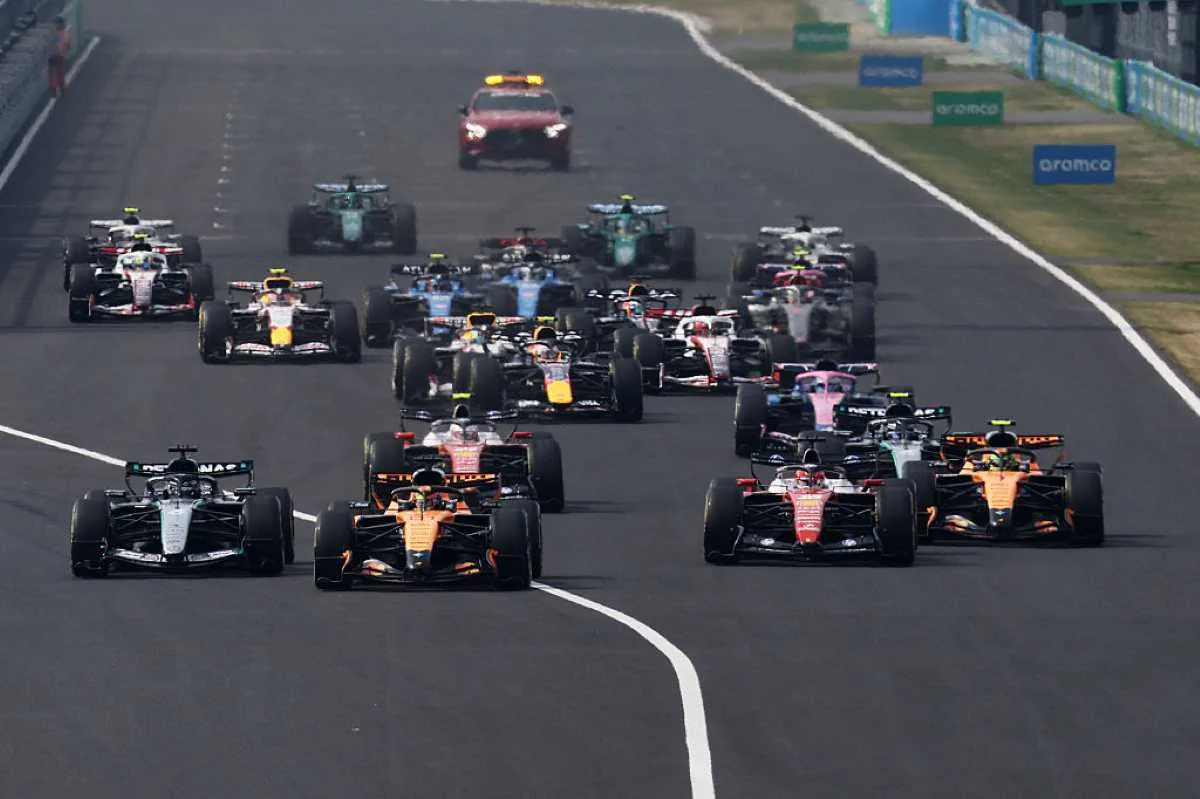
The Suzuka race was an important milestone for the current Formula 1 season. The selective Japanese circuit showcased many important technical aspects of both the current regulations and the individual teams. After a truly disastrous qualifying session from an entertainment perspective, voices in the paddock finally seem to be uniting in calling for an immediate change, at least for this session, given how much the current regulations are stifling the driver’s performance and leading to performances that are not even pleasant to follow. On the other hand, the race was pleasant, albeit with more than one asterisk. The first, and most important, is that much of the “movement” seen in the race came mainly thanks to the poor start of the two Mercedes drivers, who then had to fight back, generating much of the action seen on track in the leading positions. The second is that, as we predicted since the season debut, the “yo-yo” effect of overtaking and counter-overtaking in the race, due to the different use of energy from the electric part, soon faded away once the drivers realized that the first overtake (usually at the chicane) was effectively useless as it left them unable to defend on the main straight. The only truly positive aspect to highlight about these new regulations is that the combination of lower-downforce aerodynamics, smaller and lighter cars, and the overtake mode applicable for almost the entire lap (and therefore much more powerful than DRS) means that the cars are actually able to follow each other closely for many laps, encouraging duels. The historical difficulty of overtaking at Suzuka, mitigated however by these factors, produced an overall pleasant level of battle on track, but one that would still be achievable even without the excesses of the current 50-50 system, the need for super clipping, and whatever else aberrant has been seen in these races.
Read more Colapinto: “The big difference in speed can be a characteristic of these cars”
Antonelli: a weekend of awareness already
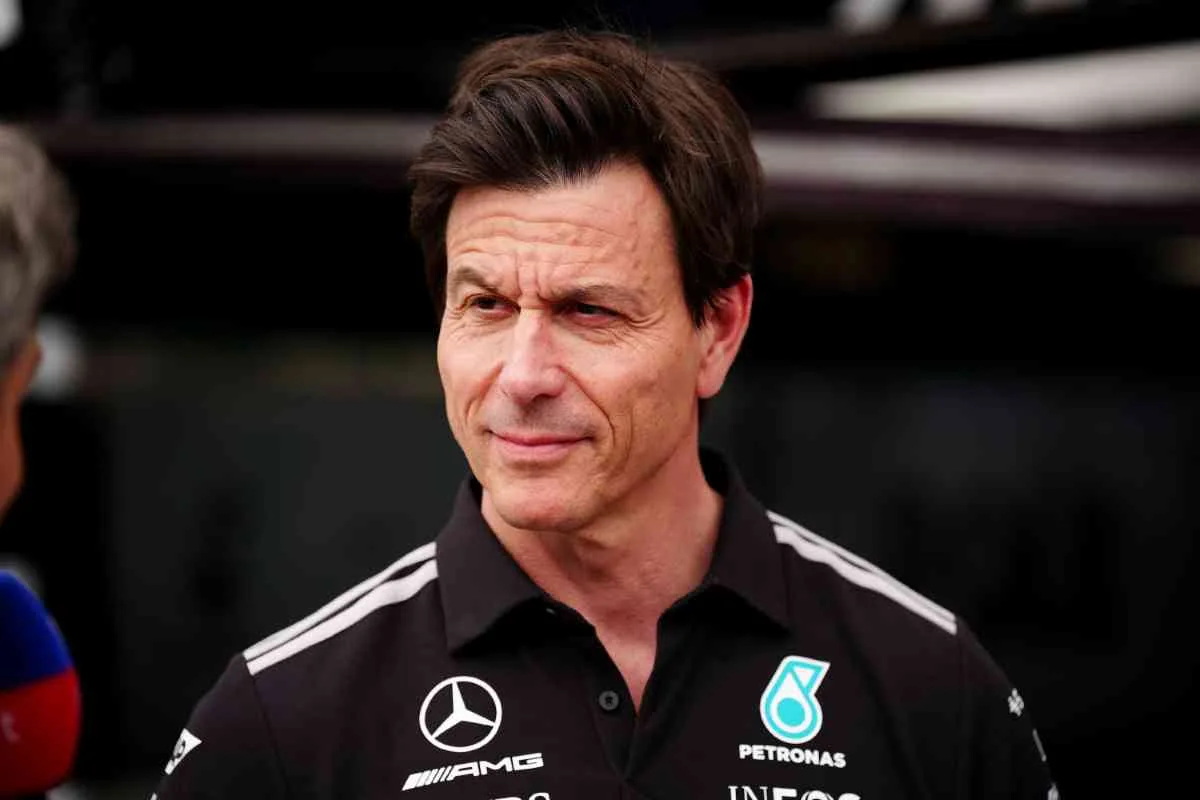
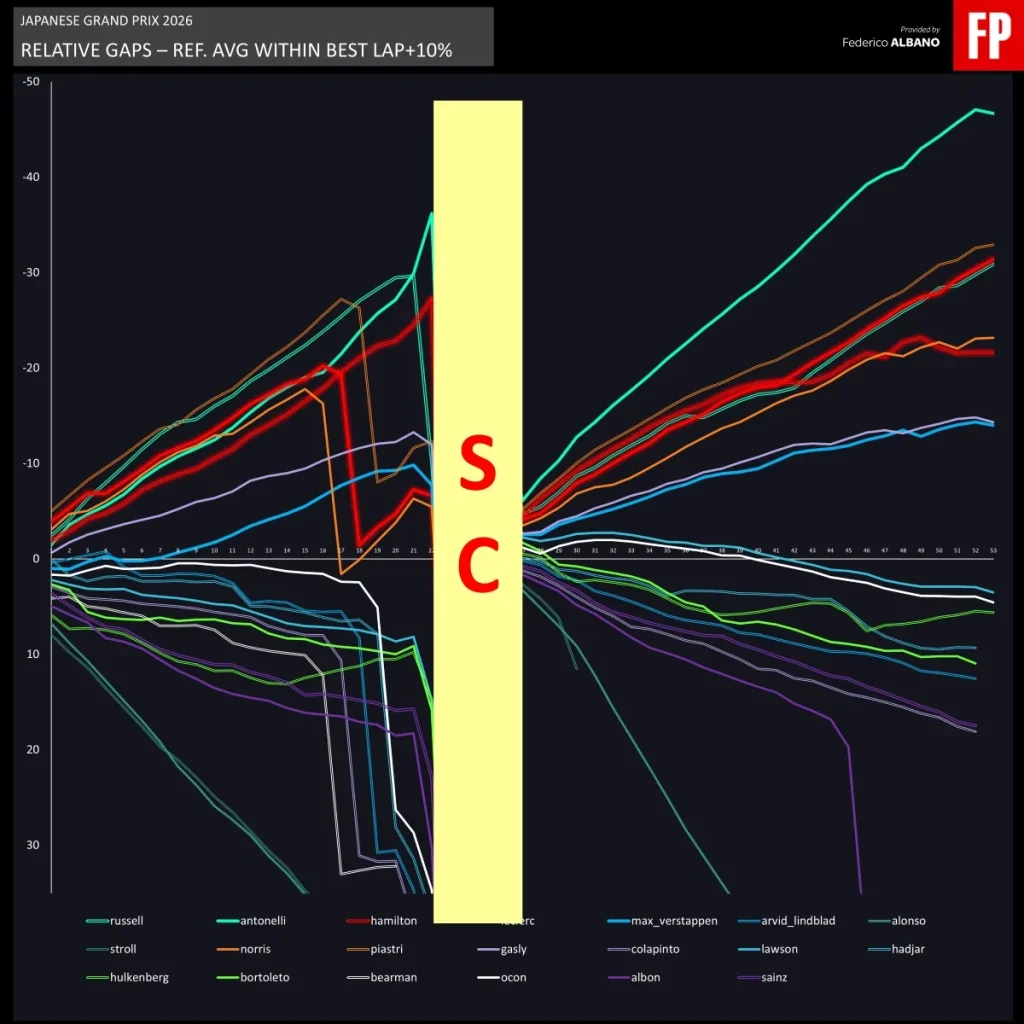
Andrea Kimi Antonelli‘s victory does indeed come with a great deal of help from the Safety Car, but in an entire weekend where the Italian was consistently the fastest on track, annihilating his teammate in almost all free practice sessions and in qualifying, and quickly catching up behind him after a disastrous start in the race. Antonelli’s approach appears calmer and with less “panic” than seen so far; the enthusiasm is already (rightly) more tempered compared to the first victory in China, and the tone in interviews has already become more analytical and determined. He seems like a Kimi who no longer feels the need to prove he deserves his place, but determined and focused on his work, which, it is clear, he knows how to do very well thanks to his great talent. Toto Wolff’s statement, in which the Mercedes team principal said that Antonelli’s victory is important also because it came on a track where the driver counts, puts George Russell’s position in a somewhat less favored perspective within the team as well. We must say that the Englishman has never particularly loved the Suzuka track, but perhaps never like at Suzuka has he been so systematically inferior to Antonelli in these two years. Although the driver of the number 63 has had the opportunity to repeat to everyone in all venues that without the Safety Car he would have won the race, some doubt honestly remains whether he would have really managed to overtake Oscar Piastri. Russell suffered from a setup problem related to rear stiffness from qualifying onwards, and this limited him in the traction phase exiting the chicane. This drastically reduced his options in close duels: if he used energy on the long straight towards the chicane, he then fell victim to the yo-yo effect on the pit straight, but, at the same time, he couldn’t attempt an attack on the pit straight because he lost crucial first meters in traction exiting the chicane and remained “stuck” in this endless loop for much of the race.
McLaren: half-rebirth, but watch out for the future
Fantastic, on the other hand, were the race and the weekend of Oscar Piastri, who put in one of his best performances even compared to last season when he was fighting for the title. Solid in duels and pace, quick at the start, the Australian absolutely deserved the second step of the podium and could probably have seriously thought about the victory without the Safety Car. There is a tendency to exalt “the McLaren step” but there is also in this case an important asterisk. The Suzuka race was run with hard compounds and on a totally new asphalt surface that eliminated the problems of tire degradation and graining, which are the two real points of difficulty from a chassis perspective for the Woking car. In fact, the only one to have a hint of graining was Piastri himself, confirming the criticality of the issue for the papaya car. The progress on the car’s weight and especially on the understanding of the Mercedes power unit were thus able to compensate for the lack of aerodynamic downforce and, with the “tires” issue missing, the race took on a hierarchy very similar to the values seen in qualifying in these first races; from there, McLaren found itself as the second force. The impression is therefore that the McLaren rebirth at Suzuka is only partially true, but at the same time, it is worth considering that no updates have yet been brought by Stella’s men. McLaren is still using a version of the MCL40 practically identical to the one seen in Barcelona, and this means that if what was seen at Suzuka was probably a step forward that wasn’t entirely real, in Miami, with the massive updates that will arrive, Norris and Piastri could find themselves with a potentially winning car in their hands.
Read more Stella: “We leave Suzuka encouraged, but we must improve the performance of our chassis”
Ferrari: Suzuka highlights the engine gap in both thermal and software terms
Finally coming to Ferrari, Leclerc’s masterful race must be highlighted, as he was able to reach the podium after a complicated and demanding race in which the Monegasque had to fight hard on track. It must be said that all three drivers on the podium handed a resounding defeat to their respective teammates, including Leclerc to Hamilton, who struggled throughout the race to find an adequate balance with energy management. The data from the Japanese weekend highlighted, perhaps as never before, a Ferrari Power Unit unable to push in the power sections as much as the competition, and struggling in all aspects. The lower power of the internal combustion engine generates a lower and slower recharge of the battery during super clipping or in dedicated sections; the torque level in the traction phases uphill and in semi-curves like at Suzuka often proved insufficient, especially with a full fuel load despite the smaller turbine that had helped a lot in these situations so far. An insufficient thermal part is coupled with the electric part which is, consequently, perpetually struggling, and which, moreover, is not optimized from a software point of view, with many problems on the so-called deployment that plague the drivers almost continuously, starting from qualifying. On this, Leclerc’s ability must be highlighted: Antonelli stated that once he got behind the Monegasque driver, he couldn’t pass because the latter used energy in all the strategic points of the track. Even listening to the interviews, it is clear that Leclerc is putting a great deal of effort into studying these new complicated (and absurd, if we may) power units, looking for an effective path, something he absolutely managed to do at Suzuka, even though all this is very much against his nature as a driver. On the last lap, Russell tried everything from an energy perspective, even reaching 347 km/h on the back straight, but Leclerc had used his reserve differently from previous laps, obtaining the absolute best time in the middle sector, and thus pushing Russell those meters away necessary to be immune from the Englishman’s attack, also confirming the complexity that drivers face on track with these regulations. The SF-26 certainly suffers from high drag, and this also explains the early search for the famous “Macarena wing,” but overall from a chassis point of view, the Japanese race did not disprove the quality of the Maranello car. The real problem for Vasseur and his team is that although very important updates will arrive from Miami, until the introduction of the ADUO nothing can change from an engine point of view, and at the moment the most differentiating factor is precisely that of the power unit.
Moment of reflection
Precisely regarding the difficulties on track, one obviously cannot fail to highlight the accident that happened to Bearman in his attempt to avoid Colapinto, who was much slower than him on the straight. From the data in our possession, the impression is that the Argentine did not slow down particularly on that lap, but that the two had already had different charging strategies for several laps, which therefore involved a large difference in speed at that point. Colapinto, however, made a mistake in moving to the left and the result was the terrifying crash of the number 87 Haas, fortunately without real consequences for the driver. This will certainly be one of the hot topics of the next meetings between the teams and the Federation to decide on regulatory changes ahead of the Miami Grand Prix in May. The impression is that there will certainly be immediate changes at least in qualifying to try to stifle the driver’s driving less (a cut in maximum electric power is likely), but it is not yet known if and what might happen for the race.